

Key Takeaways
Finding suitable Q7 wreckers Melbourne drivers can trust takes more than choosing the cheapest listing. Check fitment, condition, documentation, delivery, and installation before committing to a part.
- Confirm the Q7 generation, engine, trim, and VIN before ordering.
- Compare used, reconditioned, and aftermarket parts on more than price.
- Ask about condition, testing, warranty coverage, returns, and delivery.
- Inspect parts carefully before installation, especially electronic and safety components.
- Prepare ownership documents and vehicle details when selling or recycling a Q7.
Understanding Audi Q7 wreckers in Melbourne
Audi Q7 wreckers dismantle end-of-life, damaged, or unwanted vehicles and recover usable components for resale. That process can give owners access to parts that are no longer readily available through ordinary retail channels. Melbourne buyers should still treat every used part as an individual purchase, because condition and compatibility can vary. A careful conversation with the dismantler usually saves more time than browsing a generic listing.
What Q7 wreckers do
A wrecker assesses a vehicle, removes usable components, identifies them, and stores them for future buyers. Depending on the vehicle, that may include drivetrain parts, bodywork, lighting, interior pieces, and electronic modules. Some components are sold as removed, while others may be inspected or reconditioned before sale. The useful question is not simply whether a part is available, but how it was assessed and recorded.
Why recycled Q7 parts can be cost-effective
A recycled component may cost less than a new genuine replacement, particularly when the repair involves a large body panel, wheel, seat, or major mechanical assembly. It may also be a practical option for an older Q7 whose market value does not justify a full-price replacement. Savings are only real when the part fits and lasts, so include freight, seals, fluids, programming, and labor in the comparison. A low purchase price can disappear if installation reveals an incorrect variant.
Used, reconditioned, and aftermarket parts explained
Used parts are generally removed from another vehicle and sold in their existing condition, subject to whatever inspection the seller provides. Reconditioned parts have undergone some form of repair or refurbishment, but the exact work should be confirmed rather than assumed. Aftermarket parts are made by a third party and can vary in materials, design, and quality. Ask what category you are buying, what was tested, and whether the warranty matches the intended use.
A sensible comparison focuses on the part’s function rather than its label alone. A clean used panel may be preferable to a poorly finished replacement, while a new component may make more sense for a safety-critical repair.
Audi Q7 generations and model differences
The Q7 4L and Q7 4M are not interchangeable families, and facelift changes can affect lights, bumpers, electronics, and trim. Engine, transmission, drivetrain, suspension, and braking specifications can also change within one generation. Even apparently similar parts may use different connectors, mounting points, or software. Treat the model year as a starting point, not final proof of compatibility.
Finding the right Q7 parts for your vehicle
The best part search starts with the failed component and the exact vehicle it must serve. Describe the symptom, identify the assembly, and gather the details from the vehicle identification plate or service records. The available range can be broad, but broad availability does not guarantee a direct fit. A useful request is specific enough for a parts adviser to check the correct donor vehicle.
Mechanical parts commonly available
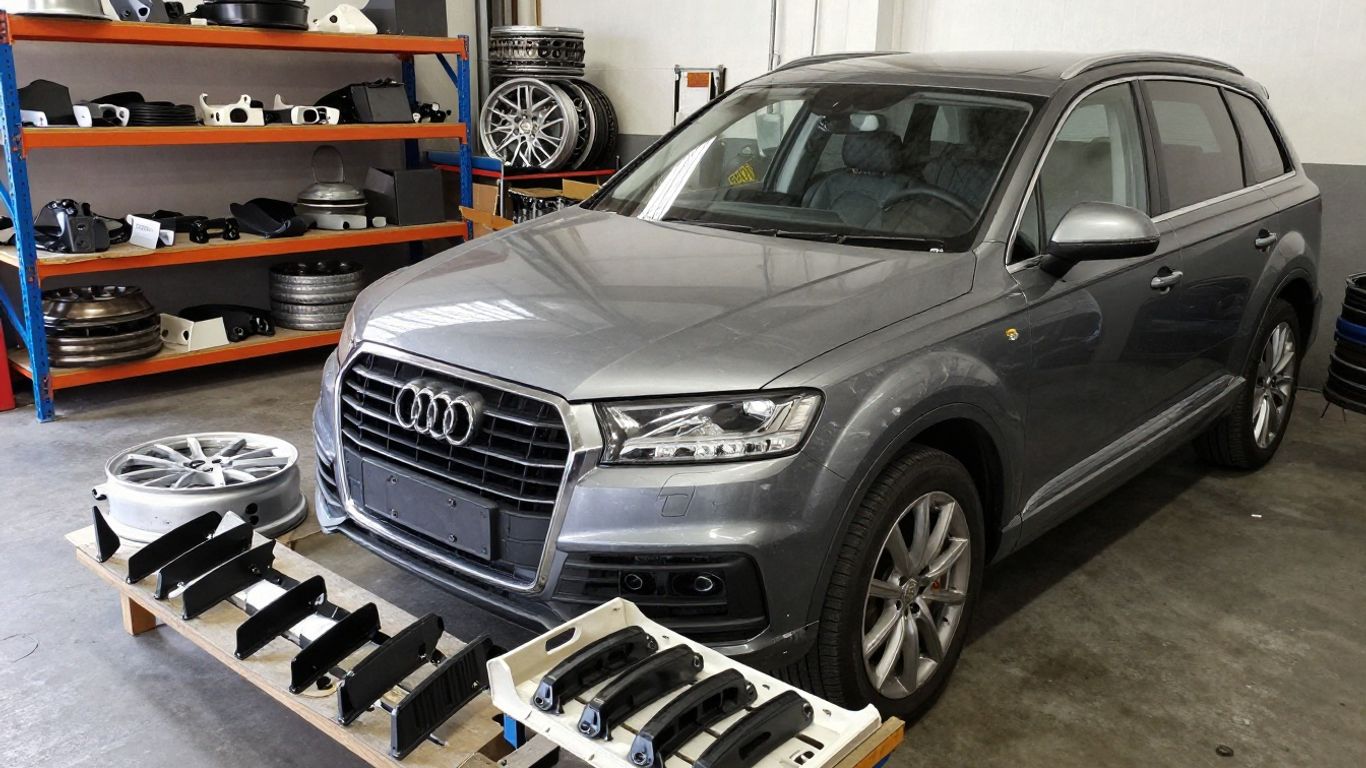
Wreckers may have engines, gearboxes, drive shafts, radiators, suspension components, steering parts, cooling equipment, and other mechanical assemblies from dismantled Q7s. Availability depends on the donor vehicle and whether the component survived the original damage. Ask about mileage, operating history, testing, and included accessories. For a large assembly, confirm whether brackets, sensors, wiring, pumps, or control units are included in the quoted price.
Body panels, lights, and exterior components
Doors, bonnets, guards, bumpers, grilles, mirrors, wheels, and lamps are common searches for a damaged Q7. Matching paint is helpful, but it is not a substitute for checking the exact body style and mounting points. Small differences in facelift design can affect headlamps, tail lamps, bumper covers, and related trim. Request clear photographs of corners, mounting tabs, glass, and painted surfaces before arranging transport.
Interior, electronic, and safety parts
Seats, dashboards, interior trim, mirrors, infotainment equipment, ECUs, sensors, seat belts, and airbag-related components may appear in recycled inventories. These parts deserve extra caution because water damage, previous deployment, or hidden electronic faults may not be visible at a glance. Ask whether a module requires coding and whether safety equipment has been inspected through an appropriate process. Never assume a warning-free donor vehicle means every electronic component is ready for immediate use.
Matching parts by year, engine, and trim
Give the seller the VIN, build date, engine code, transmission type, drivetrain information, and trim details where available. A photograph of the old part and its label can help resolve differences that a registration lookup misses. Grant Walker Parts lists used Audi Q7 parts across the Q7 4L, facelifted 4L, and 4M ranges, making generation information especially relevant when asking for a match. The final check should come from the part number and the seller’s fitment confirmation.
How to choose reliable Q7 wreckers in Melbourne
A reliable wrecker should be willing to discuss where a part came from and what is known about its condition. Professional presentation helps, but practical answers matter more than polished product language. Look for clear stock descriptions, reachable staff, and written terms that explain what happens if the component is unsuitable. Take a few minutes to compare the process, not just the advertised price.
Checking inventory and vehicle dismantling practices
Ask whether the part is physically in stock or still being sourced. A well-organized operation should be able to identify the donor vehicle, locate the component, and describe how it was removed and stored. It is also useful to ask whether fluids, batteries, refrigerants, and other hazardous materials are handled responsibly. Audi Wrecking describes vehicle dismantling and a selection of second-hand Audi parts, including engines, gearboxes, and body panels, so buyers can use those categories as a useful starting point when making an inquiry.
Confirming part quality and condition
Condition descriptions should be concrete. Terms such as tested, complete, damaged, or untested need to be explained in plain language, especially for electronics and major mechanical parts. Ask about cracks, corrosion, wear, missing fasteners, previous repairs, and included accessories. A clear condition report is more useful than a vague assurance that a part is good.
Comparing warranties, returns, and guarantees
Read the warranty before paying, including exclusions for installation errors, incorrect fitment, electrical diagnosis, and wear items. Find out whether the seller requires a qualified installation or written proof of testing. A return policy may have time limits and may not cover freight in both directions. Keep the invoice, messages, photographs, and packaging until the part has been fitted and proven suitable.
Reviewing customer service and local reputation
Local reputation is best judged through consistent evidence rather than one glowing comment. Check whether inquiries receive specific answers, whether stock information is current, and whether the business explains problems without becoming evasive. A Melbourne location may make inspection or pickup easier, while nationwide delivery can help when the right donor part is elsewhere. Choose the seller whose process feels predictable from the first conversation.
Buying Audi Q7 parts safely
Safe purchasing is mostly a matter of reducing uncertainty before money changes hands. The seller needs enough information to identify the correct component, and you need enough evidence to judge its condition. This is particularly important for Q7 systems that combine mechanical parts with electronics, sensors, or vehicle software. Do not let urgency turn a repair into a second problem.
Providing your VIN and vehicle details
Send the full VIN when requesting a fitment check, along with the model year, engine, transmission, trim, and build date if known. Explain whether the vehicle is a standard Q7, a facelift variant, or a model with special equipment. If the part is replacing one already removed, include its number and photographs of the connectors or mounting points. The more precise the request, the less likely the seller is to rely on a broad model description.
Asking for photos, measurements, and part numbers
Photographs should show the whole component as well as labels, connectors, mounting tabs, and any visible damage. For bodywork, ask for measurements and close views of edges and attachment points. For wheels, confirm size, width, bolt pattern, offset, and tire condition where relevant. Written part numbers are valuable, but they should still be checked against the VIN and the vehicle’s existing configuration.
Inspecting parts before installation
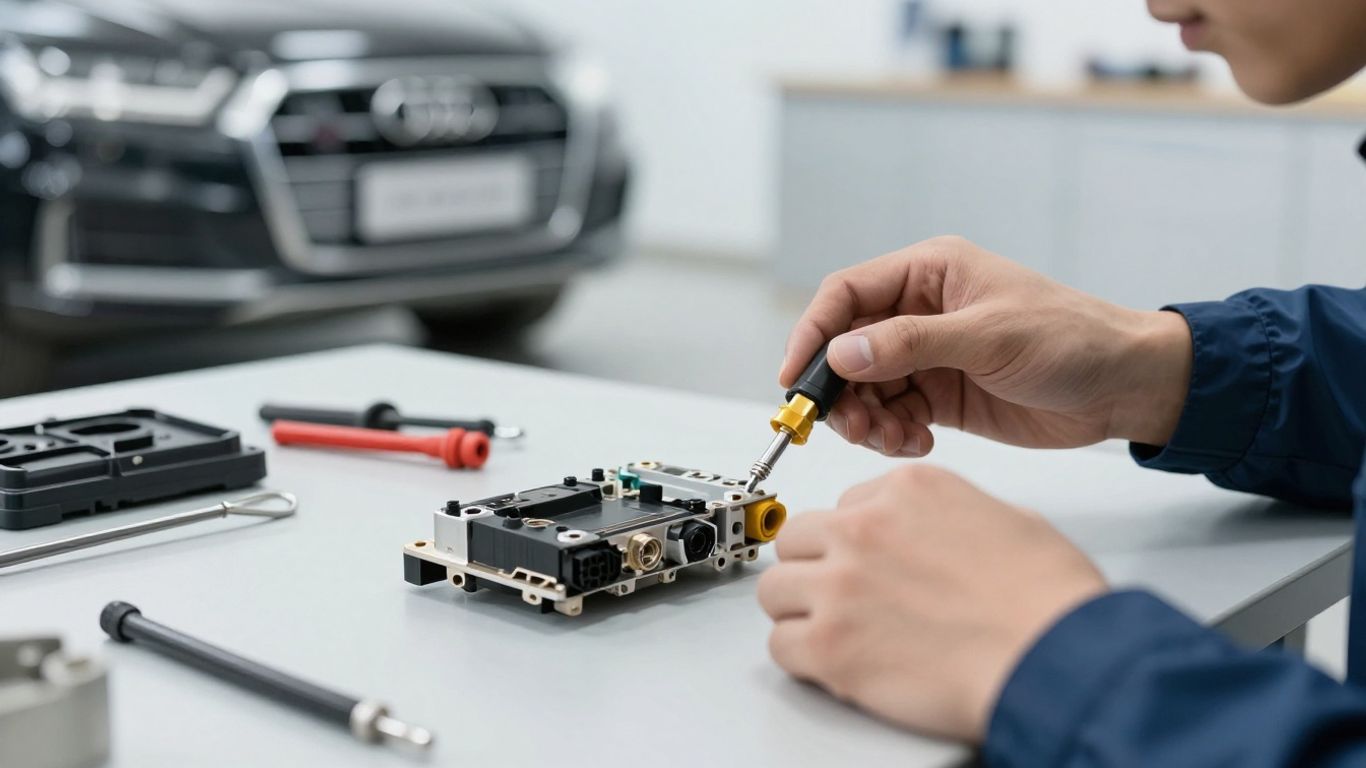
When a part arrives, compare it with the original before removing packaging or beginning work. Check connectors, mounting points, casting marks, finishes, and included hardware. Photograph damage immediately and contact the seller before installation if something is wrong. Installing a questionable component can make a return harder and may create additional diagnostic costs.
Understanding compatibility and fitment risks
Fitment risks include facelift differences, left- and right-hand variations, engine-specific components, software coding, and changes in safety equipment. A part can look identical while using a different connector or calibration. If the seller cannot confirm compatibility, ask your mechanic or an Audi specialist to review the details first. The cost of a short inspection is usually smaller than the cost of removing and replacing an incorrect part.
Costs, delivery, and installation considerations
The purchase price is only one part of the repair budget. A used Q7 component may need cleaning, seals, programming, painting, or additional hardware before it is ready. Delivery can also be significant for bulky panels, engines, and transmissions. Build the complete estimate before deciding which option is genuinely economical.
Factors that affect used Q7 part prices
Price is influenced by rarity, demand, condition, mileage, completeness, and whether the component has been tested. A painted panel may cost more than an unpainted one, while a complete assembly may be more useful than a bare core. The donor vehicle’s specification can affect value as well. Compare like with like, and ask whether the quote includes accessories, taxes, packaging, and freight.
Comparing pickup, courier, and freight options
Pickup can be practical for fragile or oversized parts if the vehicle and packaging are ready. Courier delivery may suit smaller components, while freight is often more appropriate for engines, gearboxes, doors, and other heavy items. Confirm delivery time, insurance, tracking, tailgate requirements, and who is responsible for unloading. Inspect packaging before signing for a shipment and record any visible damage.
Estimating mechanic and installation costs
Ask your mechanic for a complete installation estimate rather than a simple hourly figure. Labor may include diagnosis, removal, cleaning, fluids, gaskets, coding, calibration, wheel alignment, or testing after installation. Some jobs are straightforward, while electronic and drivetrain work can involve additional steps. Give the mechanic the part number and condition report before booking the repair.
A simple planning list can keep the quote realistic:
- Part price and applicable taxes
- Packaging, courier, or freight charges
- Consumables, seals, fluids, and replacement hardware
- Diagnostic, programming, or calibration work
- Removal, installation, testing, and possible alignment
This approach makes a cheaper used part easier to compare with a new or reconditioned alternative. It also leaves room for the small expenses that often appear once a vehicle is apart.
Deciding when a new part is the better choice
New may be preferable when the part is safety-critical, difficult to test, heavily worn, or likely to fail soon after installation. It can also be sensible when a new component includes an updated design, a stronger warranty, or required software support. For a cosmetic panel or non-critical trim piece, a carefully inspected used part may remain the better value. The right choice depends on risk, access, and the total repair cost rather than the sticker price alone.
Selling or recycling an unwanted Audi Q7
A Q7 that is damaged, incomplete, uneconomical to repair, or simply no longer wanted may still have value as a donor vehicle. A wrecker will consider usable assemblies, body panels, wheels, interior equipment, and salvageable materials. Accurate information makes the assessment faster and reduces surprises during collection. Be honest about the vehicle’s condition, including missing keys, water damage, accident history, and registration status.
Preparing your Q7 for a wrecking assessment
Gather clear photographs of the exterior, interior, engine bay, wheels, and damage. Record the model year, engine, transmission, mileage, VIN, and whether the vehicle starts or rolls. Remove personal belongings and keep loose keys, remotes, and service documents together. Do not dismantle valuable components before asking for an assessment, because an incomplete vehicle may be worth less as a whole.
Documents and ownership details you may need
The buyer may ask for proof of identity, ownership, registration details, and the VIN. Requirements vary, so confirm the paperwork before arranging collection. If the vehicle is financed, written confirmation about the loan may be needed. Keep copies of the sale agreement, receipt, transfer paperwork, and any cancellation or disposal confirmation relevant to your circumstances.
How vehicle condition affects its value
A running vehicle is not automatically worth more than a non-runner, but operational condition can increase demand for certain assemblies. Complete vehicles with intact interiors, undamaged wheels, usable panels, and documented service history may attract stronger offers. Severe collision damage, missing modules, corrosion, fire, or flood exposure can reduce the value of otherwise desirable parts. Distance from the collection location and transport difficulty may affect the final quote too.
Environmentally responsible Audi Q7 recycling
Responsible recycling involves draining fluids, handling batteries and refrigerants safely, and separating reusable parts from recyclable materials. It keeps hazardous substances away from soil and waterways while extending the useful life of components that can be repaired or reused. Blue Sky Auto identifies a 2016 Audi Q7 4M 3.0-liter diesel automatic AWD as being dismantled in Dandenong South, which illustrates how a specific donor vehicle can be matched to parts requests. Ask the recycler how the remaining shell and materials are processed after dismantling.
Conclusion
Finding the right Q7 part in Melbourne is a process of careful matching, honest condition checks, and realistic cost planning. Use the VIN and part number, ask direct questions, inspect what arrives, and choose recycled components when their condition and warranty make sense. Those habits help turn a wrecking-yard purchase into a dependable repair.
Frequently Asked Questions
Are used Audi Q7 parts reliable?
They can be reliable when the donor vehicle, condition, testing, and warranty are clearly documented. Reliability depends on the individual component and its previous use, so ask specific questions rather than relying on a general label.
How do I know which Q7 generation I have?
Use the VIN, build date, model information, and physical details such as the body design and lighting. A parts professional or mechanic can help confirm the generation when the vehicle has been modified or its records are incomplete.
Should I buy a used engine or gearbox?
Compare mileage, operating history, test information, included accessories, warranty terms, freight, and installation costs. A mechanic should review the specification before purchase, since coding and supporting components may also be required.
Can Q7 electronic modules be replaced directly?
Not always. Some modules may require coding, programming, calibration, or configuration for the vehicle. Confirm the part number and ask a qualified technician whether the replacement can be installed and commissioned correctly.
What should I check when a body panel arrives?
Inspect paint, dents, corrosion, mounting points, edges, glass, trim, and any included hardware. Compare the panel with the original before installation and photograph shipping damage immediately.
Is a recycled safety part a good option?
Safety-related components require particular caution because deployment history and hidden damage may not be obvious. Buy only when condition, provenance, inspection, and warranty are clear, and have the part installed by a qualified professional.
What information helps sell an unwanted Q7?
Provide the VIN, year, engine, transmission, mileage, location, ownership details, keys, photographs, and an honest description of damage or missing parts. Complete and accurate information usually makes the assessment and collection process smoother.