

Key Takeaways
Finding A5 used parts Adelaide buyers can trust starts with accurate vehicle identification and careful checks, not simply the lowest advertised price.
- Confirm the A5 generation, body style, engine, transmission, and part number before ordering.
- Treat brakes, steering, suspension, airbags, and drivetrain components as safety-critical purchases.
- Ask for testing details, donor-vehicle information, photographs, and a written returns policy.
- Compare the total cost of a used part with delivery, fitting, coding, and possible rework.
- Bundle suitable components and dispose of replaced parts responsibly to keep costs down.
Understanding your Audi A5 parts needs
An Audi A5 can vary considerably between generations, body styles, engines, drivetrains, and equipment levels. A part that appears correct in a photograph may still use different connectors, mounting points, or software. Begin with the vehicle identification number and the details on the existing component. That small amount of preparation makes the rest of the search far less frustrating.
Identify the A5 generation, body style, and engine
Start by recording the model year, generation, coupe, Sportback, or Cabriolet body style, engine code, transmission, and whether the car is front-wheel drive or quattro. The registration details can help a seller begin the search, but they should not replace the VIN or a direct part-number check. Factory options can also affect lights, seats, bumpers, modules, and interior trim.
If you are searching listings, filter by the closest match rather than assuming every A5 from the same year shares components. A donor vehicle with the same drivetrain and body configuration is generally a more useful starting point than one that only carries the same badge.
Confirm the exact part number and compatibility
Photograph the label or stamped number on the old part before removing it, where practical. Share that number with the seller and ask them to confirm superseded numbers, left- or right-hand fitment, and whether coding or calibration will be needed. Exact compatibility saves money because it reduces freight, returns, and workshop time.
For complex electronic components, matching the hardware number may not be enough. Ask whether the replacement is supplied tested, whether it has been unlocked or coded, and whether your repairer can complete any required programming.
Separate safety-critical parts from cosmetic components
A scratched trim panel and a worn suspension arm should never be judged by the same standard. Safety-related components deserve documented inspection and, where appropriate, professional testing before installation. Airbag systems, brakes, steering, suspension, tires, and drivetrain parts can affect how the car behaves in an emergency.
Cosmetic parts still need accurate fitment, but small marks may be acceptable if the price reflects them. Be honest about which imperfections you can live with and which ones will make the finished repair look incomplete.
Decide between used, rebuilt, and new replacement parts
Used parts can make sense for body panels, interior fittings, mirrors, and some mechanical assemblies when their history is clear. Rebuilt parts may suit selected components where a reputable specialist provides a defined process and warranty. New parts remain the sensible choice when wear, reliability, or safety cannot be verified economically.
Make the decision as a complete repair calculation. A cheaper used unit is not a bargain if it needs immediate refurbishment, specialist coding, or repeated removal and refitting.
Where to find A5 used parts in Adelaide
Adelaide buyers can begin locally, then widen the search when a specific component is difficult to locate. Dismantlers, auto recyclers, repairers, dealer networks, and online listings each offer different information and after-sales support. The best source is usually the one that can identify the part accurately and explain its condition. Keep a written record of prices, freight, warranty terms, and promised testing.

Compare Audi wreckers and European car dismantlers
A specialist dismantler may know the recurring differences between A5 variants and may be able to check a donor vehicle directly. Ask whether the business supplies a complete assembly, whether accessories are included, and how the part was removed. Audi wreckers in Adelaide can be a useful starting point when a local listing does not show the item you need.
European-focused dismantlers may also have broader knowledge of shared Audi, Volkswagen, and related platform components. VolksTorque, for example, describes itself as a specialist dismantler stocking Volkswagen, Audi, Citroen, Skoda, Fiat Scudo, and Peugeot Commercial vehicles; confirm A5 fitment rather than assuming cross-brand interchangeability.
Search local auto recyclers and online parts marketplaces
Local yards can make inspection and collection easier, while online marketplaces broaden the pool of available donor vehicles. Search using the part number alongside the A5 model details, and ask sellers to confirm whether the photograph shows the actual part. Used Audi spare parts listings can help buyers search across wreckers for model, engine, and transmission matches.
Online searches are most useful when they produce several comparable offers. Treat a listing as an invitation to verify details, not as proof that the component will fit.
Check dealer trade-ins and specialist repair networks
Repair shops and dealer networks sometimes know of dismantled vehicles, removed assemblies, or customers who have replaced a car before completing a repair. These contacts may not advertise parts publicly, but they can clarify what failed and what work was already performed. VDL Adelaide provides local Audi specialist contact and collection information, so it may be worth asking whether they can advise on the appropriate part or repair pathway.
A repairer can also identify parts that should be installed and calibrated by a technician. That advice may cost less than buying an unsuitable component first.
Evaluate pickup, delivery, and interstate sourcing options
A bulky door, engine, or transmission can cost more to transport than a smaller local alternative. Before paying, confirm the collection window, freight method, packaging, insurance, and whether the seller accepts responsibility for transit damage. For a wider search, ANZ Auto Parts says it offers new, used, and recycled Audi parts with delivery across Australia and a 30-day replacement warranty; verify the current terms for your specific purchase.
A local pickup is not automatically cheaper. Add fuel, time, loading equipment, and the risk of discovering a mismatch at collection before comparing it with delivered pricing.
How to assess the condition of used Audi A5 parts
Condition is more than whether a component looks clean in a listing photo. Ask what was inspected, what was tested, and why the donor vehicle was dismantled. A useful seller will distinguish known facts from assumptions. When the answer is vague, price the part as a higher-risk purchase or continue searching.
Inspect panels, trim, and interior components for damage
Look along panel edges, mounting tabs, seams, and painted surfaces for dents, cracks, distortion, and poorly repaired areas. For interior parts, inspect clips, hinges, stitching, switch markings, and color differences that may be more obvious once installed. Request photographs taken in natural light and close-ups of any damage disclosed in the listing.
Matching paint can be difficult, especially after exposure to sunlight. A panel with minor scratches may still be worthwhile if you already plan to repaint, but the price should account for preparation and blending.
Check mechanical and electrical parts for wear
Ask how mechanical parts were tested and whether seals, bearings, bushings, belts, or fluids need replacement before installation. Electrical items should be checked for broken plugs, bent pins, corrosion, missing brackets, and signs of overheating. If a component requires coding, confirm that the seller can provide its identifying information.
Do not treat a clean engine bay or polished housing as evidence of internal condition. A workshop inspection can be especially valuable for engines, transmissions, turbochargers, and electronic control units.
Ask about mileage, testing, and donor vehicle history
The donor vehicle’s mileage, damage location, running condition, and reason for dismantling can put a part’s condition into context. Ask whether the engine started, whether warning lights were present, and whether the component was removed before or after the vehicle was damaged. For a gearbox or differential, request any available test notes rather than relying on the donor mileage alone.
A seller may not know every detail, so written disclosure matters. Save the listing, messages, and photographs until the part has been fitted and checked.
Look for signs of corrosion, previous repairs, or water damage
Examine fasteners, terminals, carpet edges, connectors, and cavities for rust, white deposits, staining, or silt. Water damage can affect modules and wiring long after the cabin has dried. Panels may hide filler, ripples, or stretched metal beneath a fresh coat of paint.
If the vehicle came from a flood or has been stored outdoors, ask direct questions about water exposure. It is usually better to reject an uncertain electronic part than to chase intermittent faults later.
Commonly available Audi A5 used parts
Availability changes with local stock and the number of suitable donor cars, but A5 dismantlers commonly handle a broad mix of exterior, mechanical, electronic, and interior components. Some items sell quickly because they are damaged in ordinary collisions; others are harder to source because they vary by trim or specification. Use the list below as a search framework, not a promise that every item will be in stock.
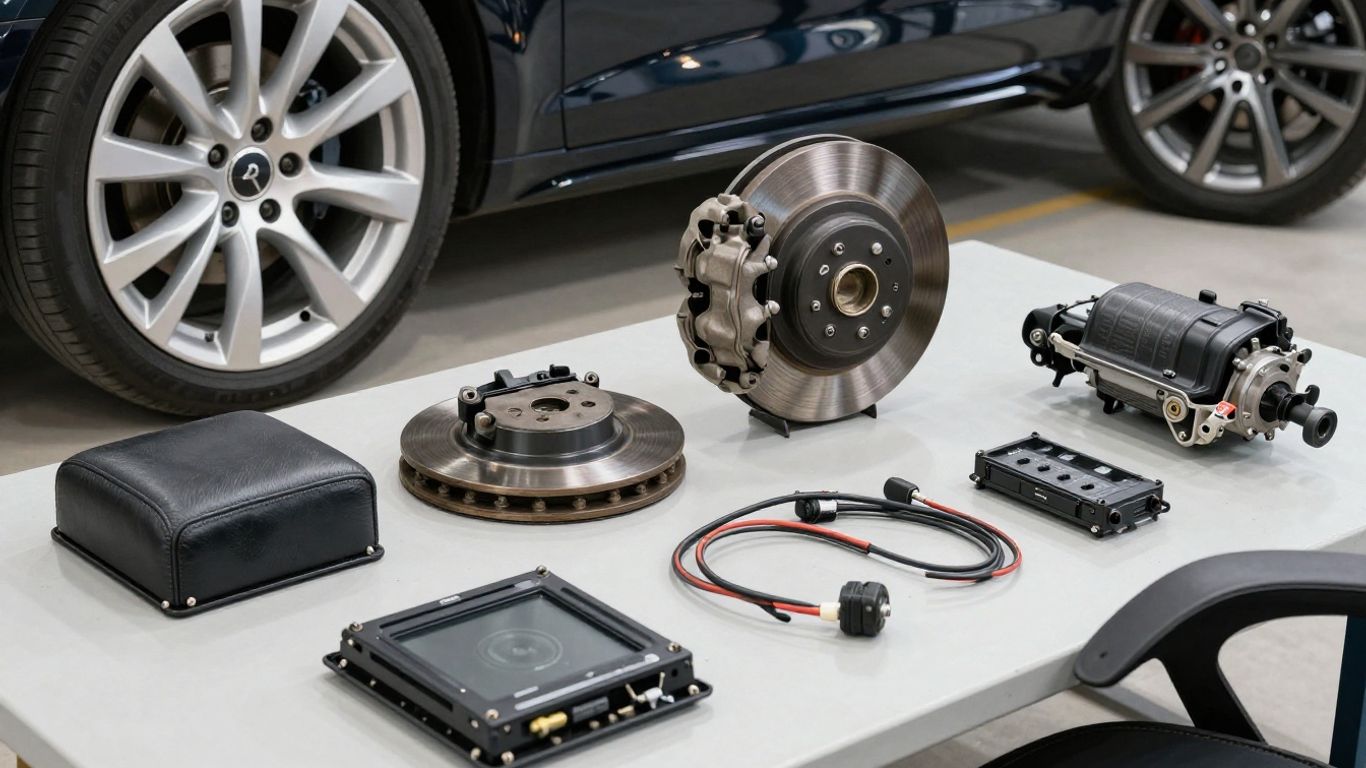
Body panels, lights, mirrors, and exterior trim
Bumpers, guards, hoods, doors, grilles, lamps, mirrors, and moldings are natural candidates for used replacement. Confirm the body style, parking-sensor provisions, lighting technology, side, color, and included brackets. A complete lamp may be more practical than a bare housing if modules and mounting hardware are difficult to source separately.
Ask for images of tabs and rear surfaces, not just the visible painted face. Hidden damage often determines whether the part can be fitted without additional repair.
Engines, transmissions, and drivetrain components
Used engines, transmissions, transfer cases, differentials, driveshafts, and ancillary components can offer substantial savings, but they carry more technical risk. Confirm engine and gearbox codes, mileage, included accessories, and whether the assembly was tested. Find out whether fluids, seals, filters, or service items are included or excluded.
A written warranty is particularly valuable for major drivetrain purchases. Have a qualified technician compare the replacement unit with the vehicle before arranging installation.
Suspension, braking, and steering parts
Control arms, hubs, calipers, steering racks, subframes, and suspension components may be available from dismantled vehicles. Their condition depends on mileage, impact history, corrosion, and storage. Ask whether the donor suffered damage near the component and whether wear items are included.
Some parts are poor candidates for uncertain reuse. New friction materials, fasteners, seals, and other service items may be appropriate even when the main assembly is sourced used.
Infotainment, sensors, modules, and wiring
Screens, amplifiers, cameras, parking sensors, engine modules, body modules, and wiring looms often vary with options and software. Match the part number, connector layout, revision, and vehicle equipment. Ask whether the unit is locked to the donor vehicle or needs coding after installation.
These components can be difficult to diagnose from appearance alone. A seller who provides a test description and return process is safer than one who simply says the module is “untested.”
Seats, dashboard pieces, and interior fittings
Seats, door cards, consoles, vents, switches, and dashboard pieces can refresh an interior at a fraction of replacement cost. Check leather or fabric color, heating and electric functions, airbag provisions, trim finish, and mounting points. Compare photographs of the donor part with your existing interior before ordering.
For seats and dashboards, ask how the part will be protected during freight. Creases, scratches, and broken clips can turn an otherwise sound component into an expensive disappointment.
How to buy A5 used parts safely
A safe purchase depends on clear information before money changes hands. Do not let urgency push you past basic checks, particularly for expensive or safety-related parts. Confirm who is selling the component, what is included, and what happens if the part is wrong or arrives damaged. Keep communication in writing wherever possible.
Verify the seller’s reputation and business details
Look for a traceable business name, physical address, working phone number, and consistent descriptions across its listings. Ask how long the part has been stored and whether invoices are provided. Reviews can be useful, but they should support—not replace—specific answers about the component.
Be cautious when payment is requested through an unusual method or when a seller refuses to identify the business. A modest saving is not worth losing the full purchase price.
Request clear photos, measurements, and part numbers
Ask for the actual item photographed from several angles, including labels, connectors, mounting points, and damage. Provide your VIN and the number from the old part, then request written confirmation of fitment. For panels and trim, dimensions can prevent a costly freight return.
If the seller cannot show a label, ask what other evidence supports compatibility. “Looks the same” is not a reliable technical match.
Understand warranties, returns, and exchange policies
Read the warranty exclusions before buying. Clarify whether labor, diagnostics, coding, fluids, and return freight are excluded, and whether the seller offers a refund, replacement, or exchange only. For a major component, confirm how long you have to test it and what evidence is needed to make a claim.
A warranty has value only when the seller can be contacted and the terms are specific. Save the invoice and the original listing until the repair is complete.
Confirm shipping, packaging, and collection arrangements
Heavy or fragile parts need suitable protection, and body panels require more careful packaging than small sensors. Confirm the delivery address, expected dispatch date, tracking, insurance, and inspection process on arrival. Photograph the packaging before opening if damage is suspected.
For collection, check loading access and whether assistance is available. Arrange transport for engines, transmissions, glass, and large panels rather than assuming they can be carried safely in an ordinary car.
How to save money on Audi A5 replacement parts
The cheapest listing is only one part of the calculation. A compatible used item can reduce the purchase price, while a mismatched one can add diagnostics, freight, downtime, and fitting charges. Compare complete repair costs and decide where uncertainty is acceptable. That approach keeps the budget realistic without treating quality as an optional extra.
Compare used-part prices with aftermarket alternatives
Ask for like-for-like comparisons: same specification, same included hardware, same warranty period, and similar delivery time. Aftermarket parts may be sensible for some service items, while a used original component may be preferable for a body or interior piece. New original parts can still be justified when a used equivalent is scarce or unverified.
Do not compare a bare assembly with a complete replacement package. The cheaper headline price may exclude brackets, sensors, modules, or installation essentials.
Calculate installation and compatibility costs
Before ordering, ask a repairer for an estimate of labor, coding, calibration, fluids, seals, and related service items. A component that requires several hours to fit deserves a higher level of verification than a clip-on trim piece. Factor in the cost of returning an incorrect part as well.
This is where a slightly more expensive, confirmed match can become the economical choice. The purchase price is only the beginning of the repair.
Bundle related parts to reduce freight expenses
When one repair involves several connected components, ask whether the seller can supply them together. Bundling may reduce freight and ensures that brackets, fasteners, sensors, and covers come from a compatible donor system. It can also save time spent coordinating several sellers.
A practical bundle might include a lamp with its module and brackets, or a cooling assembly with the associated fan and shroud. Confirm each item before paying rather than accepting unnecessary extras.
Know when a cheaper part may create extra risk
Avoid gambling on untested safety components, water-damaged electronics, badly repaired structural parts, or major drivetrain units with no meaningful warranty. A bargain can become costly when failure damages surrounding parts or leaves the vehicle off the road. Reliability matters more than the lowest number on a search page.
A lower price is useful only when the part remains fit for its intended job.
Use the vehicle’s role, the component’s safety importance, and the cost of rework to set your risk threshold. When those factors point in different directions, ask a qualified technician before committing.
Recycle or sell your old A5 components responsibly
Keep the old part until the replacement has been tested, unless storage or safety makes that impractical. Some repairable components can be sold with an accurate description of their condition, while metal, batteries, fluids, and electronic waste should go through appropriate recycling channels. Remove personal data from infotainment units before disposal or transfer.
Responsible recycling can recover value without passing an unsafe or misrepresented part to someone else. It also keeps useful materials out of general waste.
Conclusion
A careful search for A5 used parts Adelaide buyers can rely on combines precise vehicle details, honest condition checks, written seller terms, and a realistic installation budget. Take time to verify fitment before paying, give safety-critical components extra scrutiny, and compare total repair cost rather than sticker price alone. Done well, the used-parts market can make an Audi A5 repair more manageable without turning the process into guesswork.
Frequently Asked Questions
Are used Audi A5 parts worth buying?
They can be worthwhile for suitable body, trim, interior, and selected mechanical components when fitment and condition are documented. The value depends on the part’s risk, warranty, and installation cost.
How do I confirm an A5 part will fit?
Match the VIN, generation, body style, engine, drivetrain, and exact part number. Ask the seller to confirm compatibility in writing, including any coding or calibration requirements.
Which used A5 parts need the most caution?
Give extra attention to airbags, brakes, steering, suspension, drivetrain assemblies, and electronic modules. Unknown history or water damage can make these parts false economies.
Should I buy a complete assembly or individual components?
A complete assembly may simplify fitment and preserve compatible brackets or modules, but it can include unnecessary cost. Compare what is included and check the repairer’s requirements first.
What should a used-parts warranty cover?
Check the testing period, replacement or refund process, exclusions, and responsibility for freight. Ask specifically about labor, coding, fluids, and diagnostic costs, which are often treated separately.
Is local pickup better than delivery in Adelaide?
Pickup can allow inspection and avoid freight, while delivery may provide access to a wider range of stock. Compare the full cost, transport effort, packaging, and return arrangements.
Can I sell my old A5 component after replacement?
Yes, if you describe its condition accurately and disclose known faults. Batteries, fluids, electronic waste, and damaged safety components should be handled through appropriate recycling or disposal services.