

Key Takeaways
Used Audi parts can be a sensible repair choice when their compatibility, condition, and history are clear. A careful buying process matters more than simply finding the lowest price.
- Compare used, new, and aftermarket parts for the specific repair.
- Confirm fitment using the VIN and original part number.
- Ask about mileage, testing, damage, warranty, and returns.
- Use professional installation for safety-critical or coded components.
- Keep invoices and monitor the replacement after fitting.
Understand when used Audi parts are the right choice
A used component is not automatically a compromise, and a new component is not automatically the best answer. The right choice depends on the part, the vehicle’s age, its safety role, and the evidence available about its condition. For drivers comparing quality used Audi parts Sydney suppliers, the aim is a sound match at a fair total cost.
Compare used, new, and aftermarket components
Used parts may offer good value when the donor vehicle and component history are known. New genuine parts can provide a straightforward replacement, while aftermarket parts vary by manufacturer and specification. Compare the purchase price with installation, delivery, warranty coverage, and the cost of correcting a poor fit later.
The choice also depends on how quickly the car needs to return to the road. A readily available used body panel or interior component may be practical, whereas a lower-priced alternative with uncertain fitment can create more work than it saves. For a broader view of genuine and aftermarket Audi components, GMS Spares covers categories including engine, suspension, brake, electrical, and transmission parts.
Identify parts that are suitable for your Audi model
Start with the exact vehicle details rather than the badge alone. Model, build year, generation, engine, transmission, body style, and drivetrain can all affect fitment. A component that looks identical in a photograph may have a different connector, mounting point, software version, or internal specification.
Ask the supplier to identify the part by its original number and confirm whether it came from a compatible vehicle. This is especially useful for trim pieces and mechanical assemblies, where small revisions can matter. If a seller cannot explain what vehicle the part came from, treat that uncertainty as part of the purchase risk.
Weigh cost savings against part condition
The price difference is useful only when the part’s likely service life makes sense. A clean, tested component with traceable mileage may justify a higher price than an untested item, even if both are described as used. Factor in freight, fitting, fluids, seals, programming, and any return costs before deciding.
A sensible comparison separates low-risk cosmetic items from components that could leave the car undriveable. The cheapest listing is rarely the whole financial picture. Condition evidence matters more than a bargain headline when the replacement is difficult to access or expensive to install.
Know when a new or genuine part is safer
Some repairs deserve a more conservative approach. New parts may be preferable for safety-critical braking or steering components, items exposed to high heat, and parts whose internal wear cannot be assessed reliably. Follow the vehicle manufacturer’s service information and ask a qualified technician when the consequences of failure are serious.
A used option can still be reasonable in other cases, but it should not be selected simply because it is available. The decision should reflect the part’s function, inspection evidence, and the condition of the rest of the vehicle.
Find reputable Audi wreckers and suppliers in Sydney
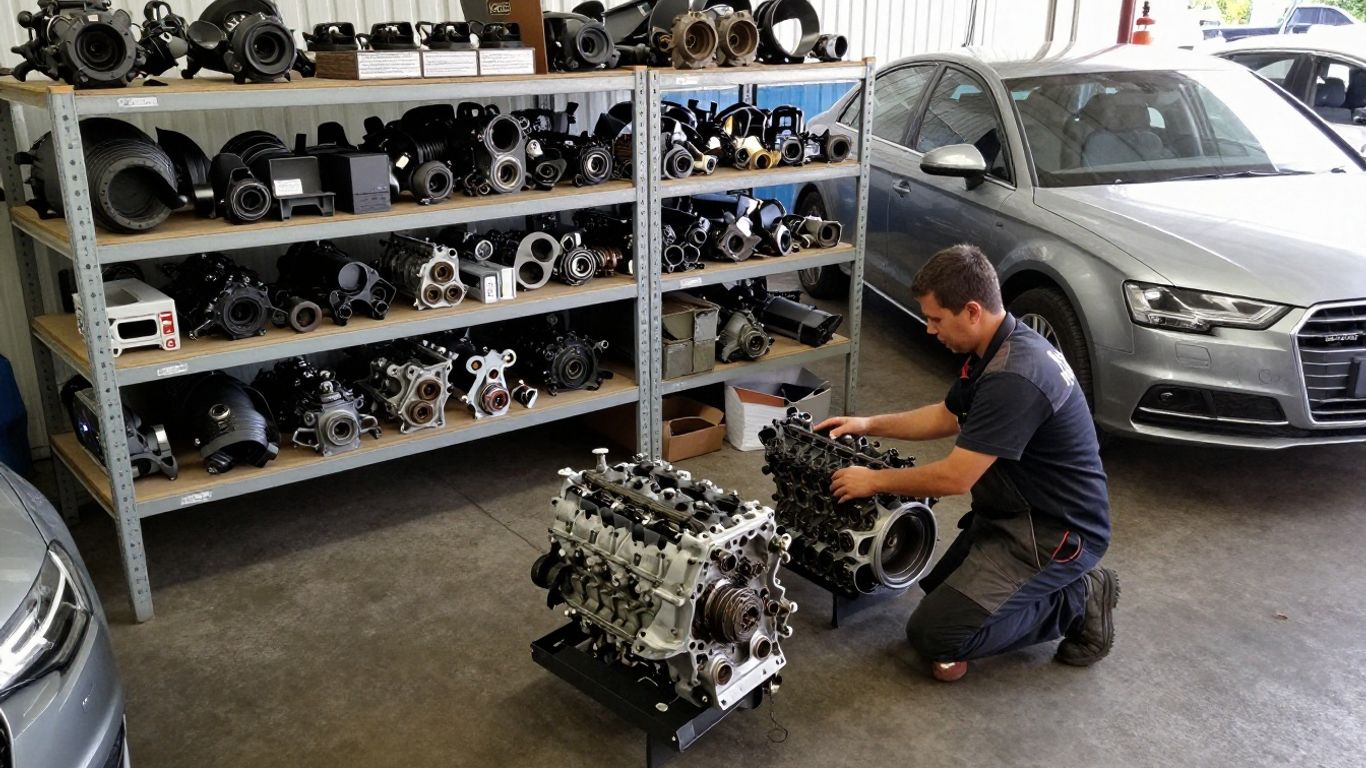
Sydney buyers have several ways to source replacement components, from local yards to online inventories and phone enquiries. Reputation matters because the seller often knows more about the donor vehicle and testing process than the buyer can see from a listing. Look for clear answers, consistent records, and a willingness to discuss fitment before payment.
Check business experience and Audi specialisation
A supplier with experience dismantling Audi vehicles may be better placed to identify model variations and related components. Ask how long the business has handled the marque, which models it regularly sees, and whether staff can provide the original part number. Specialisation should be supported by specific answers, not just a broad claim of expertise.
The Fairfield Auto Parts page describes a Sydney operation that dismantles Audis weekly and checks used parts before sale. That information is a useful example of the kind of sourcing and preparation detail a buyer can look for, though every individual part still needs separate verification.
Review customer feedback and local reputation
Read feedback for patterns rather than relying on one enthusiastic or critical comment. Pay attention to whether customers mention accurate descriptions, communication, packaging, delivery, and how problems were handled. Local reputation can also be checked through established business details and direct conversations with workshops that regularly buy used components.
Be cautious when reviews make sweeping promises without describing the actual transaction. A reputable supplier should be comfortable explaining what its warranty covers and what evidence it needs if a part arrives damaged or proves incompatible.
Confirm inventory, sourcing, and dismantling practices
Ask whether the part is physically in stock, already removed, and ready for dispatch. Find out whether the donor vehicle was damaged at the front, rear, side, or mechanically, since that context can affect the condition of seemingly unrelated components. Responsible dismantling also reduces the chance that fragile connectors, mounts, or surrounding parts were damaged during removal.
For buyers dealing with an unwanted donor vehicle as well as a replacement purchase, Audi Wreckers Kirrawee describes vehicle dismantling and parts supply in the Kirrawee area. Treat such pages as a starting point for questions about sourcing rather than as a substitute for checking the specific component.
Compare online and in-person buying options
Online buying is convenient when the listing includes clear photographs, part numbers, condition notes, and delivery terms. In-person collection gives you a chance to inspect the item and clarify details before taking it away. Either route can work, provided the seller confirms the exact item and documents the transaction.
A local supplier may also make exchanges simpler if the part does not fit. Conversely, a larger online inventory can help locate an uncommon component. Audi Wrecking is an example of a parts operation advertising Audi, Volkswagen, and Skoda components with delivery across Australia; buyers should still confirm freight protection and returns for their order.
Verify compatibility before buying a used Audi part
Compatibility is the point at which a promising listing either becomes useful or falls apart. Audi vehicles can share appearances while differing in electronics, engine configuration, transmission, or production revision. Confirming the details before purchase is cheaper than discovering a mismatch after the old part has been removed.
Match the model year, generation, and engine
Record the model designation, build date, generation, engine code, and transmission before contacting a supplier. The registration details may help, but they are not always enough to identify a particular revision. A vehicle produced near a model-year change may use a different component from an otherwise similar car.
Send the supplier the complete information rather than asking whether a part fits “an Audi” or a broad model range. Clear details make it easier to distinguish a genuine match from a part that merely looks similar.
Use the VIN and original part number
The VIN gives the seller a reliable starting point for checking the vehicle configuration. The number printed or stamped on the original component is even more useful for many purchases, although suffixes and revisions must be read carefully. Photograph the label before removal if access allows it.
Do not assume that a close-looking number is interchangeable. Ask whether the replacement number supersedes the original, and request written confirmation when the seller says it does. Keep the old part until the replacement has been checked, unless retaining it creates a safety or storage issue.
Check trim, transmission, and drivetrain differences
Trim level can change sensors, lighting, seats, control modules, and interior fittings. Transmission and drivetrain differences can affect axles, gearboxes, mounts, differentials, and control systems. Even body panels may vary by equipment package, parking sensors, cameras, or styling revision.
A useful comparison should include the part’s connector layout, mounting points, dimensions, and software requirements where relevant. Photos help, but they should support—not replace—the number and VIN check.
Ask for compatibility confirmation from the seller
Before paying, ask the supplier to confirm the match in writing and list the vehicle details used to make that decision. Ask what happens if the part does not fit despite the information provided. This creates a clear record and may reveal whether the seller has actually checked the application.
For complex items, a workshop can review the part number before ordering. Spending a few minutes on that check is worthwhile when shipping, installation, or coding will add to the cost.
Inspect the condition and history of each part
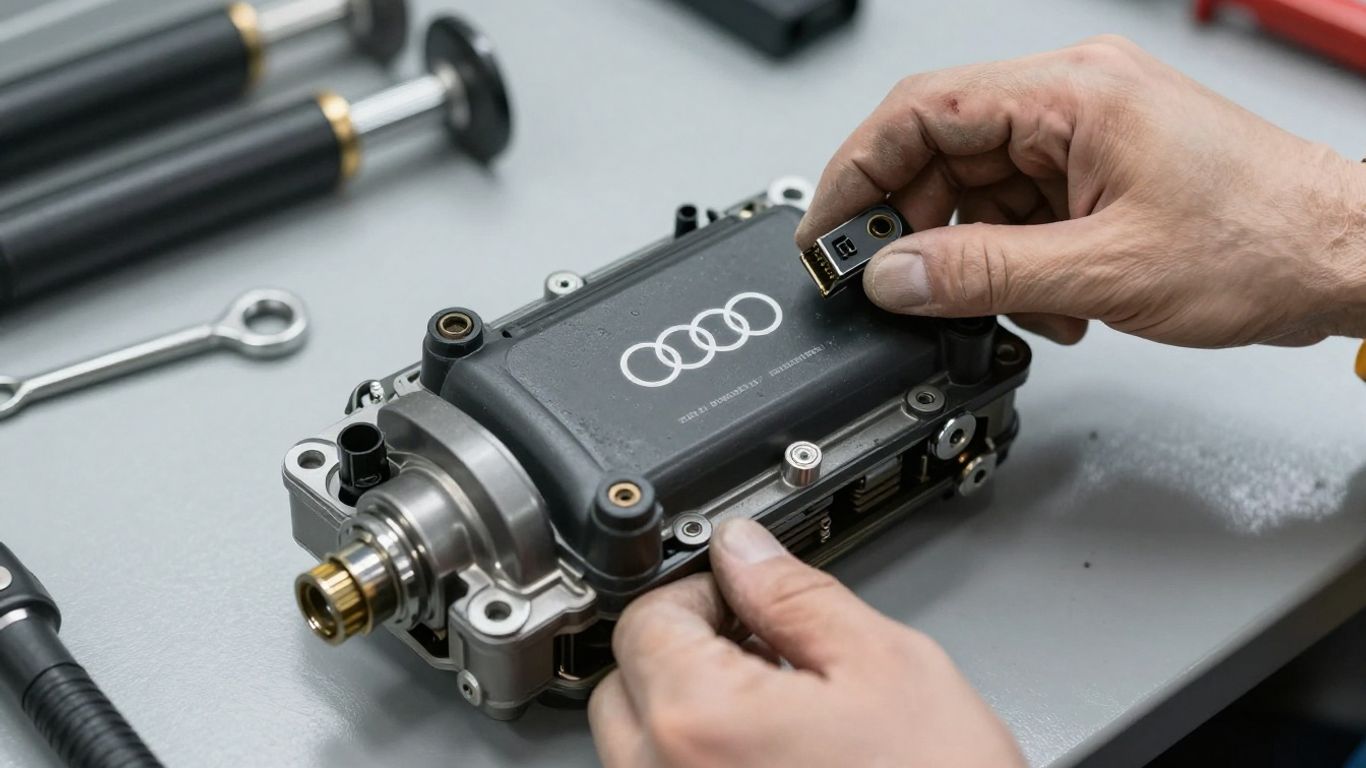
A used part’s description should tell you more than whether it is “good.” Look for evidence of how it was removed, stored, and assessed. Condition is easier to judge when photographs, donor-vehicle details, test results, and limitations are supplied together.
Look for signs of wear, corrosion, or accident damage
Inspect mounting tabs, seals, housings, connectors, fasteners, and painted surfaces. Scrapes or bent brackets can indicate removal damage, while corrosion may point to moisture exposure or poor storage. For mechanical parts, ask about leaks, unusual play, scoring, cracks, and missing hardware.
Accident damage can travel beyond the visibly crushed area, so the donor vehicle’s impact location matters. A part can look clean and still have suffered a shock that is not obvious in a single photograph.
Ask about mileage and vehicle source
Mileage is useful context for engines, transmissions, suspension components, and electric motors, although it is not a complete condition report. Ask whether the donor vehicle was running, written off after collision, affected by flood or fire, or dismantled for another reason. A supplier may not know every detail, but an honest answer about what is unknown is better than false certainty.
The source also helps you judge which parts may have been exposed to impact. Request the donor model, year, and approximate mileage, then compare those details with your own vehicle and the intended use of the component.
Check electrical and electronic components carefully
Electronic parts need extra care because visible condition says little about internal operation. Check connectors for bent pins, water marks, damaged locking tabs, and cut wiring. Ask whether the unit was tested, whether it requires coding, and whether the seller can explain its return position if it fails.
Modules, sensors, cameras, and control units may also depend on the vehicle configuration. Confirming the correct part number is essential, and professional assistance may be needed after installation.
Request photos, testing details, or inspection access
Ask for photographs of the actual part rather than generic catalogue images. Useful images show labels, connectors, mounting points, damaged areas, and the overall condition. If the part is mechanical or electronic, ask what testing was completed and what was not tested.
The buying decision should become clearer after those questions. If the seller avoids basic requests or cannot identify the item in stock, pause before sending payment. A short inspection or video call can prevent a long dispute.
Buy quality used Audi parts with confidence
Confidence comes from matching the part, seller, price, and paperwork—not from assuming that every used component is equal. Before payment, make sure the agreement covers the item supplied, its stated condition, and the remedy if it is wrong or defective. A little administration protects both sides.
Understand warranties, returns, and exchange policies
Read the warranty period, exclusions, labour position, and testing requirements before buying. Ask whether the part must be installed by a qualified technician and whether seals, fluids, or accessories are excluded. Return windows may also begin on dispatch rather than installation, so clarify the timing.
A warranty is only useful when the process is practical. Confirm who pays return freight, whether an exchange is offered, and what photographs or diagnostic information the seller needs. Keep the original packaging until the part has been checked and tested.
Confirm pricing, availability, and delivery times
Ask whether the quoted price is for the exact photographed item and whether taxes, freight, core charges, or deposits apply. Confirm that the part is available now rather than merely searchable in a catalogue. Delivery estimates should account for handling and regional transport, particularly when the car is already off the road.
For another Sydney-oriented source, Rex Auto Parts describes used Audi parts arising from vehicle recycling and removal services. Whatever source you choose, compare the written price and terms for the actual part rather than relying on a general advertised offer.
Choose safe collection or shipping options in Sydney
For collection, check whether the part can be safely loaded and transported without damaging connectors, glass, panels, or fluids. For delivery, ask how fragile items are packed and whether damage in transit is covered. Photograph the parcel before opening it if the packaging looks crushed or wet.
Arrange collection during business hours when possible so questions can be answered at handover. If the item is heavy or awkward, use suitable lifting equipment rather than risking injury or dropping the part.
Keep records of invoices and part numbers
Save the invoice, listing, photographs, messages, warranty terms, donor details, and part number in one place. These records make a return or exchange much easier and help a technician understand what was fitted. They also create a useful history for future repairs.
If you are managing several repairs, label each component as it arrives. A simple record prevents similar-looking parts from being mixed up and preserves the compatibility information you worked to obtain.
Install and maintain used Audi replacement parts
The purchase is only one stage of a successful repair. Correct installation, system setup, and post-installation checks determine whether the used part performs as expected. Some jobs are straightforward, while others require specialist tools, programming, or a controlled diagnostic process.
Decide when professional installation is needed
Use a qualified technician for braking, steering, suspension, fuel, airbag, high-voltage, and major drivetrain work unless you have the required training and equipment. Professional installation can also protect warranty conditions and reveal related faults before the replacement is fitted.
For simpler trim or non-safety items, a capable owner may be able to complete the work with the correct instructions. Stop if fasteners are seized, wiring is unclear, or the replacement does not align without force.
Complete coding or calibration for electronic parts
Some electronic replacements may require coding, adaptation, calibration, or configuration after fitting. Ask the supplier and installer what the part needs before ordering, since a component that physically fits may not operate correctly without setup. Camera, sensor, module, and control-unit work can be particularly sensitive to vehicle configuration.
Use the correct diagnostic procedure and record any fault codes before clearing them. If calibration is required, confirm that it was completed rather than assuming that a warning light will disappear on its own.
Test the replacement after installation
Test the repaired system in a controlled setting before returning to normal driving. Check for leaks, warning lights, unusual noises, vibration, poor alignment, loose trim, and intermittent electrical faults. A road test should begin gently and follow the technician’s advice.
A replacement that appears to work at idle may behave differently under load or during braking. Record the test results and report any abnormal behaviour promptly, while the installation details are still fresh.
Monitor performance and address issues early
Pay attention to changes during the first days and weeks after installation. Recheck accessible fasteners, fluid levels, warning messages, and operating temperatures where appropriate. Do not continue driving a vehicle that develops a serious safety symptom simply because the part was recently replaced.
Early contact with the supplier and installer gives you the best chance of resolving a fault under the agreed policy. Keep the removed part until the repair is confirmed, unless it must be returned as a core or cannot be stored safely.
Conclusion
Finding quality used Audi parts Sydney drivers can trust is a matter of disciplined checking: identify the exact component, investigate its history, confirm the seller’s terms, and install it correctly. With those steps in place, a used part can be a practical repair option without turning the search for savings into a gamble.
Frequently Asked Questions
Are used Audi parts reliable?
They can be reliable when the part is compatible, properly inspected, and sourced from a seller that explains its condition and provides clear terms. Reliability still varies by component and donor-vehicle history.
How do I know whether a used Audi part will fit?
Use the vehicle identification number, model and build details, engine and transmission information, and the original part number. Ask the seller to confirm compatibility in writing before payment.
Is a used part better than an aftermarket part?
Neither option is automatically better. Compare the manufacturer, specification, condition, warranty, price, and likely service life for the specific repair.
Which Audi parts should usually be bought new?
New parts may be the safer choice for certain safety-critical, highly stressed, sealed, or difficult-to-test components. A qualified technician can help assess the risk for the individual vehicle.
What should I ask an Audi wrecker before buying?
Ask about the donor vehicle, mileage, accident or flood history, testing, exact part number, compatibility, warranty, returns, availability, and delivery or collection arrangements.
Do used electronic Audi parts need coding?
Some electronic components may need coding, adaptation, or calibration after installation. Confirm the requirement before purchase and arrange the correct diagnostic work.
What paperwork should I keep after buying a used part?
Keep the invoice, part number, listing, photographs, messages, warranty terms, donor details, and installation records. These documents help with troubleshooting, returns, and future maintenance.