

Key Takeaways
Audi spare parts from wreckers can be a sensible way to control repair costs, provided the part is identified and inspected carefully.
- Used OEM parts may offer factory fit at a lower price than new components.
- The VIN, engine code, transmission, and part number are central to fitment.
- A trustworthy wrecker should provide clear condition details, policies, and photos.
- Electronic, safety-critical, and heavily worn parts deserve extra scrutiny.
- The cheapest listing is not always the lowest total-cost option.
Understand the benefits and limitations of wrecker parts
Wrecker parts sit between two common repair choices: buying new and replacing the vehicle. They can preserve factory specifications without carrying the price of a new dealer-supplied component. At the same time, their history is not always complete, so the buyer has to balance savings against uncertainty. That balance matters especially on newer Audi models with complex electronics and tightly matched systems.
Why used Audi parts can cost less
A salvaged component has already absorbed much of its original depreciation. If it came from a vehicle with a damaged body but a sound engine, light, or control module, the usable part may still have considerable life left. Labor, testing, shipping, and return terms can affect the final price, but a used part is often an economical starting point for an older vehicle.
The savings are most useful when the replacement is a bolt-on component with a clear identity. A mirror, door shell, wheel, or trim piece is generally easier to price and evaluate than a part whose condition depends on internal wear.
OEM quality versus aftermarket alternatives
An OEM part removed from another Audi was made for the vehicle family, but OEM origin alone does not prove that it is in good condition. A used factory part may fit more predictably than an inexpensive aftermarket substitute, while a new aftermarket part may still be the better choice when the design is simple and the supplier is dependable.
Compare the construction, warranty, availability, and installation requirements rather than assuming that one category always wins. For a direct comparison, write down the part number and the complete delivered price before making a decision.
Common risks with salvaged components
The main risks are hidden wear, corrosion, water exposure, prior collision damage, and incorrect cataloging. A component can look clean in a photograph while having a bent mounting point or a connector damaged during removal. Mechanical parts may also have unknown mileage or maintenance history.
Condition matters more than age alone. Ask where the part came from, whether it was tested, and whether the seller can explain any visible damage. A careful seller will not treat vague descriptions as a substitute for inspection.
When new or refurbished parts are the better choice
New or professionally refurbished parts are often preferable for components that protect occupants, control braking, or determine whether the vehicle can be started. They may also make more sense when the used price is close to new pricing after shipping and installation. Consumables such as seals, belts, filters, and some sensors are usually poor candidates for uncertain used stock.
A refurbished part can be a middle ground, but ask what work was performed and what testing supports the warranty. The answer should be specific enough for a mechanic to judge the risk.
Identify the correct Audi spare part
Correct identification prevents most avoidable problems with Audi spare parts from wreckers. Model names overlap across generations, and a part that looks identical can differ by engine, drivetrain, body style, or production period. Begin with the vehicle itself, then confirm the component using several independent identifiers. Never rely on a photograph or a short marketplace title alone.
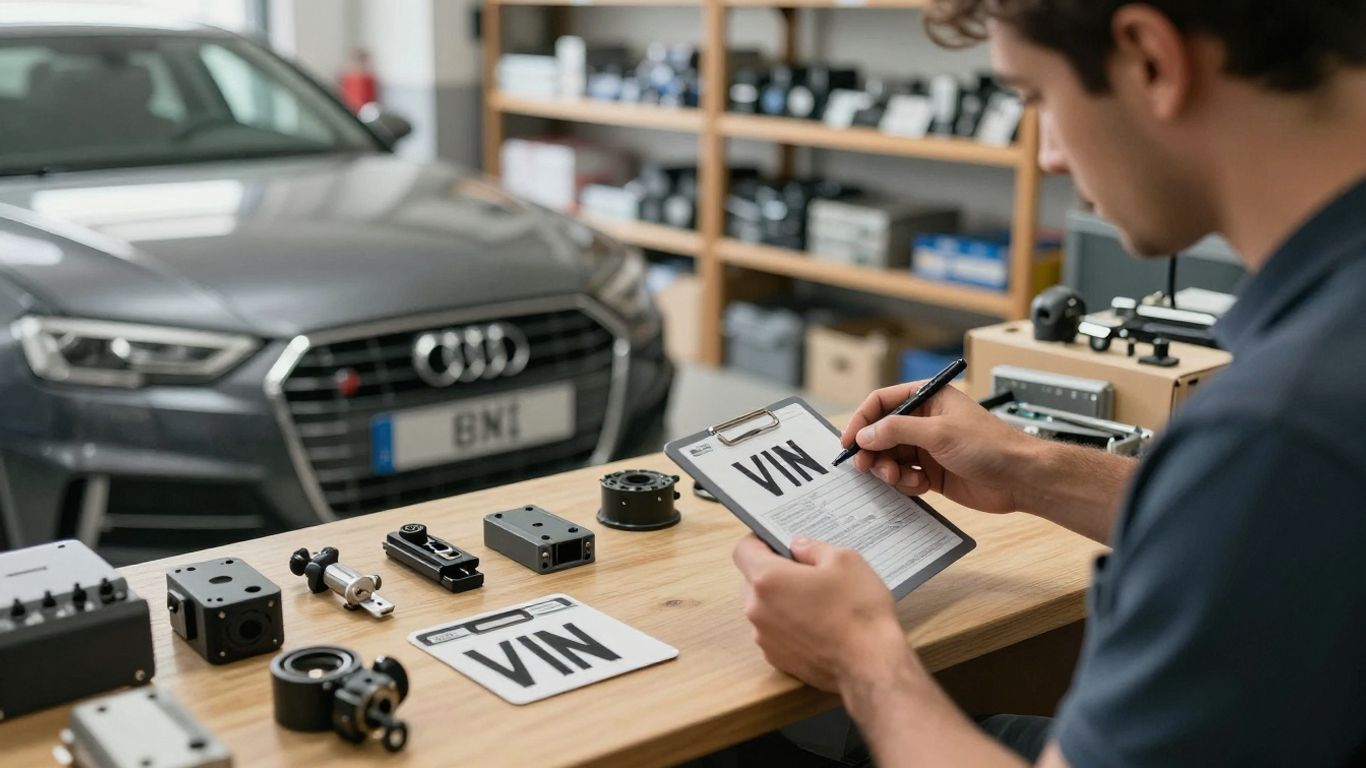
Match the part to the Audi model and year
Record the exact model, model year, body style, and production date if available. An A4 sedan and an A4 Avant may share many mechanical parts but not every exterior or interior component. The same model can also receive mid-cycle updates that change lighting, trim, wiring, or mounting details.
When searching online, narrow the listing by generation and body style before contacting the seller. If the listing covers a broad range of years, treat that as a prompt to verify rather than as proof of compatibility.
Use the VIN, engine code, and transmission details
The VIN identifies the individual vehicle and gives a parts specialist a stronger starting point than a registration description. Engine and transmission codes add another layer of precision, particularly when a model was sold with multiple powertrains. For drivetrain work, also confirm front-wheel drive or all-wheel drive and the relevant transmission type.
Send a clear photograph of the vehicle identification label and the old part label when appropriate. Redact personal information from documents, but leave the technical identifiers readable.
Check part numbers and compatibility
Compare the number printed or molded on the old component with the number in the listing. Superseded numbers may be valid replacements, while a visually similar number may refer to a different revision. Ask the seller to confirm whether the number is an exact match, a documented replacement, or merely a suggested alternative.
A small record can make this process less confusing. Keep the old number, donor vehicle details, seller reference, and return deadline together until the repair is complete.
Account for trim levels and performance variants
S line, RS, Sport, and other performance or trim variations can change suspension settings, brakes, body panels, seats, and electronics. Wheels and brake assemblies may also depend on diameter, axle, and option codes. If the vehicle has been modified, identify the original specification and the parts currently installed before ordering.
For specialist performance components, J&J Auto Wrecking is one example of a listing source that describes used Audi RS parts, including engines, transmissions, AWD systems, and suspension parts. Verify every listing against the individual car rather than assuming that a performance badge guarantees a match.
Choose a reliable Audi wrecker
The seller matters nearly as much as the component. A professional dismantler should be able to identify the donor vehicle, describe the part honestly, and explain what happens if it does not fit or fails shortly after installation. Good communication is useful before payment, not just when a problem appears. It also helps to compare several listings without treating the lowest advertised price as the deciding factor.
What to look for in a reputable dismantler
Look for consistent stock information, legible photographs, a physical business identity, and a straightforward way to ask technical questions. The seller should distinguish between tested, untested, damaged, and incomplete parts. If the answer to a basic fitment question is evasive, move on.
Sources such as Tom’s Foreign Auto Parts describe used OEM Audi components including engines, transmissions, and headlights. That kind of category information can help you understand what a recycler stocks, but you still need confirmation for your specific vehicle.
Comparing local yards with online Audi recyclers
A local yard may let you inspect a component in person and avoid some shipping expense. An online recycler can offer a wider search area, more photographs, and a better chance of finding an uncommon trim or drivetrain part. Local availability changes quickly, while online listings may remain visible after a part has sold, so confirm stock before traveling or ordering.
For regional searches, California Audi inventory illustrates why yard location and vehicle date can matter. Treat any inventory page as a snapshot and ask whether the vehicle or part is still available.
Checking inventory, warranties, and return policies
Before paying, ask whether the part is physically in stock, how long the warranty lasts, and whether the warranty covers parts, labor, or only a replacement component. Clarify who pays return shipping and whether a restocking fee applies. Engines and transmissions may have different terms from body panels or interior pieces.
A written policy is easier to use than a verbal promise. Save the listing, messages, photographs, and invoice until the part has been installed and tested.
Evaluating reviews, photos, and seller information
Reviews are most useful when they discuss accurate descriptions, packing, communication, and how problems were resolved. Look for photographs of the actual component, not only generic catalog images. Seller details should include a business name, contact method, location, and enough technical information to identify the item.
Wolf Auto Parts is an example of an online listing source that describes photographed, cataloged, quality-tested European parts and includes OEM numbers. Use those details as a checklist when comparing listings from any seller.
Find the most commonly available Audi spare parts
Wreckers tend to have the strongest supply of parts removed from common models and recently dismantled vehicles. Availability is still uneven: a popular headlight may be easy to locate while a particular control module or undamaged interior trim may take patience. Start with the systems that match the vehicle and repair, then widen the search only when fitment remains clear.
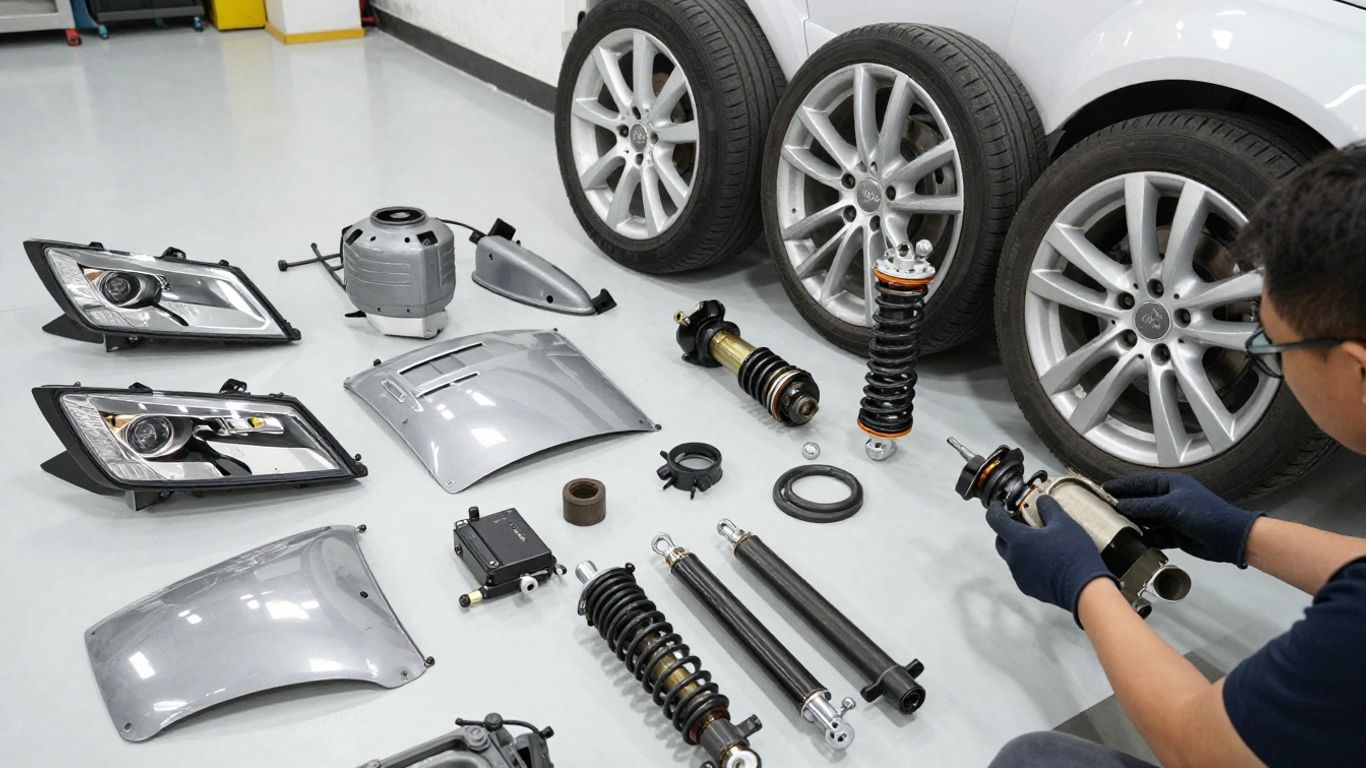
Body panels, lights, and exterior trim
Doors, hoods, fenders, mirrors, grilles, bumpers, lamps, and trim are frequent wrecker finds. Their value depends heavily on color, finish, mounting tabs, lens condition, and whether the panel came from a side or end impact. A panel with minor cosmetic wear can still be practical if repainting is already planned.
Ask for photographs of the edges, fastener points, lamp connectors, and any areas near the original collision. Those details often reveal more than a front-facing image.
Engines, transmissions, and drivetrain components
Complete engines, transmissions, transfer cases, differentials, axles, and related accessories may be available, but they require more diligence than cosmetic parts. Confirm donor mileage when documented, compression or operational testing when offered, fluid condition, and what accessories are included. A bare engine is not the same purchase as a complete, ready-to-install assembly.
For a broad search, U Need A Part describes a network-based way to locate used Audi engines, transmissions, body parts, and other components. Network listings can expand the search, but the actual seller remains responsible for condition, fitment, and terms.
Suspension, steering, and brake parts
Control arms, hubs, knuckles, steering racks, calipers, springs, and other chassis components can reduce repair costs, though wear is often difficult to judge from appearance. Bent parts, seized fasteners, leaking seals, and uneven corrosion deserve particular attention. Safety-related components should be sourced only when their history and condition are sufficiently clear.
Compare the used option with the cost of new wear items that will be replaced during the same job. A used assembly may still need bushings, bearings, pads, or hardware before it is ready for service.
Interior electronics and comfort components
Instrument clusters, radios, climate controls, switches, seats, door modules, and window regulators are common candidates. Check connector condition, screen damage, mounting tabs, and whether programming or a security procedure will be required. Interior parts can also differ by color, trim material, seat position, and optional equipment.
A seller should state whether the component was tested and whether the price includes brackets, bezels, wiring, or modules attached to it. Those small omissions can turn an apparently cheap purchase into a second order.
Inspect used Audi parts before buying
Inspection begins before the package arrives. Ask focused questions, request missing photographs, and compare the description with the vehicle’s likely failure mode. If the part is too large or expensive to return, spend more time on verification before ordering. A short delay is usually cheaper than paying twice for removal and installation.
Reviewing photos and condition descriptions
Actual-part photographs should show the front, rear, connectors, mounting points, labels, and any damage. Zoom in on scratches, broken clips, stains, or mismatched surfaces. Descriptions such as “good used condition” are not enough unless they are supported by specific information about operation and defects.
Keep a copy of the images that influenced the purchase. They provide a useful reference if the delivered part differs from the listing.
Checking for corrosion, cracks, and impact damage
Inspect metal edges for rust, aluminum housings for cracks, plastics for stress marks, and mounting points for distortion. On parts from a collision-damaged donor, damage may extend beyond the visibly crushed area. Water intrusion is especially concerning around modules, connectors, carpets, and electrical junctions.
If the seller cannot show a hidden side or attachment point, ask directly whether it has been inspected. A transparent “not checked” is more useful than an unsupported assurance.
Verifying mileage and operating history
Mileage is helpful for engines, transmissions, instrument clusters, and some suspension assemblies, but it is not always available or independently verified. Ask whether the mileage came from the donor vehicle record, an instrument display, or a seller estimate. Also ask if the donor was running before dismantling and whether the component was removed from a flood or fire-damaged vehicle.
Do not treat a low mileage figure as a guarantee. Condition, maintenance, storage, and testing may matter just as much.
Confirming whether the part includes required hardware
A component may be listed as complete while excluding bolts, brackets, sensors, keys, modules, or trim covers. Make a short installation list before ordering so the seller can confirm what is in the box. This is particularly useful for lights, seats, engines, transmissions, and electronic assemblies.
Related buying habits apply in other parts of life too: a 2026 buyer’s guide compares options by specifications, while water filtration components are selected by system compatibility rather than appearance. The same principle is simple here: identify the complete requirement before comparing prices.
Buy Audi spare parts safely and affordably
A fair purchase includes more than the headline price. Compare condition, fitment confidence, warranty, shipping, and the work needed to install the part. A slightly more expensive listing may be cheaper overall if it arrives complete and can be returned without a dispute. Keep the transaction documentation organized from the first inquiry.
Comparing prices for used OEM parts
Gather two or three comparable quotes using the same part number and condition standard. Check whether one listing includes accessories that another excludes, and distinguish tested parts from untested ones. For engines and transmissions, compare the warranty period and coverage before comparing the numbers.
Price comparisons become much clearer when you record the following details:
- Exact part number and supersession status
- Donor model, year, mileage, and drivetrain
- Tested or untested condition
- Included hardware and accessories
- Warranty, return, and shipping terms
This list keeps an attractive but incomplete quote from appearing cheaper than it really is.
Calculating shipping, taxes, and installation costs
Large body panels, engines, glass, and transmissions can carry substantial freight charges or special handling fees. Add sales tax, delivery surcharges, shop labor, fluids, seals, programming, and disposal costs to the estimate. If the part requires a core return, include the time and freight involved in sending the old unit back.
Ask the installer to review the part before the vehicle is dismantled. That can prevent a second labor charge if the item is wrong or incomplete.
Protecting payments and personal information
Use a payment method with documented purchase protection and complete the transaction through a secure, recognizable channel. Be cautious when a seller pressures you to pay outside the platform or requests unnecessary personal documents. Share only the vehicle details needed for fitment, and keep confirmation emails and receipts.
Never send payment until the seller has confirmed stock and the agreed terms. A written message describing the part and warranty can prevent confusion later.
Understanding warranties, returns, and core charges
Read the exclusions carefully. Some warranties require professional installation, prohibit opening a sealed assembly, or cover replacement but not labor. Return periods may begin on delivery, and core charges may be refunded only after the old component is received and accepted.
For a broader reminder about evaluating financial terms, term and whole life coverage is a useful example of why labels alone do not explain conditions. In parts buying, ask the same practical questions: what is covered, for how long, and what action is required when something goes wrong? A separate acquisition multiples guide also illustrates the value of checking assumptions rather than relying on one headline number.
Install and maintain wrecker-sourced Audi parts
Installation is where a good purchase either proves its value or exposes a hidden problem. Before fitting the component, compare it with the removed part and check connectors, brackets, seals, and mounting surfaces. Follow the vehicle’s service information for torque values and safety procedures. Keep the packaging until the initial test is complete.
Deciding between professional and DIY installation
Simple trim, mirrors, lamps, and some bolt-on panels may suit an experienced DIY owner with the right tools. Engines, transmissions, airbags, suspension geometry, brakes, and high-voltage systems call for professional equipment and training. If a mistake could affect braking, steering, occupant protection, or immobilization, the shop bill is usually a reasonable form of risk control.
Ask the mechanic whether they will inspect a customer-supplied part before installation and what happens if it fails. Get that policy in writing.
Programming electronic and immobilizer-related components
Control modules, instrument clusters, keys, radios, and some lighting or comfort modules may need coding, adaptation, or security matching after installation. A physically compatible module may not function correctly until the vehicle recognizes it. Confirm the programming requirement before buying and identify who will perform it.
Do not assume that a seller can supply the required security data or that every repair shop can complete the procedure. The vehicle and module details should be checked together.
Replacing seals, fluids, and wear items during installation
A used assembly may be sound but still need fresh seals, gaskets, fluids, filters, clips, or one-time-use fasteners. Replacing inexpensive wear items while access is easy can reduce the chance of repeating the same labor. For drivetrain work, use the correct fluid specification and check for leaks after filling.
The installer should document what was replaced and retain the old parts when practical. That record makes later diagnosis easier.
Testing the vehicle after fitting the part
Test the repair in stages. First inspect fasteners, wiring, fluid levels, warning lights, and leaks with the vehicle stationary. Then perform a cautious road test and confirm the original symptom has changed without introducing a new noise, vibration, warning, or handling issue.
For electronic components, scan for fault codes and verify every related function. If anything is abnormal, stop driving and contact the installer or seller before the return deadline expires.
Conclusion
Audi spare parts from wreckers can deliver useful savings when the part is matched carefully, inspected honestly, and bought with clear protection. Confirm the vehicle details, compare the complete cost, and give extra attention to safety-critical and electronic components. A patient search is usually more rewarding than a rushed bargain.
Frequently Asked Questions
Are Audi spare parts from wreckers reliable?
They can be reliable when the donor vehicle, condition, mileage, and testing history are known. Reliability varies by component, storage, prior use, and the seller’s inspection process.
How do I know whether a used Audi part will fit?
Use the VIN together with the model year, body style, engine code, transmission, drivetrain, and original part number. Ask the seller to confirm compatibility in writing before payment.
Is a used OEM part better than a new aftermarket part?
Neither is automatically better. Compare construction, condition, warranty, fitment confidence, and total cost for the specific component and repair.
Which Audi parts are commonly found at wreckers?
Body panels, lights, mirrors, trim, engines, transmissions, suspension parts, wheels, interior pieces, and some electronics are commonly listed. Availability changes by model and location.
Should I buy a used engine or transmission?
You can, but request donor mileage, operating history, testing details, included accessories, and warranty terms. A professional inspection is sensible before installation.
Do used Audi electronics need programming?
Some modules, clusters, keys, radios, and related electronics may need coding or security matching. Confirm the requirement with a qualified technician before ordering.
What should I do if the part arrives damaged or incorrect?
Photograph the packaging and part immediately, avoid installing it, and contact the seller through the documented channel. Follow the stated return process before making repairs or discarding packaging.