

Key Takeaways
A used Audi transmission can be a sensible repair, but only when its identity and condition are properly checked. These are the points worth keeping in front of you while comparing listings.
- Match the gearbox code, part number, engine, drivetrain, and VIN before ordering.
- Treat mileage and donor-vehicle history as useful evidence, not a complete guarantee.
- Compare the total fitted cost, including shipping, fluids, seals, labor, and possible core charges.
- Ask for clear photographs, test details, warranty terms, and return conditions in writing.
- Allow for coding, adaptation, and post-installation testing where the vehicle requires it.
Understand Audi gearbox types and compatibility
Audi transmissions vary considerably between models, engines, production years, and drivetrains. A gearbox that looks right in a photograph may still have different ratios, mounting points, electronics, or output arrangements. The safest approach is to identify the original unit first and then compare the replacement against several matching details.
Manual, automatic, and dual-clutch gearbox differences
Manual gearboxes use a clutch and driver-operated gear selection, while conventional automatics use hydraulic and electronic systems to manage shifts. Dual-clutch units are another category, with their own mechatronics, clutch packs, fluid requirements, and adaptation procedures. This distinction matters because a listing described simply as “automatic” may not provide enough information to establish compatibility.
Ask whether the replacement is manual, automatic, or dual-clutch, and confirm the exact transmission family rather than relying on the vehicle model alone. The same model badge can have several gearbox choices across its production run. A technician can also confirm whether ancillary parts, such as a flywheel, clutch assembly, driveshaft, or control module, are expected to transfer from the original vehicle.
Identifying Audi transmission codes
The transmission code is one of the most useful identifiers in a used-parts search. It may appear on the gearbox casing, service records, diagnostic documentation, or the vehicle’s original build information. Because codes can be short and easy to misread, take a clear photograph or have a technician verify the characters before contacting sellers.
Do not assume that two units are interchangeable because their external housings look similar. Gear ratios, differential arrangements, sensors, and software can differ beneath an almost identical casing. Record the code, part number, and any suffixes exactly as shown.
Matching the gearbox to the engine and drivetrain
Engine output, torque characteristics, drive layout, and differential design all influence gearbox fitment. A front-wheel-drive transmission is not automatically suitable for a quattro vehicle, and a gearbox paired with one engine variant may not suit another even within the same model generation. The donor vehicle’s full specification is therefore more useful than a broad description such as “A4 gearbox.”
Use a written comparison before buying: vehicle model, generation, year, engine code, gearbox code, drive layout, and part number. The complete combination matters more than any single matching label. If one detail is unknown, pause the purchase and ask for it rather than treating uncertainty as an acceptable risk.
Why the vehicle identification number matters
The VIN provides a strong starting point for checking the vehicle’s build details and original configuration. It can help a parts specialist distinguish between similar engines, body generations, drivetrains, and transmission options. VIN information does not remove the need to compare the physical gearbox code, but it can expose a mismatch early.
Provide the VIN to the seller and ask them to confirm exactly what their match is based on. Keep the response with the quotation or order record. That small paper trail can be valuable if the part arrives with an unexpected code or if the return process later becomes necessary.
Find reliable second hand Audi gearboxes
The quality of a used gearbox search depends as much on the seller as on the part itself. Specialist dismantlers, established salvage yards, and experienced parts suppliers may be able to provide donor details and test information that a casual listing cannot. Even so, the buyer remains responsible for checking fitment and reading the terms carefully.
Audi dismantlers and specialist parts suppliers
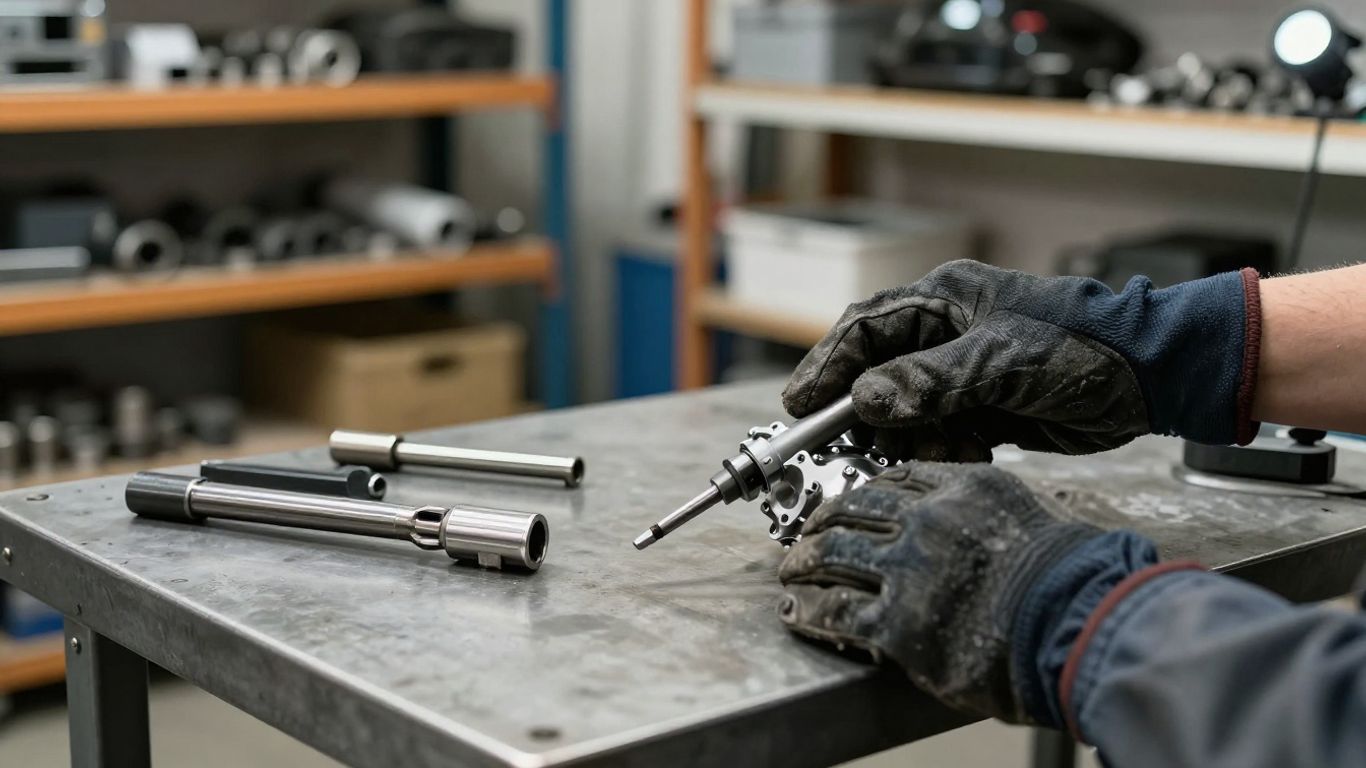
A dismantler may know the donor vehicle, record its mileage, and identify the gearbox before removing it. Ask whether the unit was inspected while installed, whether it turns freely, and whether any associated warning lights or drivetrain faults were recorded. A supplier with a clear stock system should also be able to provide photographs of the actual unit rather than generic catalogue imagery.
For comparison, Chuck and Eddie’s describes a used-parts inventory that includes transmissions and says parts are inspected twice before shipping. That information can be a useful example of the questions to ask any supplier, but it should not replace checking the specific gearbox offered for your car.
Online marketplaces and salvage yards
Online marketplaces make it easier to compare prices and locate uncommon units, but listings vary widely in detail. Look for a real part number, donor vehicle information, mileage, photographs, dispatch location, and a named warranty or returns process. Be cautious when the listing uses only a model name and year without a transmission code.
A specialist search service can reduce the time spent contacting separate yards. Automotix, for example, presents used OEM Audi parts online and describes a part-locating route through salvage yards when an item is not immediately listed. Whether using a marketplace or a direct yard, obtain the exact specification in writing before payment.
OEM, reconditioned, and used gearbox options
An OEM used gearbox is an original unit removed from another vehicle. A reconditioned gearbox has been opened, inspected, and repaired or rebuilt to a stated standard, although the precise work varies by supplier. A standard used unit may cost less, but its history and remaining service life can be less certain.
The right choice depends on the vehicle’s value, the urgency of the repair, the available warranty, and the cost of removing the gearbox again. AH Parts Dismantlers presents genuine used OEM Audi parts as an affordable repair option, while the broader category still requires the buyer to establish what inspection or testing was actually performed on the particular unit.
Questions to ask the seller before buying
A short, direct conversation can reveal more than a polished listing. Ask questions that produce specific answers rather than general assurances, especially when the gearbox is being shipped across the country. The following points cover the essentials:
- What are the gearbox code, part number, donor VIN, and recorded mileage?
- Was the unit tested, and what checks or fault scans were completed?
- Are the seals, fluid, sensors, brackets, and control components included?
- What warranty period applies, and who pays return shipping if it does not fit?
Save the seller’s answers with the invoice. If the description changes between the conversation and the final order, resolve that difference before the part leaves the supplier.
Assess the condition of a used Audi gearbox
A gearbox can look clean externally and still need substantial work. Condition assessment is therefore about combining several clues: donor history, inspection notes, photographs, fluid evidence, and the seller’s willingness to explain what was tested. No single clue can guarantee the internal condition of a used transmission.
Mileage, service history, and donor vehicle details
Mileage gives useful context, particularly when comparing two otherwise similar units, but it is not a complete health report. A higher-mileage gearbox with consistent servicing may be a more sensible prospect than a lower-mileage unit from a poorly maintained or damaged vehicle. Ask how the mileage was obtained and whether it belongs to the donor vehicle or the part listing generally.
Also ask why the donor vehicle was dismantled. Collision damage, electrical failure, flood exposure, and drivetrain faults carry different risks. If service records exist, look for evidence of correct fluid changes and previous repairs rather than accepting the phrase “removed from a running vehicle” as the whole history.
Signs of wear, leaks, and internal damage
Inspect photographs for cracks, damaged mounting points, corrosion, impact marks, and oil or fluid staining around seals and casing joints. A small amount of residue may have been left during removal, but active leakage, broken connectors, or a distorted casing deserves an explanation. The input and output shafts should also be checked by a qualified technician for abnormal play.
Internal wear cannot usually be diagnosed from photographs alone. Grinding debris in drained fluid, noisy bearings, slipping under load, or delayed engagement may only become apparent during testing. Build that uncertainty into the price and warranty decision rather than assuming a clean casing means a trouble-free installation.
Why photographs and inspection reports matter
Photographs help establish that the seller has the actual part and allow you to compare labels, connectors, housings, and mounting points. Request close images of the code stamp, part number, casing seams, shafts, and any areas with visible damage. An inspection report is more useful when it states what was checked, how it was checked, and what was not checked.
A generic statement such as “fully tested” is difficult to evaluate without supporting detail. Ask for the test conditions and any limitations. This is also where premium used Audi parts listings can provide a useful comparison point when they describe donor-vehicle selection, inspection, or VIN matching; the same evidence should be sought from any seller.
When a tested gearbox is worth paying more for
A tested unit may justify a higher price when the installation is labor-intensive, the vehicle is difficult to keep off the road, or the replacement is a scarce specification. The value comes from reducing uncertainty, not from the word “tested” by itself. Confirm whether the test covered operation, leaks, noise, fault codes, and the relevant electronic components.
Compare the extra cost with the likely cost of removing and refitting another gearbox. A modest premium can make sense when it comes with meaningful documentation and a usable warranty. If the seller cannot explain the test, the label should carry very little weight.
Compare prices and ownership costs
The cheapest listing is rarely the same as the cheapest repair. A gearbox price may exclude delivery, taxes, a refundable core charge, seals, fluids, programming, and labor. Comparing the full installed cost gives a clearer basis for choosing between a used, tested, or reconditioned unit.
What affects second hand Audi gearbox prices
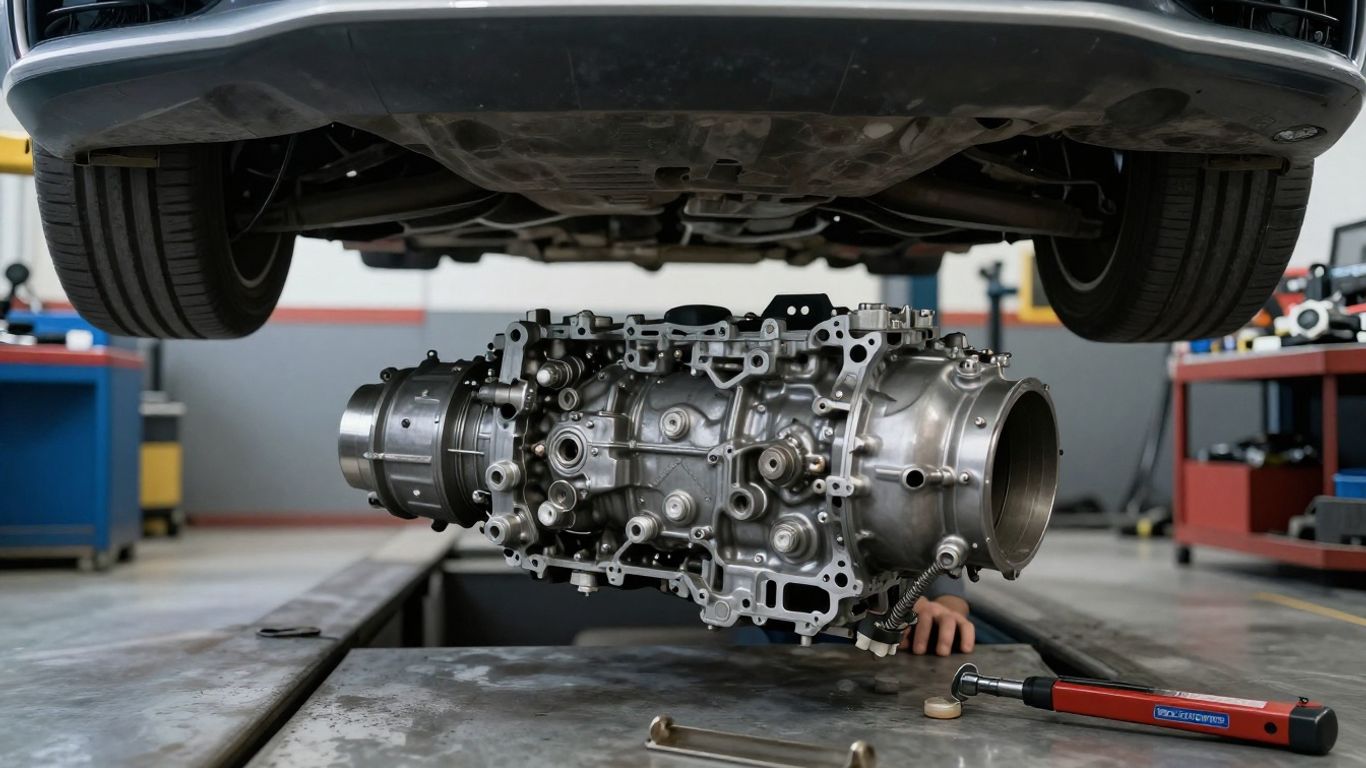
Prices reflect scarcity, gearbox type, vehicle generation, mileage, condition, demand, and the supplier’s inspection process. A common manual unit may be easier to source than a less common dual-clutch or quattro specification. Rebuilt units generally include more labor and replacement components, which changes the initial price but may reduce uncertainty.
Use comparable listings only when the specifications genuinely match. A cheaper transmission with a different code is not a bargain if it requires incompatible electronics or additional parts. Make a note of what each price includes before drawing a conclusion.
Shipping, core charges, and installation fees
Large, heavy gearboxes can be expensive to pack and transport, and damage in transit creates its own delay. Ask how the unit will be secured, whether delivery is insured, and whether the seller requires the old gearbox to be returned. A core charge may be refundable, but only if the old unit meets stated conditions and arrives within the required period.
Installation can include removal, cleaning, new seals, fluid, clutch-related work, programming, and road testing. Request a written estimate from the technician before ordering so that the saving over a reconditioned option is measured against the whole job.
Warranty coverage and return conditions
Read the warranty for duration, covered components, exclusions, claim deadlines, and labor limitations. Some warranties cover the replacement part but not diagnosis, removal, refitting, shipping, or consequential costs. Return conditions may also require the gearbox to remain unopened or to be installed by a qualified workshop.
Keep the invoice, photographs taken on arrival, and the original packaging until the unit has been checked. If a defect appears, notify the seller promptly and follow the stated claim process. Verbal promises are much harder to rely on than written terms.
Used versus reconditioned gearbox value
A used gearbox usually offers the lower entry price, while a reconditioned unit may offer documented internal work and a broader warranty. Neither category is automatically the better choice. The decision should reflect the vehicle’s remaining life, the repair budget, the technician’s recommendation, and the consequences of a second failure.
For a high-mileage vehicle, a tested used gearbox may be a practical compromise. For a vehicle that is otherwise well maintained and expected to stay in service for years, the extra evidence behind a reconditioned unit may be worth considering. Compare like with like, including what the warranty actually pays for.
Verify fitment before placing an order
Fitment checks should happen before payment, not when the delivery arrives. Model names, registration details, and photographs are useful starting points, but they do not always identify every transmission variation. A careful buyer gathers the numbers and asks the supplier to confirm the match.
Checking the gearbox code and part number
Compare the code on your original gearbox with the code supplied by the seller. Check the full part number, including suffixes, because a small variation may indicate a different revision or application. If the original label is inaccessible, a technician or parts specialist may be able to identify it from the VIN and vehicle records.
Ask whether the seller is offering the complete gearbox or a bare transmission. Control units, transfer components, brackets, sensors, and external fittings may not be included. Clarifying the scope prevents an apparent bargain from becoming a second parts search.
Confirming model year and generation
A model name can span several generations, facelifts, engine families, and electronic architectures. Confirm the production year, body generation, engine code, and transmission type together. Do not rely on a listing that says only “fits Audi A3” or “fits Audi Q5” without further detail.
When a seller lists a broad year range, ask which exact vehicles have been confirmed. The answer may reveal that the range covers several gearbox codes rather than one universal unit. Keep the confirmation attached to the order record.
Front-wheel drive versus quattro compatibility
Drive layout is a fundamental fitment issue. Front-wheel-drive and quattro systems can require different housings, output arrangements, ratios, and related drivetrain components. Even where the gearbox appears physically similar, the final-drive arrangement may make it unsuitable.
Tell the seller whether the vehicle is front-wheel drive or quattro and ask them to confirm the replacement on that basis. This detail should also be checked with the technician who will install the unit, particularly when a listing has been sourced from another market.
Using VIN matching to prevent costly mistakes
VIN matching provides an additional check against model and specification errors. Give the complete VIN, not just the registration or model description, and ask the supplier to state whether the match is exact or indicative. A positive match is reassuring, but it should still agree with the gearbox code and part number.
The purpose of VIN matching is to catch contradictions before dispatch. If the VIN points to one drivetrain while the listing shows another, stop and investigate. Paying for a part that cannot be installed is far more expensive than spending another day confirming the details.
Prepare for installation and post-installation checks
The replacement gearbox is only one part of the repair. Preparation affects how smoothly the installation goes, while final checks determine whether a problem is corrected or simply moved into a new set of symptoms. Plan the work with the technician and supplier rather than treating delivery as the finish line.
Choosing a qualified Audi technician
Choose a workshop familiar with Audi drivetrains and the transmission type being installed. The technician should be comfortable with mechanical removal and refitting as well as diagnostic procedures, fluid specifications, and adaptation requirements. Ask what warranty the workshop gives on its labor and how it handles a part that proves faulty.
A qualified technician can also inspect surrounding components while access is available. That may include mounts, axles, clutch parts, wiring, cooling lines, and seals. Addressing an obvious related fault during the same repair can prevent duplicated labor later.
Replacing seals, fluids, and related components
Used gearboxes may need new accessible seals, correct-specification fluid, filters, or one-time-use fasteners before installation. The technician should decide what is appropriate after inspecting the unit and comparing it with the original. Fluid quantity and procedure matter, especially where the transmission uses temperature-based filling or a defined service sequence.
Do not assume every seal or accessory is included with the gearbox. Confirm what arrives in the crate and what the workshop will supply. Recording the parts replaced also creates a useful maintenance history for the next owner or future repair.
Coding, adaptation, and electronic calibration
Some modern transmissions require diagnostic coding, clutch or shift adaptations, module configuration, or calibration after installation. The exact procedure depends on the vehicle and transmission system. A gearbox that is mechanically fitted may still operate poorly if the electronic setup is incomplete.
Ask the technician to explain which procedures are expected and whether any existing fault codes must be cleared or investigated first. A scan before removal and another after installation can help separate an original vehicle fault from a problem introduced during the repair.
Testing the gearbox after installation
The final test should begin with checks for leaks, warning lights, abnormal noises, and correct fluid levels. The technician can then confirm engagement, reverse operation, shift quality, and behavior at different speeds and loads. A cautious road test is more useful than declaring success immediately after the vehicle leaves the lift.
Request a written record of the work, fluid used, diagnostic results, and any follow-up inspection recommended by the workshop. If the gearbox shows delayed engagement, slipping, harsh shifts, or unusual noise, stop using the vehicle and contact the installer and supplier promptly.
Conclusion
Buying second hand Audi gearboxes can reduce repair costs, but the saving depends on careful identification and realistic ownership budgeting. Match the transmission code, drivetrain, engine, VIN, condition evidence, warranty, and installation plan before committing. A few extra questions at the buying stage are usually easier than correcting a mismatched or untested gearbox after delivery.
Frequently Asked Questions
Are second hand Audi gearboxes reliable?
They can be reliable when the specification is correct and the unit comes with credible condition information, suitable testing, and usable warranty terms. Reliability still depends on the individual gearbox and how it is installed and maintained.
How do I find the right Audi gearbox code?
Check the identification marking on the original gearbox, service records, diagnostic information, or vehicle build data. Have a technician confirm unclear characters before comparing them with a seller’s listing.
Is a used gearbox cheaper than a reconditioned one?
A used gearbox usually has a lower purchase price, while a reconditioned unit may include documented repairs and a broader warranty. Compare the complete fitted cost rather than the listing price alone.
Should I provide my VIN to the seller?
Yes. The VIN helps the seller check the vehicle’s original specification, but it should be used alongside the gearbox code, part number, engine, model generation, and drivetrain details.
What should I ask about a gearbox warranty?
Ask how long the warranty lasts, which components it covers, whether labor and shipping are included, how claims are started, and what installation or return conditions apply.
Does quattro require a different gearbox?
Quattro and front-wheel-drive vehicles can use different transmission and final-drive arrangements. Confirm the drive layout and exact gearbox specification before ordering.
What should be checked after installation?
Check fluid level, leaks, warning lights, fault codes, engagement, shift quality, noise, and road performance. Coding or adaptation may also be required, depending on the vehicle and transmission system.