

Key Takeaways
A recycled Audi transmission can be a sensible replacement when its identity, condition, and compatibility are properly confirmed.
- Match the unit by VIN, transmission code, drivetrain, and production year.
- Ask for donor-vehicle details, mileage, inspection records, and warranty terms.
- Compare the complete installed cost, not just the advertised part price.
- Treat programming, seals, fluids, and diagnostics as part of the replacement plan.
- Use a qualified technician when removal, adaptation, or coding is required.
Understanding recycled Audi transmissions
Recycled Audi transmissions give owners another path between repairing a failed unit and buying a brand-new replacement. The term can cover a component removed from a salvage vehicle and assessed for resale, but the exact preparation varies by supplier. That makes careful questions more useful than relying on the word “recycled” alone.
What “recycled” means in the automotive parts market
In the automotive parts market, a recycled transmission is generally a previously installed unit recovered from a vehicle that is no longer being repaired or returned to the road. It may be cleaned, inspected, photographed, and graded before being listed. The listing should still tell you what was actually checked, rather than leaving the condition implied.
The phrase does not automatically mean rebuilt. Some units are sold in their existing used condition, while others may receive limited preparation before shipping. Ask whether the supplier tested the transmission, recorded its mileage, or simply verified that it was present and complete.
How recycled transmissions differ from used and remanufactured units
“Used” and “recycled” are often used interchangeably in parts listings, although “recycled” highlights the component’s recovery from an existing vehicle. A remanufactured transmission is a different category: it is normally disassembled, inspected, and rebuilt according to a defined process. The work performed matters more than the label.
A recycled unit can cost less, but its remaining service life is harder to predict without donor information and testing records. A remanufactured or new unit may offer a clearer specification, though it can carry a higher purchase price.
Why Audi transmissions are commonly sourced from salvage vehicles
Salvage vehicles can retain usable driveline components even when their body, interior, or safety systems are beyond economical repair. A transmission removed from a collision-damaged car may therefore be a practical source for another Audi, provided the drivetrain and electronic configuration match.
Listings can vary widely. For example, an Audi A4 transmission listing may identify the engine, FWD configuration, CVT type, transmission ID, mileage, and stock details. Those particulars are more helpful than a broad model name by itself.
The benefits and limitations of choosing a recycled transmission
The main attraction is usually the possibility of lowering the parts bill while keeping an older vehicle on the road. Reusing a functioning component also avoids discarding a part that may still have useful life. Even so, the lower initial price does not remove the need for compatibility checks or professional installation.
The limitations are uncertainty and variation. Two transmissions for the same model may differ by engine, software, gearing, or drivetrain, and a short warranty may not cover every installation-related expense. Read the conditions before treating the purchase as a low-risk bargain.
Finding the correct transmission for your Audi
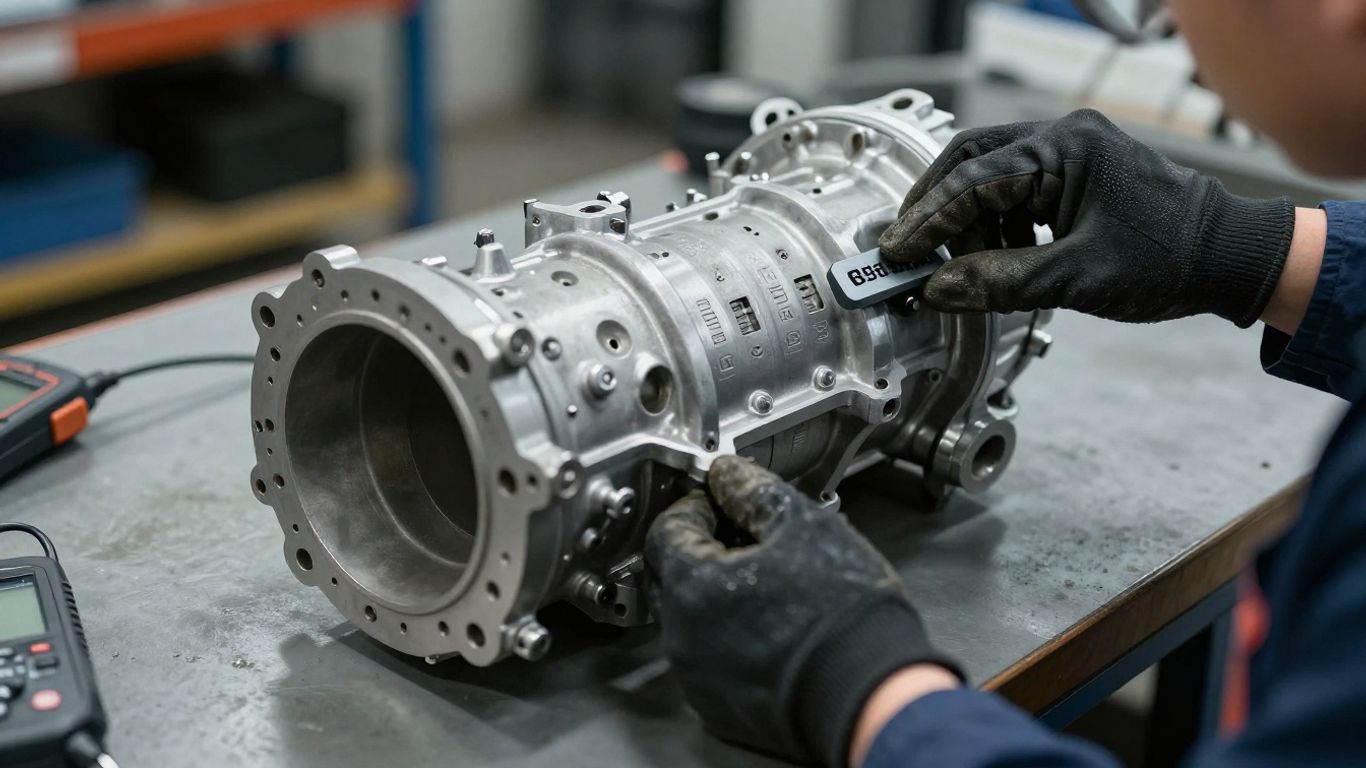
Finding a suitable unit starts with identification, not browsing. Model badges can narrow the search, but they rarely provide enough detail for a confident fit. Before ordering, collect the vehicle’s VIN, production year, engine information, drivetrain layout, and transmission identification markings.
Matching the transmission to the model and production year
Audi models can change transmission specifications during a generation, and a facelift or engine revision may bring a different unit. Confirm the production year rather than relying only on the registration date. A supplier should be able to explain why the offered part matches the specific vehicle.
Inventory examples show why this matters: a listing can be tied to a particular year and model while also specifying engine size and transmission type. Treat those fields as fitment evidence, not background decoration.
Using the VIN, transmission code, and drivetrain configuration
The VIN gives the supplier a starting point for checking the vehicle’s build details. The transmission code, often found on the unit or in vehicle documentation, adds another layer of certainty. Drivetrain information is equally important because front-wheel drive and all-wheel drive versions may use different housings, ratios, or control arrangements.
Send clear photographs of identification labels when possible. If the code is missing or difficult to read, ask the installer or parts specialist to verify it before money changes hands.
Comparing automatic, manual, S tronic, and Tiptronic systems
These systems should never be treated as interchangeable simply because they fit the same model family. They can differ in clutch design, control hardware, fluid requirements, mounting points, and electronic communication with the vehicle. The replacement must match the original system’s specification.
An automatic listing may also use terms such as CVT or Tiptronic, while S tronic identifies a different dual-clutch arrangement. Clarify the terminology with the seller and compare the transmission code rather than guessing from a photograph.
Avoiding compatibility issues with quattro and front-wheel-drive models
quattro and front-wheel-drive vehicles can require different transmission assemblies, even when their exterior dimensions look similar. A mismatch may affect driveshaft connections, final-drive ratios, control modules, or software adaptation. This is one reason a “fits Audi” description is not enough on its own.
Use the VIN and complete drivetrain description together. A listing for an Audi Q5 transmission, for instance, can identify an automatic eight-speed unit, an AWD configuration, a transmission ID, and donor mileage; those details are the kind of information a buyer should seek.
Evaluating the condition of a recycled transmission
Condition assessment is a process of reducing uncertainty. Mileage helps, but it does not reveal how the vehicle was driven, maintained, or damaged. A useful evaluation combines donor history, photographs, inspection notes, fluid observations, and a written warranty.
Reviewing mileage, vehicle history, and donor-car information
Ask whether the mileage came from the donor vehicle’s records, an instrument cluster, or an estimate. The donor’s accident location can also matter: damage around the engine bay or transmission casing deserves closer scrutiny than a collision confined to another area. Service history, when available, adds valuable context.
Mileage should be treated as one clue rather than a guarantee. A high-mileage unit with credible records may be easier to assess than a lower-mileage unit with no traceable background.
Checking fluid condition and visible signs of damage
Photographs should show the casing, mounting points, connectors, shafts, and any visible identification marks. Look for cracks, impact marks, bent fittings, corrosion, missing covers, or evidence that the unit was dragged or stored poorly. Fluid that appears heavily contaminated or smells burnt should prompt further questions.
Not every external mark means internal failure, but unexplained damage should be documented before purchase. Ask whether the unit will arrive drained, and confirm which fluid the installer should use.
Understanding inspection and testing procedures
A supplier’s inspection process may range from visual grading to bench testing or a donor-vehicle operational check. Ask what was tested and what was not. “Inspected” is too vague unless the seller can describe the steps and provide a record tied to the stock number.
A useful report may include mileage, code, fluid observations, visible condition, and test results. Keep that paperwork with the invoice so any warranty conversation starts with the same information.
Identifying warning signs of excessive wear or previous failure
Warning signs include unexplained metal debris, severe fluid discoloration, damaged electrical connectors, missing components, and a history of repeated transmission faults. A supplier that cannot answer basic questions about the donor vehicle or return process also deserves caution.
Be wary of a price that is far below comparable units when the listing offers no explanation. Cheap parts can become expensive if removal, shipping, and installation have to be repeated.
Comparing recycled, remanufactured, and new transmissions
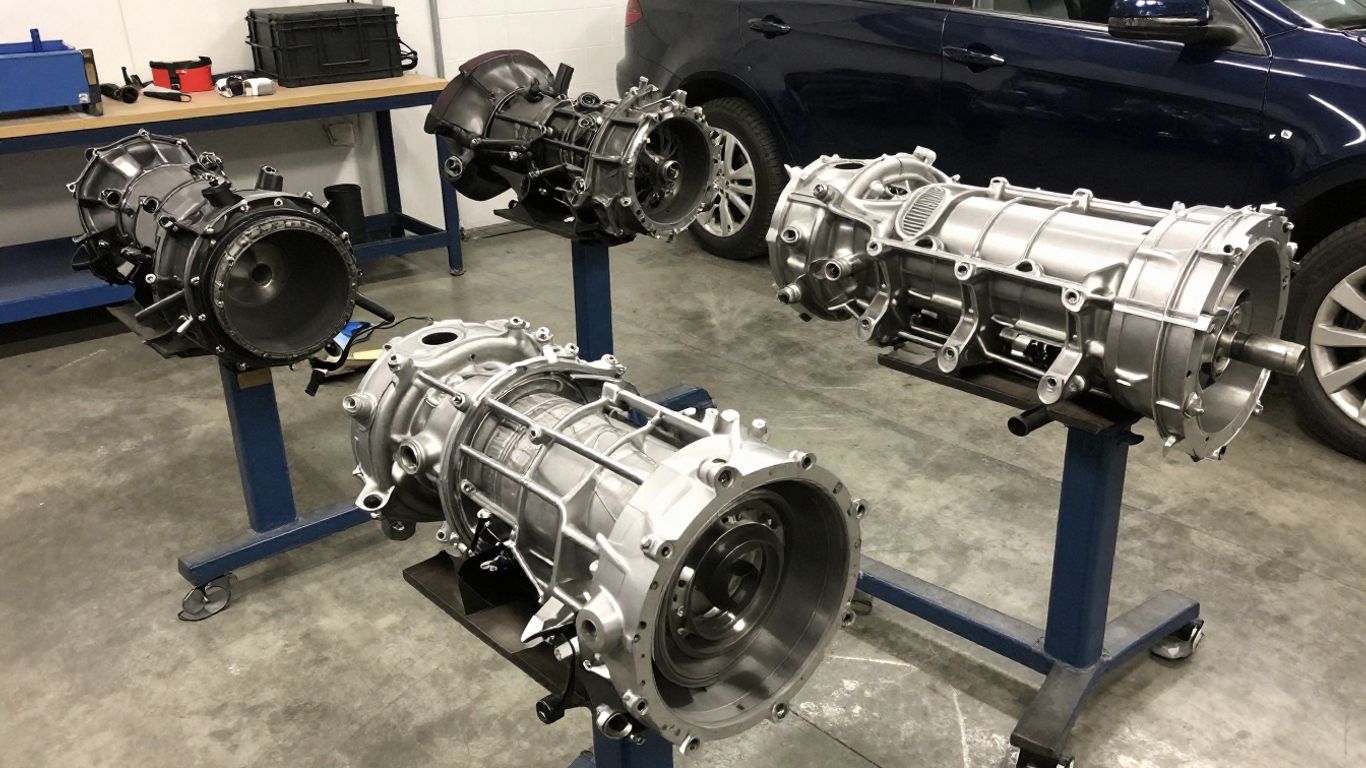
Replacement choices should be compared as risk and cost packages, not as three labels on a parts page. A recycled unit may reduce the initial spend, while a remanufactured or new unit may provide more predictable specifications. The right choice depends on the vehicle’s value, intended ownership period, and tolerance for repeat labor.
Upfront cost differences between replacement options
A recycled transmission is often priced below a remanufactured or new unit, but the spread varies by model and availability. Core charges, freight, taxes, and installation can narrow the difference. Obtain a complete quote before deciding that one option is cheaper.
Price also reflects supply. A rare transmission code may cost more than a common unit, even when both are used. Availability should not persuade you to accept a part with uncertain fitment.
Warranty coverage and return-policy considerations
Read the warranty for duration, covered components, labor exclusions, fluid requirements, and claim deadlines. Many policies require the buyer to report a problem promptly and may exclude damage caused by incorrect installation or unrelated vehicle faults.
Return rules matter just as much. Confirm whether the part must be returned in the original packaging, whether a restocking fee applies, and who pays freight when the unit is not defective.
Expected service life and reliability
No seller can promise that a recycled transmission will last as long as a new one without knowing its history and the condition of the vehicle receiving it. Reliability depends on the unit, installation quality, correct fluid, cooling system condition, and ongoing maintenance. A careful fitment check improves the odds but cannot eliminate used-part risk.
A written warranty can make that risk manageable, but it does not turn a used unit into a remanufactured one. Keep expectations realistic and preserve all installation records.
When a remanufactured or new unit may be the better choice
A remanufactured or new transmission may make more sense when the vehicle is otherwise in excellent condition, the car will be kept for many years, or the failed unit suffered extensive internal damage. It can also be preferable when a suitable recycled code is unavailable or warranty terms are too limited.
The decision should follow a diagnosis and a full cost comparison. A cheaper component is not necessarily the better value if its risk is incompatible with the vehicle’s role.
Estimating the total replacement cost
The advertised transmission price is only one part of the project. Removal and installation can require substantial labor, and the final invoice may include fluids, seals, programming, shipping, and diagnostic work. Build the estimate before ordering so an attractive listing does not create an unpleasant surprise.
Transmission purchase prices and core charges
Ask whether the advertised price includes a core charge, freight, taxes, and a warranty. A core charge may be refundable when the old unit is returned under the supplier’s conditions, but it is still money that may be needed upfront.
Compare like with like. A low listing price without a warranty or with unusually high freight may not be cheaper than a better-documented unit.
Labor rates for removal and installation
Labor depends on the model, drivetrain, access, shop rate, and whether additional faults are found during removal. quattro systems and electronically managed transmissions may involve more steps than a simple mechanical replacement. Request an estimate that separates removal, installation, fluid service, and programming.
A second quote can help identify missing line items. The lowest labor figure is not always the most economical if the shop lacks experience with the vehicle’s transmission system.
Additional parts, fluids, seals, and programming
The installation plan may require new seals, filters, fasteners, approved fluid, mounts, or related hardware. Electronic control systems may also need coding or adaptation after installation. Those items should appear in the written estimate rather than being treated as optional surprises.
The following simple breakdown helps organize the conversation with a repair shop:
| Cost area | What to confirm | Why it matters |
|---|---|---|
| Replacement unit | Price, code, mileage, warranty | Establishes the part’s identity and risk |
| Labor | Removal, installation, shop rate | Shows the main service charge |
| Consumables | Fluid, filter, seals, fasteners | Supports correct installation |
| Electronics | Coding, adaptation, diagnostics | Helps the vehicle recognize the unit |
Once these areas are listed separately, you can compare quotes more fairly. The total should reflect a completed repair, not just a box delivered to the workshop.
Potential costs for diagnostics and related repairs
A transmission fault may originate in wiring, sensors, software, cooling, mounts, or another driveline component. Paying for diagnosis before replacement can prevent an unnecessary purchase. It may also reveal related work that should be completed while access is available.
Set aside a contingency for damaged connectors, seized fasteners, leaks, or a problem discovered after the original fault is corrected. A transparent shop will explain why each extra repair is needed.
Buying recycled Audi transmissions from a reputable supplier
A reputable supplier should make identification and risk visible in the listing. Look for stock details, clear photographs, donor information, mileage, grading, warranty language, and a direct way to confirm fitment. A broad network can improve availability, but the individual part still needs individual verification.
Questions to ask an auto recycler or parts dealer
Before placing an order, ask focused questions rather than accepting a generic “fits your car” answer. Useful questions include:
- What is the exact transmission code and drivetrain configuration?
- What mileage and donor-vehicle information can you provide?
- What inspection or testing was completed?
- What does the warranty cover, and how are returns handled?
The answers should be specific enough for your technician to compare with the vehicle. If the supplier cannot provide them, continue searching rather than filling in the gaps yourself.
Confirming warranty terms, testing records, and mileage
Have the seller put key details on the invoice: transmission code, mileage, stock number, condition grade, and warranty period. Request inspection or test records when available. That documentation can be especially useful if a problem appears after installation.
Used-part listings vary in how much evidence they provide. A listing for a 2019 Audi S5 assembly that includes on-site photographs illustrates why images and exact application details are valuable, though photographs alone do not prove internal condition.
Verifying shipping, packaging, and return requirements
Transmissions are heavy and vulnerable to impact, so packaging deserves attention. Confirm whether the unit ships drained, secured to a pallet, and protected around connectors and mounting points. Photograph the packaging before opening if the shipment appears damaged.
Check the return window and the procedure for reporting freight damage. Do not discard packaging until the part has been inspected and the shop confirms that it is the correct unit.
Comparing inventory listings for models such as the A4, Q5, and S5
Compare listings by code, engine, drivetrain, mileage, grade, warranty, and total delivered price. An A4 listing may be a FWD CVT, while a Q5 listing may be an AWD automatic; the model names alone do not make them comparable. S5 inventory may also involve different performance-oriented specifications.
A search platform that describes quality-tested used Audi parts can be a useful starting point, but still verify the individual listing with the supplier and technician. When researching online, unrelated pages such as Xcan.it, realtor review examples, a Clerk Magistrate hearing guide, SEO advertorials, and a Forza Horizon drift guide are not evidence of automotive fitment and should not influence the purchase.
Preparing for installation and long-term performance
Installation quality has a direct effect on how a replacement transmission performs. The shop should confirm the diagnosis, inspect related components, use the specified fluid, and complete any required electronic procedures. Planning these steps before delivery reduces delays and repeat labor.
Having the vehicle professionally diagnosed before replacement
A diagnostic scan and road-test findings can help distinguish internal transmission failure from a sensor, wiring, fluid, or control issue. Ask for the fault codes and the technician’s reasoning before approving replacement. This is particularly useful when the original symptom is slipping, harsh shifting, delayed engagement, or a warning light.
The diagnosis should also establish whether the replacement is being ordered for the correct system. A part cannot solve a fault that was misidentified.
Flushing fluids and replacing seals, filters, and related components
The technician should follow the applicable service procedure for fluid removal, filter replacement, seals, and cooler-line inspection. Reusing contaminated fluid or overlooking a leak can undermine an otherwise sound replacement. The correct fluid specification matters as much as the quantity.
Ask whether mounts, axles, wiring, and cooling components will be checked while the transmission is accessible. Addressing a related fault at this stage may prevent another removal later.
Completing coding, adaptation, and software procedures
Some electronically managed transmissions require coding, adaptation, or software procedures after installation. The exact steps depend on the vehicle and control system, so the workshop should verify the requirements rather than assuming the unit will operate immediately.
Keep a record of the scan results and completed procedures. If shifting remains abnormal, that information helps separate an adaptation issue from a mechanical problem.
Following break-in and maintenance recommendations
Follow the installer’s guidance for early driving, fluid checks, and service intervals. Avoid towing or demanding use until the shop confirms that the transmission is operating correctly and there are no leaks. Early attention to unusual noises, engagement delays, or warning lights can protect warranty rights.
Retain the invoice, part details, warranty, diagnostic report, and maintenance records. Those documents make future servicing easier and give you a clear history of the recycled unit.
Conclusion
Recycled Audi transmissions can offer a practical replacement route when buyers verify the code, drivetrain, donor history, condition, warranty, and complete installation cost. The safest purchase is not necessarily the cheapest listing; it is the unit that can be identified, inspected, installed correctly, and supported after delivery.
Frequently Asked Questions
Are recycled Audi transmissions the same as remanufactured transmissions?
No. A recycled transmission is generally recovered from another vehicle and sold after whatever inspection or preparation the supplier provides. A remanufactured unit usually undergoes a defined rebuilding process, so ask what work was actually completed.
How do I know which transmission fits my Audi?
Use the VIN, transmission code, production year, engine, and drivetrain configuration together. Confirm the details with both the supplier and the technician before ordering.
Does lower mileage guarantee a better used transmission?
No. Mileage is useful but incomplete. Donor history, maintenance, impact damage, testing, fluid condition, and warranty terms also influence the risk.
What should a recycled transmission warranty cover?
Review the coverage period, included components, labor rules, fluid requirements, claim deadline, and return procedure. Ask about exclusions for incorrect installation or unrelated vehicle faults.
Should I replace seals and fluids during installation?
The technician should inspect and replace service items such as seals, filters, and fluid when the manufacturer’s procedure or the component’s condition calls for it. The exact work depends on the vehicle and transmission.
Can a replacement transmission need coding or adaptation?
Yes, some electronically managed systems may require coding, adaptation, or software procedures after installation. The workshop should verify the requirements for the specific vehicle.
Is a recycled transmission worth considering for an older Audi?
It can be, especially when the vehicle is otherwise sound and the replacement has verified fitment, reasonable condition, and useful warranty coverage. Compare the complete installed cost with other replacement options before deciding.