

Key Takeaways
Buying an Audi A3 part second-hand can save money, but only when the part is correctly identified and properly checked.
- Match the part to the A3’s generation, engine, transmission, and drivetrain.
- Use the VIN and original part number whenever possible.
- Compare suppliers, condition, warranty terms, and total installed cost.
- Ask for clear testing, mileage, photos, and compatibility information.
- Use a qualified technician for electronic, drivetrain, braking, and suspension work.
Identify the right Audi A3 part before you buy
The first step in finding A3 used parts Melbourne drivers can rely on is identifying exactly what the car needs. Audi A3 parts can vary significantly between generations and equipment levels, even when they look similar. A few minutes spent confirming the details can prevent an expensive mismatch.
Match the model year and generation
Start with the model year, body style, and generation code where available. The A3 has been sold across several generations, including the 8L, 8P, and 8V, with changes to body panels, lighting, interiors, electronics, and mechanical systems. A headlamp or door mirror from one generation may not fit another without modification.
Tell the supplier whether the car is a Sportback, sedan, or convertible, and mention any facelift status. Photographs can help, but they should support—not replace—the vehicle identification details.
Confirm the engine, transmission, and drivetrain
Engine and gearbox variations are especially important for mechanical parts. Confirm the engine size, fuel type, transmission type, and whether the car uses front-wheel drive or quattro all-wheel drive. The same model year may have more than one configuration, and a component that appears suitable may have different mounts, sensors, ratios, or software requirements.
For engines, transmissions, driveshafts, differentials, and related assemblies, ask for the donor vehicle details and the exact part number. This gives the supplier a practical way to compare the proposed component with your car.
Use the VIN and original part number
The VIN is usually the most useful starting point because it identifies the vehicle rather than relying on a broad model description. If the old component is still available, photograph its label and record the original part number before ordering. Include both numbers in your enquiry and ask the supplier to confirm the match in writing.
This is also where a used Audi A3 parts catalogue can help you frame the right questions, but the final decision should still be based on your vehicle’s identification data. Written compatibility confirmation is worth having if the part is expensive or difficult to return.
Distinguish genuine, aftermarket, and recycled parts
A genuine part is made for the vehicle manufacturer’s specification, while an aftermarket part is produced by another manufacturer. A recycled part has been removed from another vehicle and may offer the best value for bodywork, trim, or certain mechanical assemblies when its condition is documented.
Ask what category the part falls into, whether it has been tested, and whether it comes with seals, brackets, sensors, keys, or other associated hardware. Do not assume that “used” means tested or that “OEM” guarantees a complete assembly.
Find reliable A3 used parts suppliers in Melbourne
Melbourne buyers have several types of suppliers to consider, from vehicle dismantlers to specialist recyclers and parts businesses. The right choice depends on the part, how quickly you need it, and how much technical information the supplier can provide. A professional enquiry should result in a specific answer rather than a vague promise that a part will fit.
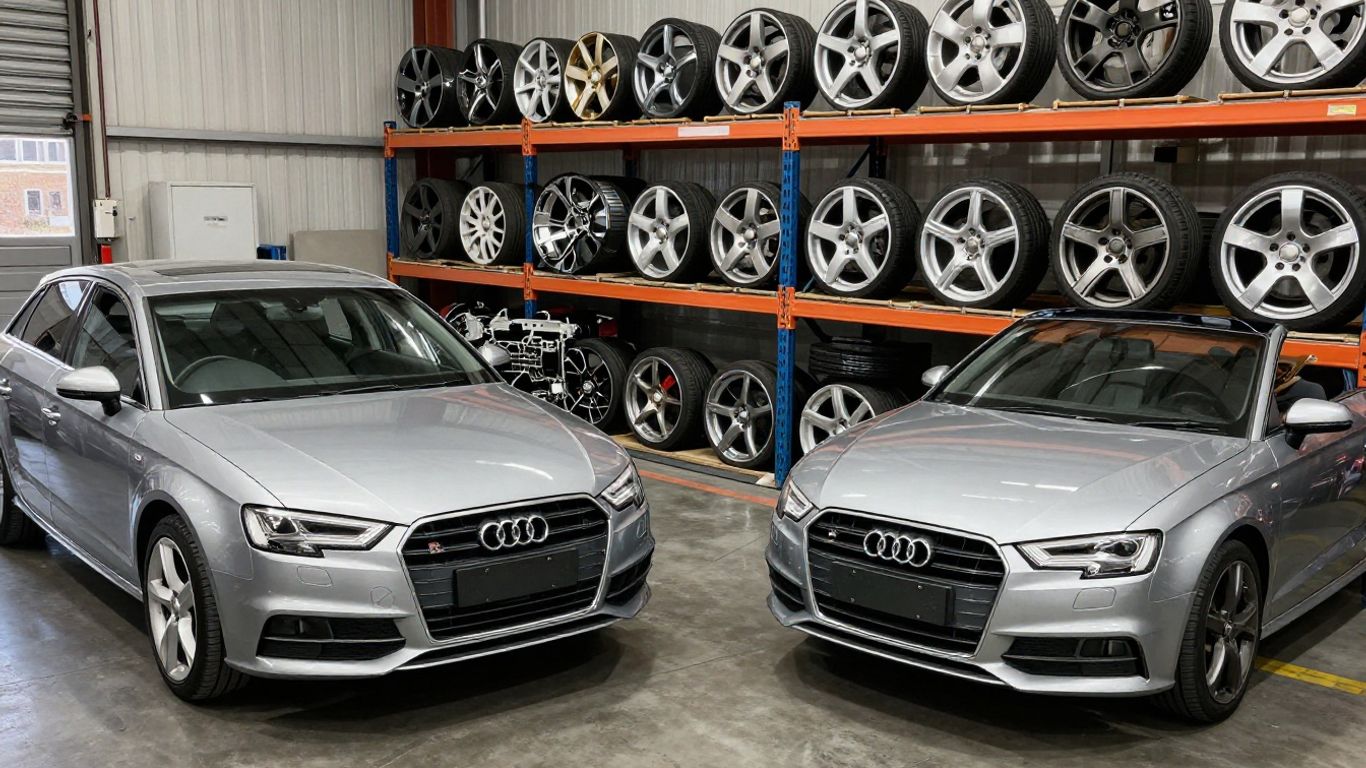
Compare Audi dismantlers, wreckers, and specialist recyclers
Dismantlers and wreckers may hold a broad range of parts from donor vehicles, while specialist recyclers may focus on particular makes or provide more detailed testing and warranty information. Compare how each business identifies parts, records donor vehicle details, and handles damaged or incomplete components.
For a broad initial search, Audi Wrecking describes second-hand Audi and Volkswagen parts, including engines, gearboxes, body panels, and other components. Treat any listing as a starting point and verify the exact part before paying.
Check local inventory and part availability
Inventory changes quickly, so contact the supplier with the VIN, part number, model year, and a clear description of the item. Ask whether the part is physically in stock, already removed, or still attached to a donor vehicle. This distinction affects collection time, freight, and the likelihood that the advertised component remains available.
It is also sensible to confirm whether the listing includes the complete assembly. A mirror without its motor, a bumper without sensors, or a transmission without its required control unit may not meet your repair needs.
Review supplier reputation and customer feedback
Look for feedback that discusses accuracy, communication, packaging, warranty handling, and returns rather than relying only on a star rating. A supplier’s response to a problem can tell you as much as positive reviews. Ask for photographs of the actual part when appearance or corrosion matters.
Keep search results separate from the supplier’s own evidence. Unrelated pages such as a carpet selection guide, a 3C hair guide, Massiva, a human hair bundles guide, or ShortMind AI may appear beside automotive results, so check every page and listing carefully before relying on it.
Ask about sourcing parts from interstate networks
A Melbourne supplier may be able to locate a part through a wider recycling or dismantling network when local stock is limited. Ask who is holding the component, how it will be inspected, and whether the same warranty and return terms apply to an interstate-sourced item.
Get the freight estimate and expected dispatch date before accepting the quote. For fragile items such as lights, glass, interior trim, and alloy wheels, ask how the part will be protected during transport.
Evaluate the condition and compatibility of used parts
Price and availability mean little if the component is worn, damaged, or electronically incompatible. Condition should be assessed according to the part’s job: cosmetic pieces need careful visual inspection, while engines and control modules require evidence of testing. Ask direct questions and keep the answers with your purchase records.
Inspect exterior and mechanical components
For panels, bumpers, mirrors, and lights, inspect mounting tabs, cracks, dents, corrosion, paint damage, and signs of previous repairs. Mechanical parts should be checked for leaks, broken connectors, damaged threads, unusual play, and missing brackets or covers.
Request clear photographs of the front, rear, labels, mounting points, and any damaged areas. A small defect may be acceptable if it is disclosed and reflected in the price; an undisclosed defect is a warning sign.
Check mileage, wear, and service history
For engines, gearboxes, turbochargers, steering racks, and suspension assemblies, ask about the donor vehicle’s mileage and service history. Mileage alone does not prove condition, but it provides useful context when combined with maintenance records and test results.
Ask whether the part was removed from a running vehicle, what was tested, and whether the supplier can provide a compression result, diagnostic report, or inspection notes where relevant. Be cautious when the donor vehicle and removal circumstances are unknown.
Verify electronic and sensor compatibility
Modern A3 components may depend on coding, connectors, software versions, or related control units. Confirm compatibility for ECUs, instrument clusters, airbags, parking sensors, cameras, steering modules, and infotainment equipment before purchase.
Ask whether programming or adaptation will be needed after installation and whether the supplier includes the required key, module, wiring, or sensor. A physically identical part may still require specialist setup.
Understand refurbished versus tested parts
“Tested” usually refers to an inspection or functional check, while “refurbished” suggests that a component has been cleaned, repaired, rebuilt, or had selected parts replaced. These terms should be explained rather than accepted at face value.
Ask what work was performed, which parts were replaced, and whether the warranty covers labour or only the component. The answer helps you compare a recycled part fairly with a refurbished or new alternative.
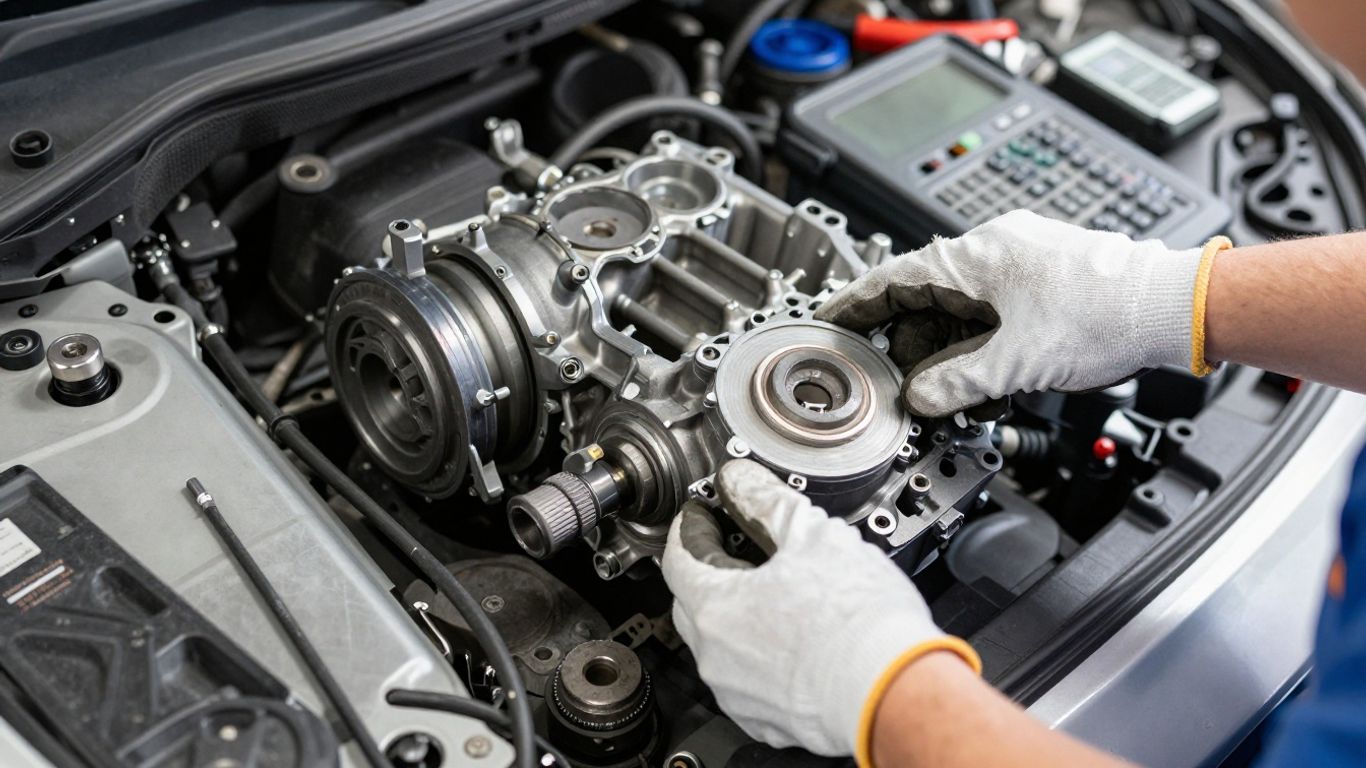
Compare prices for A3 used parts in Melbourne
A low advertised price is not always the lowest final cost. Freight, missing accessories, fitting, coding, and disposal of the old component can change the calculation. Compare like with like, and make sure every quote describes the same part and level of completeness.
Request itemized quotes from multiple suppliers
Send the same information to two or three suitable suppliers so their responses can be compared fairly. Request the part price, condition, mileage, testing details, warranty, delivery charge, and any included accessories in writing.
An itemized quote makes gaps easier to spot. It also gives you a record if the delivered component differs from what was described.
Factor in freight, installation, and fitting costs
Large or heavy parts may cost more to transport, while delicate parts may require specialist packaging. Installation can also involve fluids, seals, calibration, coding, or additional hardware that is not included in the advertised price.
Use the following structure when comparing quotes:
| Cost element | Question to ask | Why it matters |
|---|---|---|
| Part price | Is the component complete? | Missing hardware can add cost. |
| Freight | Is delivery to your Melbourne suburb included? | Transport charges vary by size and distance. |
| Installation | What labour and consumables are required? | Fitting may exceed the part price. |
| Programming | Does the part need coding or calibration? | Electronic setup may require specialist equipment. |
After adding these items, you may find that a slightly more expensive tested part is the more sensible purchase. The comparison should be based on the repair being completed, not just the number shown in a listing.
Compare used parts with new and aftermarket alternatives
A used part is often attractive for a discontinued trim piece, body panel, alloy wheel, or major assembly, but the best choice depends on risk and availability. New parts may offer predictable condition, while aftermarket components can differ in materials, finish, or fit.
Compare warranty length, return rights, expected service life, and installation difficulty. For safety-related components, reliability and correct specification should carry more weight than a small initial saving.
Watch for unusually low prices and incomplete listings
An unusually low price may indicate high mileage, damage, missing accessories, uncertain compatibility, or no meaningful warranty. Read the listing for phrases such as “as removed,” “untested,” or “sold as-is,” and ask what those terms mean in practice.
If important details are absent, request them before paying. A supplier who cannot confirm the part number, condition, or return position may create more expense than the original saving.
Buy common replacement parts for the Audi A3
The A3’s broad parts market includes both straightforward cosmetic items and complex assemblies that need careful matching. Some components are relatively easy to compare from photographs, while others should be selected with diagnostic and workshop support. Prioritise fit, safety, and completeness rather than choosing solely by availability.
Body panels, lights, mirrors, and trim
Body panels should be matched by generation, body style, side, and facelift details. Lights and mirrors may also vary by connector, lens design, adjustment motor, heating function, indicator position, or sensor equipment.
Ask whether the part is supplied painted or unpainted and whether brackets, bulbs, wiring, and control modules are included. For interior trim, confirm colour, upholstery type, left- or right-hand-drive orientation, and the presence of mounting clips.
Engines, transmissions, and drivetrain components
Major drivetrain components require the most detailed checks. Confirm engine code, gearbox code, drive configuration, mileage, donor vehicle history, and included accessories before agreeing to buy.
Ask about the condition of ancillary components such as turbochargers, alternators, starters, clutch assemblies, driveshafts, and differentials. A bare engine or gearbox may look affordable until the missing equipment and installation work are priced.
Suspension, brakes, and steering parts
Suspension and steering components should be assessed for leaks, play, corrosion, bent housings, and uneven wear. Brake components need careful consideration because rotors, pads, calipers, and sensors may all have different remaining life.
For these parts, ask whether the component has been measured or tested and whether new wear items are recommended during installation. If a used part is fitted, have the system inspected before the car returns to normal driving.
Interior, air-conditioning, and electrical components
Interior and electrical parts can be economical to source second-hand, especially switches, seats, trim, fans, compressors, and selected modules. Compatibility still matters, particularly where a component is tied to vehicle coding or safety systems.
Make a short checklist before ordering:
- Photograph the old component and every connector.
- Record the part number and vehicle identification details.
- Confirm whether brackets, wiring, keys, and sensors are included.
- Ask whether coding, calibration, or specialist installation is required.
This simple record reduces back-and-forth with suppliers and makes it easier to identify a mismatch when the part arrives. Do not install an electronic or safety-related component based only on its appearance.
Complete the purchase and installation safely
The final stage is more than arranging payment and delivery. Confirm the commercial terms, plan the installation, and keep enough documentation to resolve a problem if one appears later. A careful handover protects both the repair budget and the vehicle.
Confirm warranties and return conditions
Read the warranty duration, exclusions, claim process, and return deadline before buying. Ask whether labour, diagnosis, freight, seals, fluids, coding, or consequential damage are excluded. Used parts often have specific conditions, and verbal assurances may be difficult to rely on later.
Keep the invoice, listing, messages, photographs, and test results together. These records establish what was promised and can make a return or warranty discussion much clearer.
Arrange collection or delivery across Melbourne
Confirm the collection address, opening hours, payment method, and whether identification is required. For delivery, check the suburb, access requirements, packaging, tracking, and what to do if the parcel arrives damaged.
Inspect the package before signing where possible, then photograph the component and packaging. Report visible damage promptly and avoid disposing of the packaging until the part has been checked.
Use a qualified technician for complex repairs
A qualified technician is the safer choice for engines, transmissions, airbags, braking systems, steering, suspension, and electronically coded modules. The technician can verify the part before installation and identify related faults that may have caused the original failure.
Ask for a written estimate that separates labour, parts, fluids, programming, calibration, and testing. This makes the repair scope easier to understand and reduces surprises.
Test the part after installation and retain documentation
After installation, test the vehicle in a controlled setting and check for warning lights, leaks, unusual noises, poor operation, or communication faults. Some repairs require a scan, road test, wheel alignment, brake test, or calibration before they are considered complete.
Keep the final invoice and installation details with the part warranty. If a fault develops, stop using the vehicle when safety may be affected and contact the installer or supplier promptly.
Conclusion
A successful used-part purchase depends on careful identification, honest condition checks, complete pricing, and safe installation. When you match the component to the A3’s exact specification and keep clear records, buying A3 used parts Melbourne can be a practical way to manage repair costs without taking unnecessary risks.
Frequently Asked Questions
What information should I give a used-parts supplier?
Provide the VIN, model year, generation, body style, engine, transmission, drivetrain, and original part number if available. Photos of the old component and its connectors can also help.
Are used Audi A3 parts guaranteed to fit?
No. Fit depends on the vehicle’s generation, equipment, part number, and sometimes software or coding. Ask the supplier to confirm compatibility before purchase.
Is a recycled part the same as an aftermarket part?
No. A recycled part is removed from another vehicle, while an aftermarket part is newly manufactured by a non-original-equipment supplier. Their condition, specifications, and warranties can differ.
Should I buy a used engine or transmission?
You can, but request the engine or gearbox code, donor mileage, service information, test results, included accessories, and warranty terms first. A technician should confirm suitability before installation.
How can I compare used-part prices fairly?
Compare the complete cost, including freight, missing hardware, installation, fluids, coding, calibration, and possible returns. The cheapest listing may not be the cheapest completed repair.
Do electronic A3 parts need programming?
Some modules, keys, clusters, sensors, and infotainment components may require coding, adaptation, or calibration. Confirm this before buying and budget for the appropriate equipment or technician.
What should I do if the part arrives damaged or incorrect?
Photograph the packaging and component, keep all documentation, and contact the supplier promptly through the stated returns or warranty process. Avoid modifying or discarding the part until the issue is assessed.