

Key Takeaways
An Audi A6 can be a useful source of replacement parts even when the complete vehicle is no longer economical to repair. The right dismantler, clear part-matching details, and careful paperwork make the process safer and more predictable.
- Confirm the A6 model year, engine, transmission, and trim before buying a part.
- Ask how used components were tested, graded, stored, and covered by warranty.
- Compare dismantling value with repair costs and the price of selling the vehicle whole.
- Prepare ownership documents, remove personal belongings, and handle registration plates correctly.
- Choose responsible recycling practices for fluids, batteries, tires, glass, and metal.
Understanding A6 dismantling services in Brisbane
The phrase “A6 dismantled” usually refers to an Audi A6 that has been taken apart so usable components can be sold and remaining materials can be recycled. For owners, this can be an alternative to repairing a badly damaged or uneconomical car. For buyers, it can provide access to original used parts at a lower cost than new replacements. The quality of the experience depends on accurate identification and responsible handling.
What “A6 dismantled” means for owners and buyers
A dismantled A6 is assessed as a vehicle and then separated into recoverable parts, recyclable materials, and items that require disposal. Buyers might be looking for a complete engine, a door mirror, a control module, or a small trim piece. Sellers may receive an offer based on the vehicle’s condition and the value of components that can be recovered. The term does not automatically describe a part’s condition, so ask whether it is tested, inspected, or sold as-is.
How Audi dismantlers differ from general wreckers
A specialist familiar with Audi vehicles may be better placed to identify model-specific differences, electronic modules, and trim variations. That does not remove the need for buyers to verify compatibility, but it can make the search more efficient. A general yard may still have suitable stock, particularly for common components, while a specialist supplier may have stronger knowledge of Audi part numbers and interchange questions.
Which A6 models and components are commonly available
Stock varies with local vehicle intake, so no dismantler can promise every year or specification. Common searches include engines, transmissions, radiators, lights, bumpers, doors, mirrors, wheels, seats, instrument clusters, batteries, and electronic control units. Audi Wreckers Brisbane is one example of a listing that discusses recycled Audi A6 parts and a broader used-parts inventory, so buyers should still confirm current availability directly through its A6 parts listing.
When dismantling is better than repairing or selling whole
Dismantling may make sense when collision damage affects the body shell, a major mechanical failure exceeds the car’s value, or the vehicle has been sitting unused for a long time. Repair can remain the better choice when the chassis is sound and the fault is well understood. Selling the vehicle whole may also be preferable if it is roadworthy and complete. Obtain more than one valuation and include towing, inspection, parts, labor, and registration costs in the comparison.
Finding the right Audi A6 dismantler in Brisbane
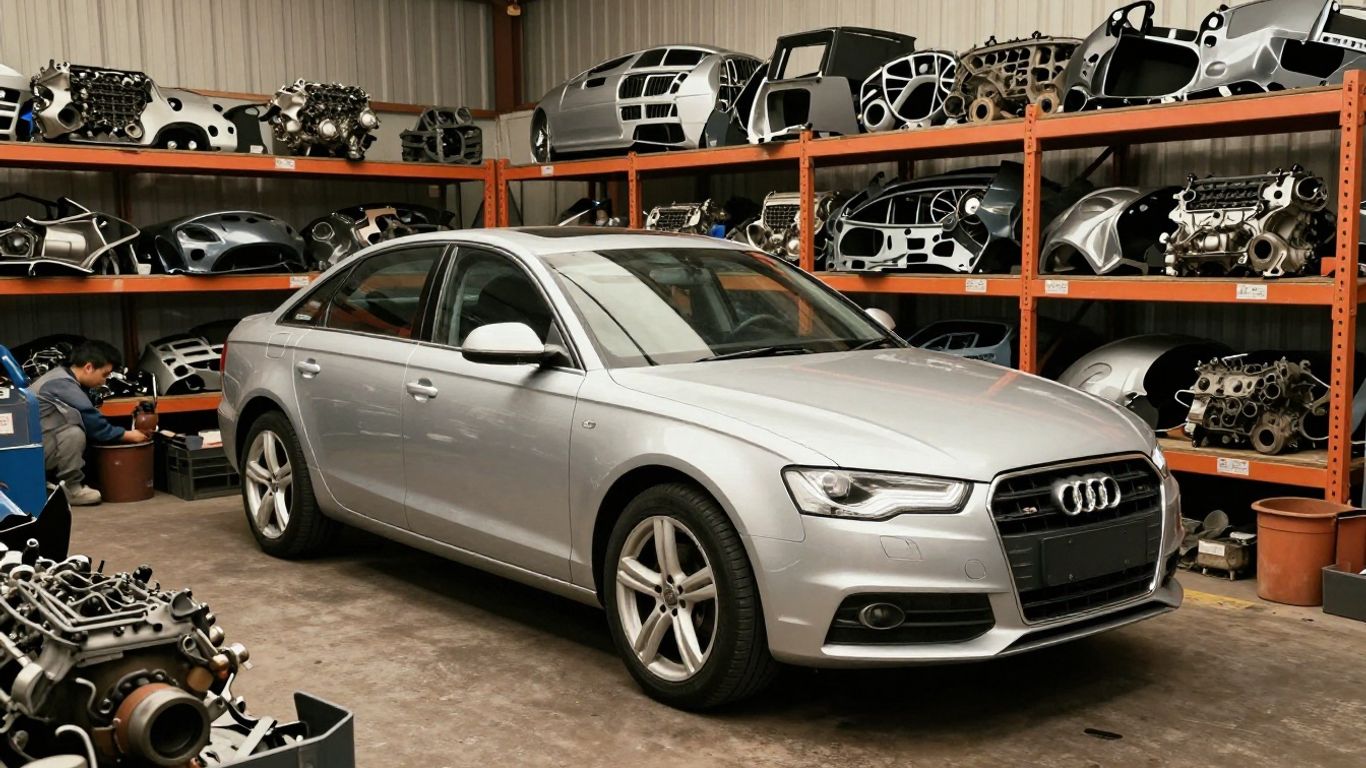
Searching for A6 dismantled Brisbane services is only the first step. A useful supplier should be able to identify the part accurately, explain its condition, and provide practical collection or delivery information. Brisbane has local yards, online inventories, and businesses that combine vehicle buying with parts recovery. Treat each listing as a starting point rather than proof that the exact part is on the shelf.
Comparing local yards, online suppliers, and specialist wreckers
A local yard can allow an inspection and may simplify collection of bulky parts. An online supplier can make it easier to search across a wider inventory, but photographs and descriptions need closer scrutiny. Specialist wreckers can be useful for uncommon trims or electronics, while general suppliers may offer more routine parts. Q1 Auto Parts appears in search material as a Brisbane source for used Audi parts; verify its current stock, business details, and terms before relying on a listing.
Checking inventory for your model year and trim
The word A6 covers several generations, body styles, engines, drivetrains, and equipment levels. Give the supplier the vehicle identification number when possible, along with the build year, engine code, transmission type, body style, and the number printed on the old part. A photograph of connectors, mounting points, or labels can prevent an expensive mismatch. Do not assume that two parts fit simply because they came from vehicles with the same badge.
Verifying dismantler licenses, reviews, and business details
Check that the business has a traceable address, working phone number, clear trading name, and written sales terms. Reviews can reveal patterns about communication, packaging, refunds, or part condition, although they should not replace your own questions. Ask how vehicles are acquired and whether ownership records are maintained. Search results can also contain unrelated pages, such as Brawn Media, Resapass, or Black Mountain Plumbing, so confirm that a result actually concerns automotive dismantling before contacting it.
Questions to ask before arranging a purchase or inspection
A short call can establish whether a part is worth pursuing. Ask for the donor vehicle’s year and specification, the part number, its condition, the test performed, the price, and the return period. For a heavy item, confirm whether the price includes loading, freight, or collection. Written answers are useful if several similar components are being compared.
A practical enquiry usually covers these points:
- Is the component confirmed to fit the stated A6 configuration?
- Was it tested, and what result was recorded?
- Are the mounting points, plugs, keys, and sensors included?
- What warranty or return conditions apply?
These questions help separate a properly identified used part from a vague listing. They also give you a record to refer to if the item arrives differently from its description.
Buying used Audi A6 parts with confidence
Used parts can reduce the cost of keeping an older A6 on the road, but a low price is not the same as good value. The most reliable purchase starts with the vehicle’s exact identity and ends with a clear agreement about condition. Mechanical parts deserve functional checks, while body and interior items need careful inspection for damage and missing hardware. Keep invoices, photographs, and written messages until the part has been fitted and tested.
Matching parts by model year, engine, and transmission
Start with the vehicle identification number and the original component’s part number. Engine and transmission variations can affect sensors, wiring, mounts, software, and surrounding components. A facelift or trim change may also alter lamps, bumpers, dashboards, and door assemblies. If the supplier cannot confirm the match, ask a qualified technician or Audi parts counter before paying.
Identifying high-demand mechanical and electrical components
Engines, gearboxes, turbochargers, alternators, starters, ECUs, body control modules, sensors, and cooling assemblies often attract strong interest because replacing them new can be costly. Their condition is also harder to judge from photographs. Ask for mileage where it is known, test details, fault-code information, and whether programming or coding will be needed after installation. Compatibility matters more than appearance when a part is electronic or mechanically complex.
Evaluating cosmetic panels, interior parts, and accessories
For panels, request photographs of edges, mounting tabs, paint surfaces, and hidden corrosion points. Interior parts should be checked for stains, broken clips, worn leather, missing switches, and color-code differences. Accessories such as wheels, roof fittings, and mirrors may have multiple designs across one generation. A small defect may be acceptable when disclosed, but it should be reflected in the price.
Understanding warranties, returns, and part condition
Warranty periods differ by supplier and by component. Ask whether coverage applies to labor, freight, installation, or only the part itself. Clarify whether electrical items are returnable after coding attempts and whether seals, fluids, or consumables must be replaced before use. A written return process is especially valuable for parts purchased without an in-person inspection.
Selling or disposing of an Audi A6 for dismantling
An unwanted A6 may still have value even if it is damaged, incomplete, or no longer running. The offer usually reflects the vehicle’s identity, condition, location, and recoverable parts rather than its original purchase price. Before accepting, ask whether removal is included and how payment will be made. A clear handover protects both sides.
How to estimate the vehicle’s dismantling value
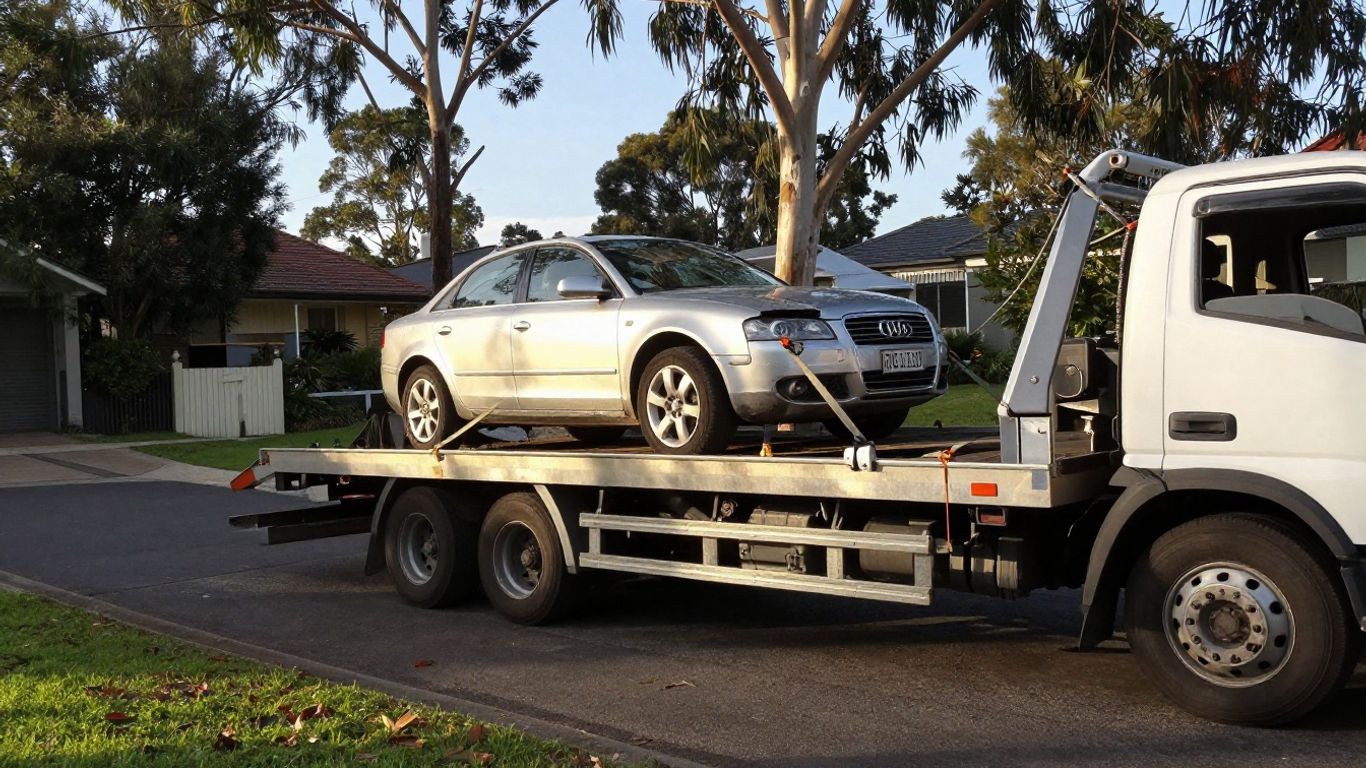
Describe the A6 honestly, including accident damage, warning lights, missing keys, engine condition, wheel status, and whether it can roll. Share photographs of all sides, the interior, the odometer, and the VIN plate. A complete vehicle with sought-after components may attract more interest than a stripped shell, but location and transport access can reduce the offer. Brisbane Top Wreckers is listed as buying unwanted and damaged Audis with removal options; confirm the current quote and conditions rather than assuming every vehicle receives the same offer.
Preparing ownership documents and personal belongings
Gather proof of identity, ownership information, service records, keys, and any finance-release documentation that may be relevant. Remove toll tags, paperwork, garage remotes, chargers, tools, child seats, and personal items from the cabin and boot. Photograph the car immediately before collection and keep a copy of the agreed offer. This simple preparation avoids disputes over what was handed over.
Arranging Brisbane car removal for damaged or non-running vehicles
Tell the removal provider whether the car is in a basement, behind a gate, on a slope, or unable to steer or brake. A non-running vehicle may need a winch or specialized loading equipment. Confirm the pickup window, access requirements, cancellation terms, and whether towing is free or deducted from the offer. For broader comparisons, Audi Wreckers Brisbane is described in search material as offering Audi removal and pickup services, but current service coverage should be checked directly.
Removing registration plates and handling canceled registration
Before the vehicle leaves, check Queensland requirements for returning plates and canceling registration. Keep receipts or confirmation of any cancellation, surrender, or transfer process, and ask the dismantler what disposal documentation it supplies. Do not leave plates, keys, or ownership papers in the car without understanding the handover procedure. If the vehicle is insured or financed, notify the relevant provider after the sale is completed.
What happens during the Audi A6 dismantling process
Professional dismantling is more than stripping a vehicle quickly. The A6 is first recorded, assessed, and made safe before parts are removed in a controlled order. Components that can be reused are separated from materials destined for recycling or regulated disposal. The exact sequence varies with vehicle condition and yard equipment.
Vehicle assessment and parts cataloging
The process generally begins with identification, photographs, a condition assessment, and a review of likely reusable components. Staff may record part numbers, visible damage, mileage information, and vehicle specifications. Cataloging helps a future buyer receive a more accurate description and makes it easier to locate related hardware. It also prevents usable parts from being lost among unsorted stock.
Safe removal of engines, transmissions, and electronics
Large mechanical assemblies require suitable lifting equipment, stable supports, and careful disconnection of fuel, coolant, oil, wiring, and exhaust systems. Electronics must be handled with attention to batteries, connectors, static, moisture, and vehicle security systems. Airbags and pretensioners require controlled procedures because they can be hazardous. Buyers should ask whether a removed component includes its brackets, sensors, wiring, keys, or control units.
Testing and grading reusable components
Testing may include visual inspection, pressure or electrical checks, bench testing, or confirmation that a system operated before removal. Not every part can be tested in the same way, especially when the donor vehicle was heavily damaged. A grade should communicate known defects and missing items, not simply make the part sound attractive. Photographs and a written condition description make that grade more useful.
Recycling fluids, batteries, tires, and metal responsibly
Fuel, coolant, brake fluid, refrigerant, oils, and other fluids should be drained and managed through appropriate waste channels. Batteries, tires, glass, wiring, aluminum, steel, and catalytic components can enter different recovery streams. Proper separation reduces contamination and keeps hazardous materials out of ordinary landfill. The result is a cleaner process and a better chance of recovering value from the whole vehicle.
Costs, legal considerations, and environmental benefits
The cost of a used A6 part is shaped by more than the dismantler’s purchase price. Scarcity, condition, demand, shipping, testing, and installation all influence the final amount. Buyers also need to consider consumer rights and the risks of buying an incorrectly identified or unlawfully sourced component. A careful transaction can save money while extending the useful life of another vehicle.
Main factors that affect used A6 part prices
A part’s price commonly reflects its demand, rarity, condition, testing history, completeness, and freight requirements. Large panels and engines cost more to store and transport than small switches, while painted parts may carry a premium if their color and condition are suitable. Prices can also vary by generation and engine specification. Compare like-for-like items rather than choosing the cheapest listing without checking what is included.
| Part category | What usually affects price | Useful buyer check |
|---|---|---|
| Engine or transmission | Mileage, testing, completeness, and warranty | Ask for identification and test details |
| Electronic module | Compatibility, coding needs, and fault history | Match the part number and connector layout |
| Body panel or lamp | Damage, color, mounting tabs, and lens condition | Request close photographs |
| Interior component | Trim code, wear, switches, and missing clips | Confirm color and included hardware |
The table is a reminder that “used” is not one uniform condition. A cheaper item may need coding, repainting, seals, or additional hardware, so calculate the fitted cost before deciding.
Consumer protections when buying second-hand auto parts
Consumer protections depend on the seller, the transaction, and applicable Queensland and Australian law. A business sale generally carries different expectations from a private sale, and written terms can clarify what remedy is available if a part is faulty or misdescribed. Keep the receipt, listing, messages, and photographs. If installation is required, use a qualified technician and follow any fitting conditions in the warranty.
Avoiding stolen, counterfeit, or incompatible components
Be cautious when a seller refuses to provide a business identity, part number, donor information, or receipt. Unusually low pricing, altered labels, damaged security seals, and pressure to pay outside normal channels are warning signs. Confirm that the component is legal to sell and that it matches your vehicle. King Auto Parts is another search result describing used Audi parts and dismantling, but any supplier should be checked independently before purchase.
How professional dismantling reduces waste and emissions
Reusing a functioning component can avoid some of the material extraction, manufacturing, and transport associated with a new replacement. Recycling steel, aluminum, glass, wiring, and tires further reduces the amount sent to landfill. Responsible fluid and battery handling matters just as much as recovering saleable parts. These benefits depend on competent dismantling and proper downstream recycling, not merely on calling a vehicle “green.”
Conclusion
A6 dismantled Brisbane services can connect owners with affordable used components and provide a practical exit for damaged or unwanted cars. Verify fitment, condition, paperwork, removal terms, and recycling practices at every stage. With those checks in place, dismantling can be a sensible way to recover value and keep usable Audi parts in circulation.
Frequently Asked Questions
What does “A6 dismantled” mean?
It means an Audi A6 has been taken apart so reusable components can be sold and other materials can be recycled or disposed of appropriately.
Can I buy a used Audi A6 engine in Brisbane?
You may be able to find one through a dismantler, subject to stock. Confirm the engine code, mileage where known, testing, included accessories, warranty, and compatibility before paying.
How do I match a used A6 part to my car?
Use the vehicle identification number, model year, engine and transmission details, trim information, and the original part number. Photographs of connectors and mounting points can provide additional confirmation.
Is a damaged Audi A6 worth selling for dismantling?
It may be, particularly if it has recoverable mechanical, electrical, interior, or body components. Request an itemized or clearly explained offer and compare it with repair and whole-vehicle sale options.
Can a dismantler remove a non-running A6?
Many removal services can collect non-running vehicles, but equipment and access requirements vary. Explain the vehicle’s location, movement limitations, and damage before scheduling pickup.
What should I do with the registration plates?
Check the current Queensland process for plate return and registration cancellation. Keep any receipts or confirmation and ask what vehicle disposal documentation will be provided.
Are used Audi parts covered by warranty?
Some business-supplied parts are covered by a stated warranty, while others may be sold as-is. Read the written terms carefully, including exclusions, return deadlines, freight responsibility, and labor coverage.