

Key Takeaways
Buying A8 second hand parts can reduce repair costs, but compatibility and condition matter more than the headline price.
- Confirm the A8 generation, engine, transmission, drivetrain, and steering position before ordering.
- Match the OEM part number and revision code whenever possible.
- Ask for donor vehicle details, mileage, testing information, and clear photographs.
- Compare the total cost, including shipping, installation, returns, and warranty coverage.
- Have electronic, safety-related, and complex mechanical components installed and tested professionally.
Understanding the Audi A8 second hand parts market
The Audi A8 has changed substantially across its generations, so a used part is not automatically suitable simply because it came from another A8. The best purchases start with careful identification and realistic expectations about wear. For many owners, A8 second hand parts make sense when a replacement is no longer available new or when a complete repair would otherwise become uneconomical. A little research before payment can prevent a much more expensive mistake afterward.
Common reasons to choose used A8 components
Used components are often considered when a vehicle needs an expensive assembly, a discontinued trim piece, or a body panel that is difficult to source new. They can also be useful for keeping an older A8 on the road without paying the price of a brand-new dealer-supplied component. The saving is not guaranteed, though; a low purchase price can disappear once freight, installation, coding, or a return is added.
A sensible buyer treats the part as one piece of a repair decision. Check whether the component is available locally, whether the seller can verify its source, and whether the warranty is long enough to cover installation and testing. Compatibility comes before convenience, especially with an A8’s electronics and drivetrain.
OEM, aftermarket, reconditioned, and salvaged parts compared
These descriptions are not interchangeable. An OEM part is made for the vehicle manufacturer or supplied to its specification, while an aftermarket component comes from an independent producer and may vary in design or finish. Reconditioned parts have been inspected or repaired, but the quality of that work depends on the rebuilder and the documentation supplied.
A salvaged component is removed from another vehicle. Its value depends heavily on the donor car, storage conditions, mileage, and whether the part was tested before removal. A clear listing should tell you what category you are buying rather than relying on vague wording such as “genuine” or “excellent.”
Audi A8 generations and compatibility differences
The A8 name covers several generations, including the D2, D3, and D4 families, with facelift changes within some of those ranges. Exterior lights, control modules, interior pieces, suspension components, and connectors may differ even when two vehicles appear broadly similar. Long-wheelbase versions can also have different body and interior parts from standard-wheelbase cars.
Use the generation as a starting point, not as final proof. The production year, exact trim, engine code, transmission, and equipment level may all affect fitment. A parts network can be useful for broad searching, but the final match should be confirmed against the vehicle identification number or the original component.
Parts that are usually safe to buy used
Simple, non-safety-critical components are often easier to assess second hand than coded electronics or heavily stressed mechanical assemblies. Examples include certain trim pieces, brackets, mirrors, body panels, wheels, and interior switches, provided their condition and specification are clear. Even these parts may differ by color, side, finish, or equipment package.
The safest choice is usually a component whose function can be checked visually and whose replacement does not create a major safety risk. A seller offering used Audi A8 components may have a broad inventory, but breadth does not remove the need to confirm the exact application.
Identifying the right part for your Audi A8
Correct identification is the foundation of any used-parts purchase. Have the vehicle identification number, registration details, model year, engine information, and a photograph of the old part available before contacting a seller. This information helps narrow the search and gives the seller something concrete to verify.
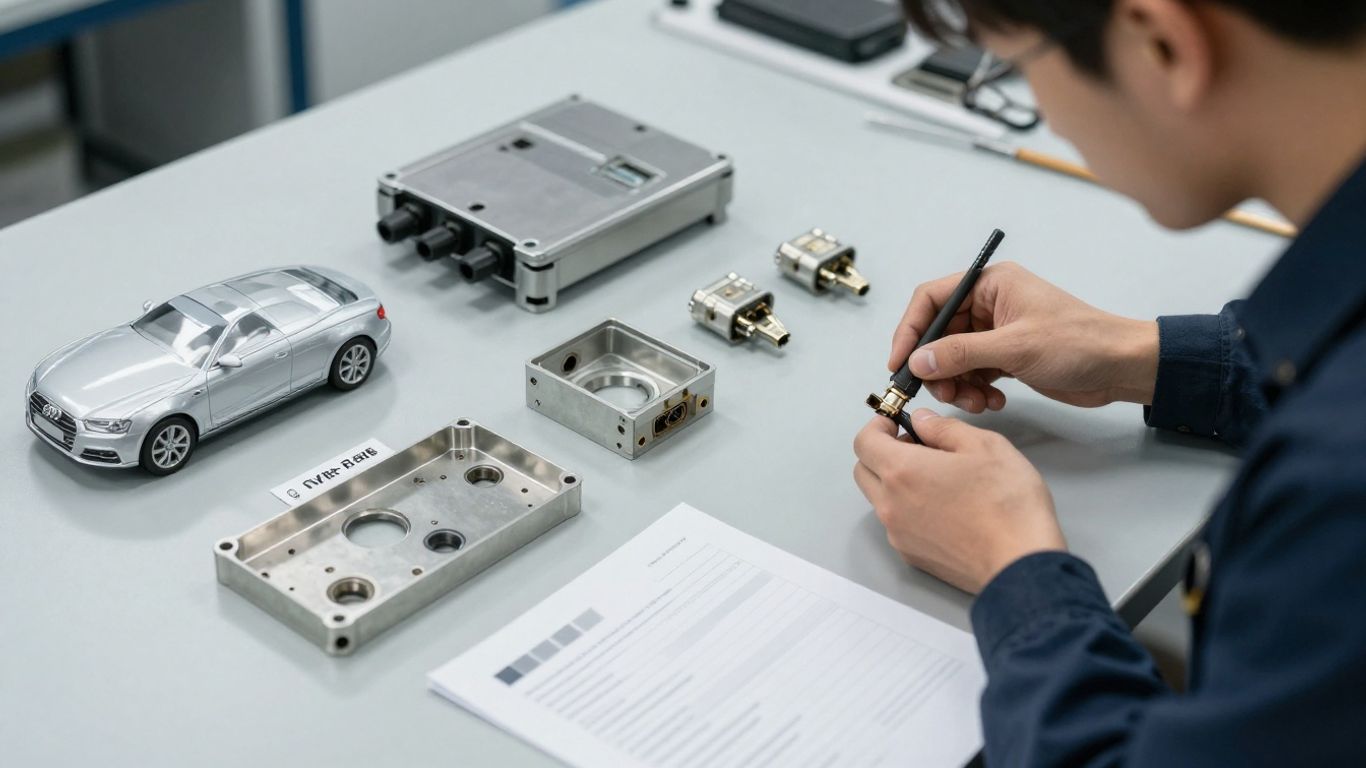
A listing that says only “Audi A8 part” leaves too many questions unanswered. Read the description carefully, compare connector shapes and mounting points, and ask for the original number when it is not shown.
Using the model year and generation
Start by recording the model year and generation, then check whether the vehicle is a pre-facelift or facelift version. A part listed for a broad year range may cover several revisions, or it may simply reflect a seller’s search category rather than confirmed fitment. The vehicle’s build date can also matter when a change occurred during a model year.
Photographs of the vehicle and the old part can help, but they should support—not replace—the identification data. If the seller cannot explain why the listed years apply to your car, treat the match as unconfirmed.
Checking engine, transmission, and drivetrain specifications
Engine and transmission details are especially important for parts connected to cooling, fuel delivery, exhaust systems, control electronics, and the drivetrain. Quattro equipment, axle configuration, and transmission type can change the correct specification even within one generation. Record the engine code and transmission code if they are available on the vehicle documentation or original component.
For an engine or gearbox, ask whether the quoted assembly includes sensors, ancillaries, wiring, or a torque converter. Those details affect both compatibility and the final cost. A bare unit may look attractively priced while requiring several additional parts before installation.
Matching OEM part numbers and revision codes
The original part number is often the most reliable bridge between a vehicle and a replacement. Compare every digit, letter, suffix, and revision code, and ask whether the seller has checked supersession information. A newer revision may replace an older one, but that should be confirmed rather than assumed.
When numbers do not match, request evidence that the parts are interchangeable. Connector locations, software versions, and mounting points can differ beneath an almost identical housing. Keep photographs of the label and connector layout with your repair records.
Confirming left-hand-drive and right-hand-drive compatibility
Steering position affects dashboards, steering racks, pedal assemblies, wiring, wiper arrangements, lighting patterns, and some interior trim. A part removed from a right-hand-drive car may not fit a left-hand-drive vehicle, even if the model year and engine are the same. Side-specific body parts also need careful checking: “driver side” can mean different sides in different markets.
Tell the seller which market the car was built for and specify left or right side using the vehicle’s direction of travel. When ordering lights, racks, or interior components, ask for a clear orientation photograph before paying.
Where to buy reliable A8 second hand parts
The seller matters almost as much as the part. Established dismantlers, specialist suppliers, and recycling centers generally have clearer processes for cataloging, testing, packing, and handling returns. Private listings can sometimes offer a good component, but the buyer usually carries more of the identification and inspection burden.
Ask direct questions and keep the answers in writing. A reliable source should be able to explain the donor vehicle, the part’s condition, dispatch arrangements, and the terms that apply if the component does not fit.
Audi breakers and vehicle dismantlers
Vehicle dismantlers can be a practical source for original components removed from a known donor car. Their inventory may include body panels, lights, interior parts, modules, suspension pieces, and larger assemblies. The quality of the buying experience depends on how carefully the vehicle was recorded and how thoroughly each part was checked.
Ask whether the donor car was running, why it was dismantled, and whether the part was damaged during removal. A dismantler that supplies a stock reference, photographs, and a written warranty gives you more to work with than a listing based on a single generic image.
Specialist used-parts suppliers
A specialist supplier may be better placed to identify unusual A8 components and explain variations between generations. Some suppliers organize stock by model, year, engine, and part number, which reduces the chance of buying from a broad but inaccurate listing. You can also compare Audi A8 parts from breakers when several suppliers offer the same type of component.
Do not assume that “specialist” means every part is tested in the same way. Ask what the grading terms mean, which components are covered by the warranty, and whether the supplier has recorded mileage or a bench-test result.
Online marketplaces and private sellers
Online marketplaces offer a wide range and make price comparison easy, but the listings vary sharply in detail. Look for photographs of the actual part, labels, connectors, mounting points, and any visible damage. Stock photographs, incomplete descriptions, and pressure to pay quickly are reasons to slow down.
Message the seller before ordering and ask a specific fitment question. The response often reveals whether the seller has the part in hand and understands its application. Save the listing, photographs, and correspondence until the part has been fitted and tested.
Local salvage yards and auto recycling centers
A local yard can be useful when you need to inspect a component in person or avoid long-distance shipping. It may also let you compare several similar pieces and check color, finish, connector layout, or physical damage before purchase. Bring the old part or detailed photographs when visiting.
Ask how removed components are stored and whether the yard offers any return period. Exposure to rain, impact during removal, or poor storage can affect electronics, seals, trim, and polished surfaces. Local collection is convenient, but it is not a substitute for condition evidence.
Inspecting used Audi A8 parts before purchase
Inspection is where a promising listing becomes a defensible purchase. The right checks depend on the component, but every buyer should look for evidence of damage, corrosion, incorrect removal, and uncertain history. Photos are helpful; a written description of what was tested is better.
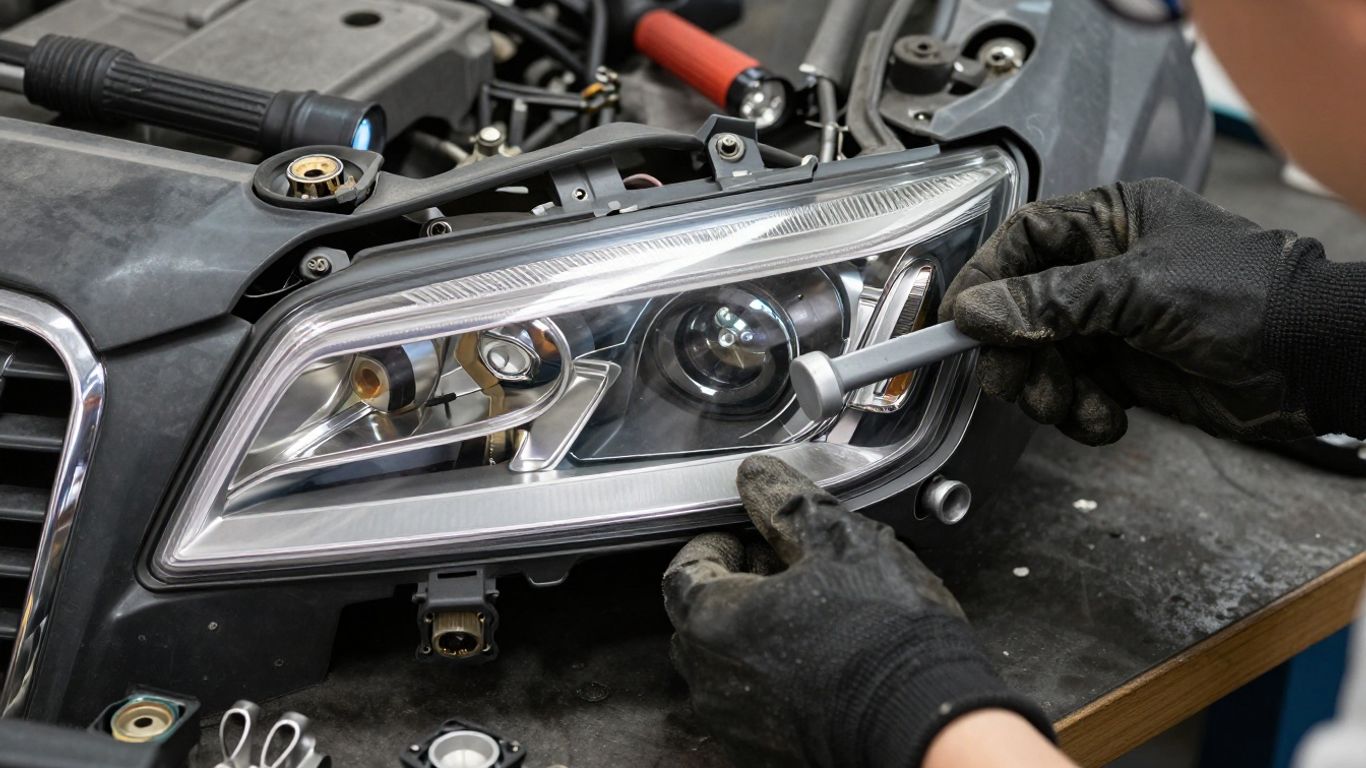
For larger or expensive parts, consider an independent inspection or a professional opinion before committing. That cost is small compared with paying to install an unusable assembly.
Evaluating visible wear, corrosion, and previous damage
Examine mounting tabs, threaded holes, housings, seams, connectors, and painted surfaces. Scratches may be cosmetic, but cracks around mounting points can make a part unusable. Corrosion on terminals, pulleys, fasteners, or aluminum housings may indicate storage or water exposure rather than ordinary service wear.
Ask for photographs in natural light and request close-ups of any area that is hidden in the original listing. A repaired panel may still be suitable, but the repair should be disclosed so you can judge its finish and structural condition.
Checking electronic and mechanical components
Electronic modules should be checked for water intrusion, damaged pins, broken cases, and signs of overheating. Mechanical parts need different questions: look for play, leaks, scoring, bent shafts, damaged threads, and missing hardware. Some faults cannot be confirmed until the component is powered, bench-tested, or installed on the vehicle.
Safety-related systems deserve extra caution. Airbag components, braking parts, steering components, and suspension assemblies should come with credible condition information and be handled according to professional guidance. Never treat an attractive price as proof that such a part is safe.
Requesting photos, mileage, and donor vehicle details
Ask for the donor vehicle’s year, generation, engine, transmission, mileage, and reason for dismantling where available. Mileage is not a complete measure of condition, but it provides useful context when comparing two otherwise similar parts. Request photos of the actual item, not just an example from a catalog.
The following questions are a practical minimum before ordering a costly component:
- Is this the actual part shown in the photographs?
- What is the donor vehicle’s year, engine, transmission, and mileage?
- Has the component been tested, and what exactly was tested?
- Are connectors, brackets, sensors, keys, or mounting hardware included?
The answers should line up with the listing and with your vehicle information. If key details remain vague after a clear request, choose a seller offering better documentation rather than trying to fill the gaps yourself.
Understanding testing, grading, and quality reports
Terms such as tested, inspected, good condition, and grade A only help when the seller defines them. A test report should identify the test performed and its result, not simply repeat the product description. For a module, that may involve communication or power checks; for a mechanical assembly, it may involve measurements, rotation, pressure, or leak checks.
Read the report alongside the warranty. A component can pass a limited bench test while still requiring programming or further inspection after installation. Before ordering, make sure the report covers the failure points that matter for your repair.
Balancing price, condition, and warranty coverage
The cheapest listing is rarely the cheapest repair once every cost is counted. Compare like with like: same part number, similar mileage, equivalent testing, included accessories, and comparable warranty terms. A used component with clear evidence may be better value than a cheaper item with no history.
A simple written comparison keeps the decision grounded. It also makes it easier to explain why a slightly higher price is reasonable when it reduces installation or return risk.
Comparing used-part prices with new OEM alternatives
Check the price of a new original replacement, an aftermarket equivalent, and a used or reconditioned option. Availability may differ, and some components have no practical new alternative. For others, a new part may include a stronger warranty or updated revision that changes the calculation.
Compare the condition and included items rather than focusing only on the headline figure. A used assembly missing a bracket, sensor, or control unit may not be comparable to a complete new package. Affordable reconditioned A8 parts can be worth considering when the supplier explains what was checked and what warranty applies.
Calculating shipping, core charges, and installation costs
Shipping can be substantial for engines, transmissions, bumpers, doors, and other large components. Add packaging, insurance, local taxes where applicable, core charges, specialist tools, fluid replacement, coding, and labor before deciding. A part that must be returned may also require you to pay the initial installation and removal costs twice.
Ask whether the quoted price includes all visible accessories and whether a refundable core charge applies. Get the return freight rules in writing for heavy or fragile items. The true comparison is the installed and working cost, not the number shown beside the part.
Reviewing returns and warranty terms
Read the warranty duration, exclusions, claim process, and required proof of failure. Check whether labor, diagnosis, programming, fluids, and return shipping are excluded. Some warranties apply only if the component is installed by a qualified technician or if related parts are replaced at the same time.
Confirm the window for reporting damage and test the part promptly after delivery. Keep the packaging until the installation is complete, photograph the parcel on arrival, and record the part number before fitting it.
Recognizing unusually low prices and misleading listings
A price far below comparable listings deserves questions, not immediate celebration. It may reflect a missing module, severe cosmetic damage, uncertain fitment, a non-working core, or a listing that uses a stock photograph. Be cautious when the seller avoids part numbers, refuses close-up images, or insists on payment without a clear written description.
Good value still comes with traceable information. Compare several listings, check what is included, and walk away when the explanation does not match the price.
Installing and maintaining second hand A8 parts
Installation is the final part of the purchasing decision, not an afterthought. A correct component can still fail if it is fitted with damaged seals, incorrect fasteners, unsuitable fluids, or incomplete coding. Plan the work before the part arrives and identify any special tools or procedures.
Keep the invoice, listing, photographs, test report, and installation notes together. These records help with warranty claims and make future diagnosis much easier.
Parts that require professional installation
Brakes, steering, suspension, airbags, high-voltage systems, engines, transmissions, and complex fuel or cooling components can create serious risks when installed incorrectly. A professional technician can inspect surrounding parts, identify related faults, and verify torque settings and fluid requirements. They can also tell you when a used component is not worth fitting.
Ask the workshop whether it will inspect the replacement before installation and whether its labor is covered if the part proves faulty. Written agreement on that point avoids confusion later.
Programming and coding replacement electronics
Some replacement modules and electronic assemblies may need coding, adaptation, immobilizer procedures, or configuration before they operate correctly. Fitment alone does not prove that the component is compatible. Ask the seller and installer what programming is expected and whether the replacement is supplied ready for that process.
Do not assume that a module from the same generation can simply be plugged in. Save the original coding information where possible and use a technician with the appropriate diagnostic equipment.
Replacing seals, fasteners, and wear items during installation
A used assembly may be sound while its old seals, clips, gaskets, bushings, or single-use fasteners are not. Replacing inexpensive wear items during the job can prevent leaks, rattles, and repeat labor. Check the manufacturer’s repair requirements for torque-to-yield bolts and sealing surfaces.
Inspect the surrounding hoses, wiring, connectors, and mounts while access is available. This is often the most economical moment to address a related weakness rather than dismantling the same area again.
Testing the vehicle after installation and keeping service records
After installation, check for warning lights, leaks, unusual noise, vibration, poor alignment, and incorrect operation. Test the vehicle in a controlled setting and confirm that any required diagnostic codes have been cleared only after the underlying issue is understood. Recheck fluid levels and fasteners according to the workshop’s procedure.
Record the date, mileage, part number, donor information, installer, and warranty details. A careful service record gives the next technician useful context and helps you judge the real life of the replacement.
Conclusion
Finding quality A8 second hand parts is mainly an exercise in identification, evidence, and total-cost thinking. Match the part to the exact vehicle, ask for meaningful condition details, and use professional installation when safety, electronics, or complex mechanical systems are involved. With those habits, a used component can be a practical repair choice rather than an expensive gamble.
Frequently Asked Questions
Are A8 second hand parts reliable?
They can be reliable when the part is correctly matched, properly inspected, and backed by clear testing or warranty information. Reliability varies by component, donor vehicle, storage, and seller practices.
How do I identify the correct Audi A8 part?
Start with the model year, generation, engine, transmission, drivetrain, steering position, and original part number. Confirm revision codes, connectors, mounting points, and side-specific details before ordering.
Is a used OEM part better than an aftermarket part?
Not automatically. A used OEM component may offer the original design, while a new aftermarket part may offer a stronger warranty or updated construction. Compare specification, condition, testing, and total cost.
What information should a seller provide?
Ask for the actual part photographs, part number, donor vehicle details, mileage, condition, testing performed, included hardware, dispatch information, and warranty or return terms.
Which A8 parts should be installed by a professional?
Professional installation is strongly advisable for brakes, steering, suspension, airbags, engines, transmissions, high-voltage systems, and replacement electronics that require coding or adaptation.
Can an electronic module be installed without programming?
Some modules may work after installation, but others require coding, adaptation, or security procedures. Confirm the requirement with a qualified technician before buying.
How can I avoid buying the wrong used part?
Do not rely on the model name alone. Match the OEM number and revision, provide complete vehicle details, compare photographs, ask specific fitment questions, and choose a seller with a practical return policy.