
Key Takeaways
A successful RS3 build starts with the car’s generation, intended use, and maintenance history rather than a shopping list. The best RS3 performance parts work together as a measured system.
- Identify whether you have an 8V or 8Y RS3 before ordering parts.
- Match engine, drivetrain, tire, suspension, and brake upgrades to the car’s main use.
- Budget for supporting maintenance, installation, alignment, and post-installation checks.
- Prioritize heat control and traction when increasing power.
- Check fitment, legality, warranty implications, and service requirements before buying.
Start with your RS3 platform and performance goals
The right upgrade path depends on more than the RS3 badge. Model generation, transmission calibration, wheel and brake package, mileage, and local regulations all affect which parts make sense. Start by defining how the car is driven, then build a plan around repeatable performance rather than a single impressive dyno number.
A clear goal also makes it easier to source the right component quickly, whether you are buying locally in Melbourne, Sydney, or Brisbane or arranging delivery nationwide. A balanced plan saves money because it reduces duplicate purchases and avoids fitting parts that later limit the rest of the build.
Differences between 8V and 8Y RS3 models
The 8V and 8Y RS3 share the familiar five-cylinder character, but they are not interchangeable platforms. Engine hardware, electronics, cooling layouts, software strategies, body dimensions, wheel clearances, and drivetrain details can vary. Confirm the model year, engine code, transmission, and existing options before treating a part as universal.
Read the manufacturer’s fitment notes carefully and compare them with the vehicle identification details. A component listed for an 8Y may require different brackets, intake routing, software, or fasteners than an apparently similar 8V component. This is especially relevant for engine-bay parts, intercoolers, exhaust sections, suspension hardware, and wheels.
Street, track, and drag racing priorities
A street-driven RS3 benefits from predictable throttle response, quiet cruising, reliable cold starts, comfortable damping, and tires that work across changing weather. A track car needs repeatable braking, stable temperatures, alignment adjustability, and parts that tolerate repeated heat cycles. Drag-oriented builds place greater emphasis on launch behavior, tire preparation, drivetrain control, and straight-line traction.
Those priorities can conflict. A very stiff suspension may feel sharp at a circuit but unsettled on broken roads, while an aggressive tire compound may offer excellent dry grip but poor wet-weather practicality. Decide whether the car needs one dominant purpose or a compromise that remains enjoyable every day.
Setting a realistic performance budget
The purchase price of a part is only one line in the budget. Installation, gaskets, fluids, alignment, calibration, diagnostic time, and potential follow-up work can materially change the total. Reserve money for inspection and correction, particularly when the car has unknown service history or previous modifications.
A useful way to think about the budget is by stage: baseline maintenance, airflow and cooling, software, traction, chassis, and finishing details. Spend first on the areas that remove a known limitation. A modest, well-supported build is usually more satisfying than a high-output package that cannot be used consistently.
Balancing power, comfort, and daily drivability
Power is only useful when the car can deploy it cleanly and remain pleasant between spirited drives. Consider noise, ride height, tire replacement cost, low-speed clutch or transmission behavior, parking clearance, and how often the car will see poor weather. These practical details determine whether an upgrade feels like an improvement after the first month.
Leave room for adjustment. Adjustable damping, reversible intake or exhaust choices, and conservative alignment settings can preserve comfort while giving the car more ability when the road opens up. The goal is a coherent driving experience, not the maximum specification in every category.
Upgrade the 2.5 TFSI engine and airflow system
The 2.5 TFSI responds best when airflow, charge temperature, exhaust flow, fueling, and calibration are treated as connected variables. Adding one part in isolation may produce little benefit if another component becomes the restriction. Begin with the condition of the engine and cooling system, then select hardware that supports the intended calibration.
Before ordering, compare the available specifications, installation requirements, and legal status. Audi RS3 engine upgrades can include breathing and ignition-related components, but every part still needs to be matched to the exact engine and build stage.
Intake systems and turbo inlet upgrades
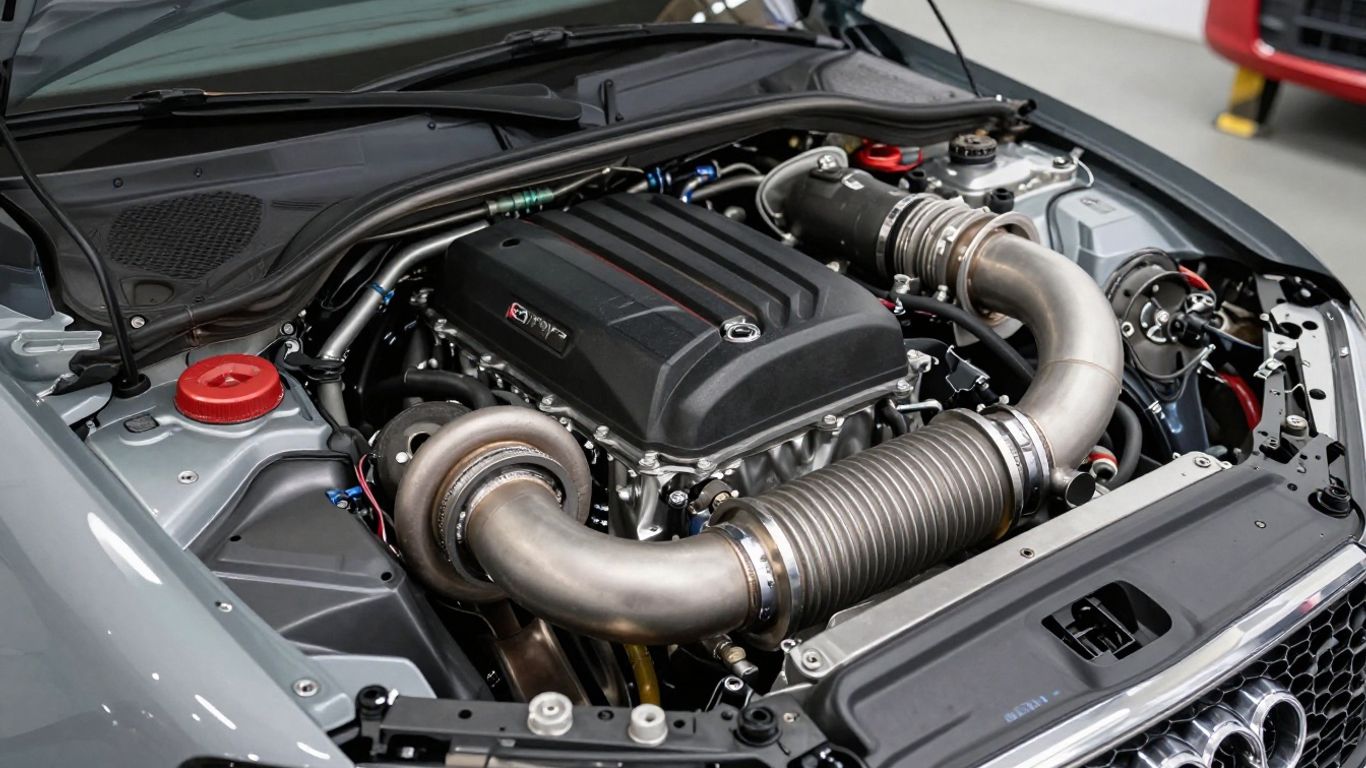
An intake system should provide a suitable air path, secure connections, sensible heat shielding, and a filter that can be serviced. Inspect the inlet diameter, sensor provisions, breather connections, and clearance around the hood and surrounding components. A larger-looking pipe is not automatically a better choice if it creates fitment or calibration complications.
Turbo inlet upgrades belong in the same conversation because the inlet, intake, and turbocharger must work together. Confirm whether the part is designed for the 8V or 8Y platform and whether any adapter, breather provision, or software adjustment is required. Keep the original parts labelled if the car may return to stock.
Intercoolers and charge-air temperature control
An intercooler’s value appears during repeated acceleration, warm ambient conditions, and back-to-back track laps, when heat can reduce consistency. Look beyond the headline dimensions: core design, end tanks, mounting, pressure-drop behavior, pipe connections, and protection from road debris all matter.
Installation should include a careful check for leaks, hose movement, and contact with nearby components. Afterward, log intake temperatures and boost behavior under comparable conditions. The useful result is not simply a cooler number on one pull; it is a more stable operating window across repeated use.
Downpipes, exhaust systems, and emissions considerations
Downpipes and exhaust systems influence flow, sound, heat, and emissions equipment. Before choosing one, check whether catalytic equipment is retained, whether sensors remain correctly positioned, and whether the configuration is legal for road use where the vehicle is registered. A part that is suitable for competition use may not be appropriate for a daily-driven car.
The exhaust should also be judged as part of the whole system. Excessive noise, drone, or heat near underbody components can make a powerful car tiring to use. Audi RS3 exhaust upgrades are best considered alongside intake, intercooling, calibration, and local compliance rather than as an isolated power purchase.
ECU tuning, supporting hardware, and fuel requirements
ECU calibration should match the installed hardware, fuel quality, temperature range, and intended use. Ask what supporting parts are required, how the calibration is validated, and what data should be monitored after installation. Fuel quality must be consistent with the chosen tune, and the engine should be free of misfires, boost leaks, and service faults first.
A responsible calibration plan includes a return-to-stock option, clear revision notes, and a way to identify abnormal behavior. If the car experiences knock activity, unusual exhaust temperature, fuel-pressure errors, or repeated intervention, stop testing and investigate instead of assuming the software is the only answer.
Improve traction and drivetrain performance
More engine output increases the demands placed on the transmission, driveshafts, mounts, tires, and all-wheel-drive system. Traction upgrades are therefore not just about launching harder; they are about making torque delivery predictable and reducing unnecessary shock through the drivetrain. Maintenance history is as important as the advertised power figure.
Use software and hardware together. The car should remain controllable when the road is cold, wet, uneven, or crowded, not only when the tires are fully prepared at a drag strip.
Engine and transmission software tuning
Engine software determines how torque is produced, while transmission software influences shift behavior, clutch pressure, launch strategy, and torque intervention. The two calibrations should agree about the engine’s output and the drivetrain’s operating limits. A mismatch can create harshness, inconsistent shifts, or protective intervention.
Ask for a clear explanation of what changes and what remains standard. A useful calibration process records baseline behavior, applies one meaningful change at a time, and checks logs afterward. This makes faults easier to isolate and helps preserve the car’s everyday manners.
Launch control and torque management
Launch control places a concentrated load on the engine, transmission, tires, axles, and all-wheel-drive system. Repeated attempts can build heat quickly, especially when traction varies. Use it sparingly and allow the car to cool according to the manufacturer’s guidance and the tuner’s instructions.
Torque management is not merely a restriction to remove. It can protect components, smooth gear changes, and help the tires maintain grip. For a street car, a controlled launch that repeats reliably is usually more valuable than an aggressive setting that works only under perfect conditions.
Haldex and quattro system maintenance
All-wheel-drive performance depends on fluid condition, correct service intervals, clean filters where applicable, and inspection for leaks or damaged components. Do not assume that a car with strong launches has a healthy system. Uneven tire wear, mismatched tire circumferences, warning lights, or unusual engagement behavior deserve attention before adding power.
Use four tires with compatible specifications and maintain consistent pressures. If the car has been modified, document the service work and check that calibration, tire size, and drivetrain components remain compatible. Preventive maintenance is often cheaper than diagnosing a traction problem after a failure.
Upgraded mounts and drivetrain reliability
Stiffer mounts can reduce unwanted movement and make throttle transitions feel more direct, but they may also transmit more vibration into the cabin. Choose them according to the car’s use and accept that a track-focused solution may compromise refinement. Inspect the surrounding brackets and fasteners rather than treating mounts as an independent bolt-on.
Reliability also depends on heat management, fluid condition, fastener torque, and installation quality. After fitting mounts or drivetrain hardware, check for contact under load and listen for new noises during acceleration, braking, and reversing. Small changes are easier to diagnose when the rest of the car is documented.
Choose suspension, braking, and handling parts
Handling upgrades should make the RS3 easier to place, stop, and control, not simply lower it or increase stiffness. The correct choice depends on road quality, tire grip, ride-height goals, and how much adjustment the owner is willing to manage. Brakes and suspension should be developed as a pair because more cornering speed increases the demand on stopping performance.
Plan the installation around an alignment and a proper inspection. RS3 handling upgrades can cover suspension, cooling, and wheel-related changes, but each component still needs to fit the vehicle’s generation and existing setup.

Lowering springs versus adjustable coilovers
Lowering springs are comparatively simple and can improve stance and body control when matched to the original dampers. Their fixed rate and height make them convenient, but they offer less control over ride height and damping. Confirm the spring’s intended axle loads and the amount of lowering before installation.
Coilovers add adjustment and can provide a wider range of setup choices, though that flexibility demands careful installation and tuning. Excessive lowering can reduce suspension travel, create bump-steer concerns, and cause rubbing. Set the car for usable travel first, then refine the height.
Sway bars, control arms, and alignment settings
Sway bars alter the balance between front and rear roll resistance, while control arms can add adjustability for camber or geometry. These parts should be chosen with the tire, spring, and damper combination in mind. Changing one end of the car can affect turn-in, mid-corner balance, traction, and tire wear.
Alignment should begin with a measured baseline. Record ride height, camber, toe, and steering-wheel position, then make moderate changes and inspect the tire temperatures and wear pattern. For a street car, preserving stable braking and even tire wear is generally more useful than chasing an extreme setting.
Brake pads, rotors, and fluid for street use
Street brakes need predictable cold bite, low noise, manageable dust, and reliable performance in traffic. Pad friction characteristics, rotor condition, fluid age, and caliper hardware all matter. A fresh high-temperature fluid and correctly bedded pads may deliver a larger practical improvement than a visually dramatic rotor change.
Inspect disc thickness, surface condition, pad taper, hose condition, and caliper movement. After installation, follow the bedding procedure and allow the brakes to cool before judging pedal feel. Do not mix components without checking their compatibility with the factory caliper and electronic systems.
Track-focused cooling and brake upgrades
Track use creates repeated heat that the street rarely produces. Brake ducts, higher-temperature fluid, track-capable pads, and improved airflow can help, but each solution has trade-offs in noise, dust, service intervals, and road manners. Engine and transmission temperatures should be monitored alongside brake performance.
Prepare a track inspection routine before the first session. Check wheel torque, fluid levels, tire condition, brake pad thickness, and signs of rubbing. A part becomes useful only when it can be inspected, maintained, and replaced before it reaches its limit.
Select wheels, tires, and exterior performance parts
Wheels and tires are among the most noticeable RS3 performance parts because they affect grip, steering response, ride quality, braking clearance, and unsprung mass at once. Exterior components can add visual intent, but fitment and durability should remain the deciding factors. Start with tire requirements and brake clearance, then choose the wheel around them.
Check load ratings, hub dimensions, offset, width, fender clearance, and the effect of spacers. A wheel that fits at rest may contact under compression or steering lock, so test the complete assembly before committing to a full set.
Choosing wheel sizes and offsets
The correct wheel size is not simply the largest diameter that fits. Width, offset, spoke shape, center bore, brake clearance, and tire profile all interact. Compare the proposed wheel with the factory package and test for caliper, strut, inner-liner, and outer-fender clearance.
If spacers are used, verify hub engagement, stud or bolt length, torque procedure, and certification requirements. Changes in offset can alter steering feel and bearing load, so use them to solve a measured fitment goal rather than to create an aggressive stance alone.
Summer, all-season, and track tire compounds
Summer tires generally prioritize dry and warm-weather grip, while all-season tires trade some peak performance for broader temperature and weather usability. Track compounds can provide substantial grip but may require heat, careful storage, and more frequent inspection. Select according to the actual climate and driving calendar.
Keep the same tire type across an axle and follow the manufacturer’s size and load guidance. Tire pressure should be checked cold and reviewed after use, since heat and driving style change the result. A powerful car on unsuitable tires is rarely satisfying, regardless of its engine output.
Lightweight wheels and unsprung weight
Reducing wheel and tire mass can improve response over bumps, steering reaction, acceleration, and braking feel. The benefit depends on where the mass is removed and whether the new wheel remains strong enough for local roads and track use. Weight should never be considered without checking construction, load rating, and impact resistance.
Compare complete wheel-and-tire assemblies rather than wheel weights alone. A heavier tire can erase the advantage of a light rim, and an ultra-low-profile setup may reduce comfort or increase damage risk. The best package is light, durable, and properly matched to the car.
Aerodynamic upgrades and carbon-fiber components
Front lips, splitters, side skirts, rear wings, and other exterior parts should be checked for mounting strength, ground clearance, drainage, and compatibility with existing trim. A decorative component may have little aerodynamic effect, while a functional part can create additional load and require balanced front-to-rear consideration.
Carbon-fiber components also need careful inspection for finish quality, panel alignment, fastener access, and resistance to everyday impacts. Carbon-fiber body kits are most useful when the design, mounting method, and intended driving environment are understood before purchase.
Plan a reliable RS3 performance build
A reliable build is a process of sequencing, measurement, and restraint. Keep records of the car’s original condition, every installed component, software revision, fluid change, and observed symptom. That history helps a workshop diagnose problems and helps the owner know which change produced a real improvement.
Parts supplied through a broad car-parts network can make sourcing faster and more affordable, but availability should not replace fitment checks. Confirm the exact application before installation and ask for help when the catalog information does not answer a technical question.
Matching parts for a balanced upgrade path
Start with tires, brakes, cooling, and maintenance if the car is used hard. Then address airflow and calibration, followed by traction and chassis refinement. The order can change with the vehicle’s condition, but every step should support the next rather than create a new bottleneck.
A simple planning table can keep the sequence visible and expose missing support work:
| Build stage | Main purpose | Checks before purchase |
|---|---|---|
| Baseline service | Establish a healthy starting point | Fault scan, fluids, leaks, ignition, tires |
| Airflow and cooling | Support repeatable engine output | Fitment, hoses, temperature logging |
| Software calibration | Coordinate torque and response | Fuel quality, supporting hardware, revisions |
| Chassis and brakes | Control and stop the added performance | Clearance, alignment, pad and fluid condition |
Use the table as a planning aid, not as a substitute for the vehicle’s service history. If the baseline stage reveals worn mounts, tired dampers, or poor tires, correct those issues before judging the next modification.
Supporting maintenance before adding power
Maintenance should cover the basics before any major performance change. That includes fluid condition, spark plugs, ignition coils, filters, cooling-system health, hoses, belts where applicable, battery condition, and diagnostic fault codes. The inspection should also include worn bushings, wheel bearings, brake lines, and underbody damage.
A sensible pre-build checklist is short enough to use every time:
- Scan for stored and pending faults before ordering hardware.
- Confirm tire age, tread, pressure, and matching specifications.
- Inspect fluids, leaks, hoses, clamps, and service intervals.
- Measure brake pads, rotors, wheel clearance, and suspension wear.
Completing those checks gives the new parts a clean baseline. It also prevents a tuning issue from being blamed on an old misfire, boost leak, weak battery, or overdue fluid service.
Common fitment and installation issues
Typical problems include incorrect model-year assumptions, missing adapters, inaccessible fasteners, rubbing under compression, sensor wiring tension, and hardware that needs replacement rather than reuse. Exhaust and intake work may also expose brittle clips or seals that were not obvious during a visual inspection.
Photograph the original routing and label removed hardware. Dry-fit components before applying final torque, check moving clearances at full steering lock and suspension compression, and follow the supplied torque sequence. If the installation changes ride height or wheel position, schedule an alignment afterward.
Dyno testing, data logging, and ongoing inspections
A dyno can help compare changes when the test conditions and procedure are consistent, but the number is only one part of the evaluation. Road behavior, intake temperature, boost, fuel pressure, ignition correction, oil temperature, coolant temperature, and transmission behavior may matter more for a daily-driven car. Use data to identify trends rather than chase a single peak.
Inspect the car after the first few drives and again after the first hard session. Look for loose clamps, fluid seepage, tire contact, uneven pad wear, unusual vibration, and changes in noise. Keeping a simple log of dates, mileage, conditions, and symptoms makes ongoing ownership far less frustrating.
Conclusion
Choosing RS3 performance parts is easier when the build is treated as a connected system. Confirm the platform, define the use, protect the drivetrain, control heat, and give tires, brakes, suspension, and maintenance equal attention. A measured build may take longer than a rushed parts order, but it is more likely to deliver speed that remains enjoyable, reliable, and usable.
Frequently Asked Questions
What should I upgrade first on an RS3?
Begin with a full inspection and baseline maintenance, then address tires, brakes, cooling, and any known faults. Once the car is healthy, choose engine or chassis upgrades according to the intended use.
Are 8V and 8Y RS3 parts interchangeable?
Not necessarily. Confirm the generation, model year, engine code, transmission, mounting points, electronics, and manufacturer fitment notes before ordering any component.
Is an intake upgrade worth adding to a stock RS3?
It can be useful when it is correctly fitted and matched to the rest of the airflow system, but the result depends on the specific design, calibration, heat management, and vehicle condition.
Do I need an intercooler before tuning?
That depends on the tune, climate, usage, and supporting hardware. Repeated high-load driving and increased boost can make charge-air temperature control more important.
Are coilovers better than lowering springs?
Neither is universally better. Springs offer simplicity, while coilovers provide more adjustment. The appropriate choice depends on ride comfort, track use, desired height, and willingness to set up the suspension.
What tires work best for a modified RS3?
Choose based on climate, road use, temperature range, and whether the car visits a circuit. Match the tire size and load rating to the wheel and vehicle, and use compatible tires across each axle.
How can I keep a modified RS3 reliable?
Use compatible parts, maintain fluids and ignition components, monitor temperatures and logs, inspect the car after hard use, and investigate warning signs promptly instead of continuing to add power.