

Key Takeaways
Buying RS6 used parts takes more than matching a model name to a listing. Confirm the generation, part number, condition, and installation requirements before paying.
- Confirm the RS6 generation, VIN, part number, and drive side.
- Compare genuine, refurbished, used, and aftermarket options carefully.
- Ask for testing details, photos, mileage, and return terms.
- Include shipping, taxes, programming, fluids, and labor in the budget.
- Use specialist help for high-voltage, electronic, drivetrain, and suspension work.
Understanding Audi RS6 generations and part compatibility
The RS6 name covers several very different cars, so compatibility is never guaranteed by the badge alone. Engine layouts, transmissions, electronics, bodywork, and suspension systems changed substantially between generations. Before searching for RS6 used parts, identify the exact car and the exact component you need.
Key differences between C5, C6, C7, and C8 models
The C5, C6, C7, and C8 generations use different platforms and powertrains, with changes that affect both major assemblies and small fittings. A body panel may resemble another generation’s panel while having different mounting points, sensors, or trim attachments. Treat the generation as a starting point, not proof of fitment.
Record the model year, body style, engine, transmission, and equipment level. Performance brakes, adaptive suspension, lighting, and interior electronics can vary even among cars from the same generation. If a listing lacks these details, ask before assuming it will work.
Identifying the correct part by VIN and part number
A VIN gives a dismantler or parts specialist a far better reference than a general search term. Compare the number stamped or printed on the original component with the seller’s number, including suffixes and revision letters. A visually similar module can still require different software or connectors.
Photograph the old part before removing it, especially its label, plugs, brackets, and mounting points. When a number has been superseded, ask the seller or technician to confirm that the replacement is an approved interchange rather than relying on an informal marketplace description.
Checking left-hand-drive and right-hand-drive compatibility
Drive side affects dashboards, steering components, pedal assemblies, wiring, seats, mirrors, headlights, and some body trim. A component advertised simply as “front” or “driver side” may be ambiguous when it crosses an international market. Confirm whether the listing uses the seller’s perspective or the vehicle’s direction of travel.
For seats, check airbag placement, controls, memory functions, heating, trim color, and connector layout. Listings for RS6 front seats can be useful for comparison, but the equipment description still needs to match your car.
Matching performance, body, and interior components
Performance parts should be matched as a system. Brake calipers, discs, pads, wheels, and sensors need compatible dimensions and clearances, while drivetrain components must suit the relevant transmission and quattro arrangement. Body and interior parts also depend on trim level, options, and whether the car is a sedan, Avant, or another configuration.
Use measurements and photographs alongside the part number. For a C7 build, C7 performance parts may help you see how fitment and equipment descriptions are presented, but any upgrade or replacement should still be checked against the individual vehicle.
Choosing between OEM, refurbished, and aftermarket parts
The cheapest purchase price is not always the lowest repair cost. Genuine parts can make sense for safety-critical or highly integrated systems, while refurbished components may offer a useful middle ground. Aftermarket parts can also be appropriate when the maker provides clear specifications and reliable fitment information.
The right choice depends on the component, its failure consequences, and the quality of the evidence supplied with the listing.
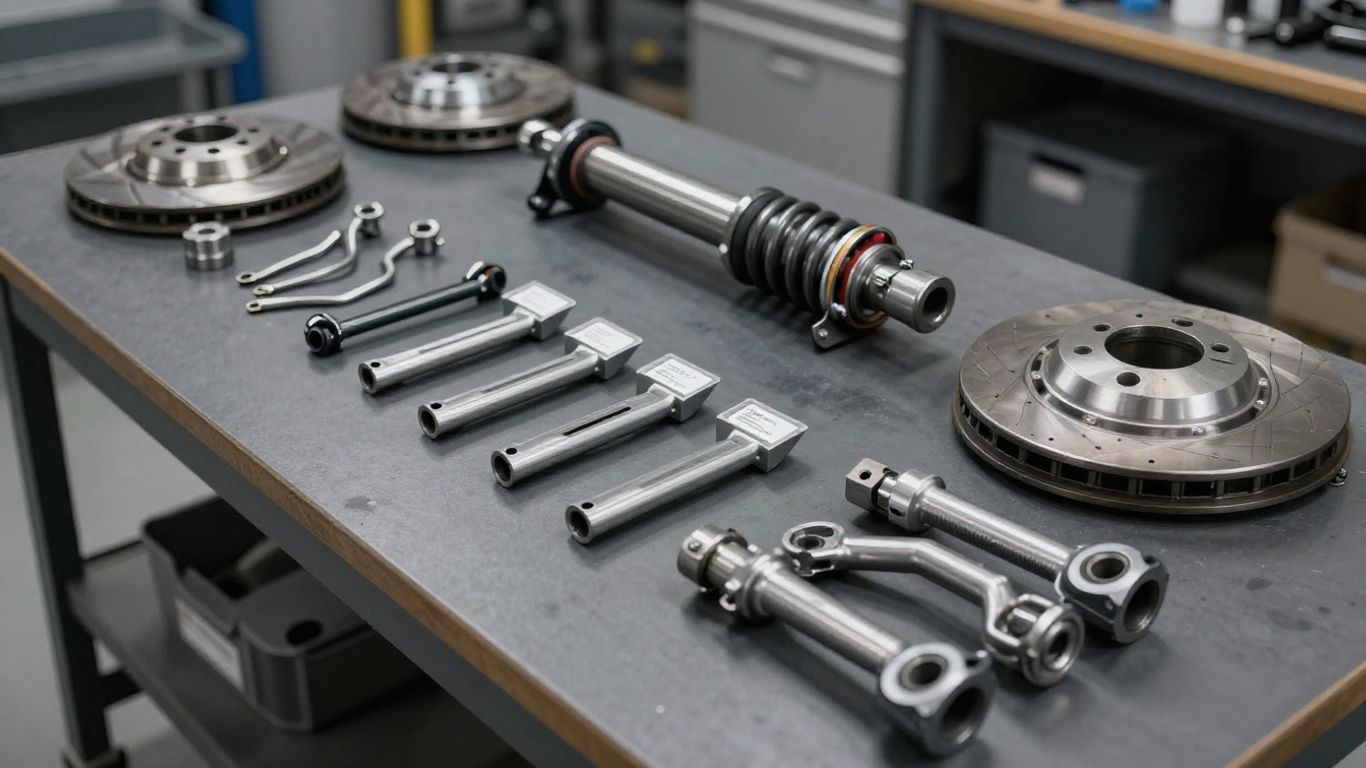
This kind of comparison is most useful when it is tied to a specific repair rather than treated as a general ranking of part types.
When genuine Audi parts are worth the extra cost
A genuine part may be worthwhile when software compatibility, crash protection, sealing, or precise calibration matters. Examples include certain control modules, restraint components, sensors, and parts whose fit affects water ingress or structural alignment. Confirm the current part number and whether coding or adaptation will be required.
For routine trim, brackets, or non-critical hardware, a quality used component may be a sensible alternative. The decision should reflect risk and expected service life, not just the label on the box.
How refurbished components compare with used parts
A used part normally comes from another vehicle and may have its original wear, corrosion, or service history. A refurbished part has usually been cleaned, tested, repaired, or rebuilt, although the exact process differs by seller. Ask what was replaced and what tests were performed rather than assuming “refurbished” means fully remanufactured.
For motors, compressors, modules, and transmissions, request a written description of the testing process. A short warranty can add reassurance, but it does not replace checking the part’s compatibility.
Evaluating aftermarket alternatives for RS6 repairs
Aftermarket parts should be judged by dimensions, materials, certifications where relevant, and the supplier’s fitment data. Avoid listings that use broad claims without specifying the applicable generation or engine. For cosmetic parts, finish and alignment may be the main concerns; for mechanical parts, tolerances and durability matter more.
Read the installation requirements before ordering. A part that appears inexpensive can become costly if it needs extra adapters, different fasteners, or repeated removal because the fit is poor.
Avoiding parts that compromise performance or safety
Safety systems deserve conservative purchasing decisions. Do not buy damaged airbags, cracked brake components, bent suspension parts, or electronic modules with unknown water exposure simply because the price is attractive. Ask for close-up photographs of contact surfaces, connectors, seals, and casting numbers.
A useful screening list before payment is:
- Confirm the exact part number and vehicle application.
- Ask whether the part was tested, and request the test result.
- Check for cracks, corrosion, repaired mounts, and missing hardware.
- Confirm the warranty period and return conditions.
That short process will not eliminate every risk, but it helps separate a documented component from a vague listing.
Finding reliable sources for RS6 used parts
A reliable source makes the condition and origin of a component easier to understand. Specialist dismantlers often know which options were fitted to a donor vehicle, while marketplaces provide breadth but require more independent checking. Local networks can also uncover parts that never appear in a formal catalog.
Across Melbourne, Sydney, Brisbane, and nationwide, the most useful supplier is usually the one that can answer specific questions quickly and document what it is selling.
Specialist dismantlers and vehicle recyclers
Dismantlers can often provide donor mileage, photographs, stock numbers, and details about how a part was removed. Ask whether the vehicle was running, flooded, accident-damaged, or dismantled for another reason. For engines and gearboxes, the donor’s service history and test evidence are especially valuable.
A specialist may also identify associated hardware that a generic search misses. That can prevent delays caused by receiving a bare component without brackets, sensors, or connectors.
Online marketplaces and parts directories
Online catalogs are convenient for comparing availability, but descriptions vary widely. Audi RS6 parts can be a useful search starting point, while a listing for used Audi RS parts may include engines, transmissions, AWD components, suspension, body panels, interiors, and electronics. Treat those categories as leads to investigate, not as a substitute for vehicle-specific confirmation.
Check the seller’s photos against the written description. Stock images, vague mileage, and generic compatibility language should prompt a question before an order is placed.
Audi enthusiast forums and owner networks
Owner groups can help identify common failure points, superseded numbers, and practical installation issues. Their advice is most useful when it points you toward documentation or a verifiable part number. Forum recommendations are personal experiences, not guarantees about another car or seller.
Use the discussion to form better questions, then confirm the answer with the manufacturer’s documentation, a qualified technician, or the dismantler supplying the part.
Questions to ask a seller before purchasing
A good seller should be able to answer more than “yes, it fits.” Ask for the donor vehicle details, exact part number, condition, testing method, included hardware, dispatch timing, and return policy. Also confirm whether the price includes a core charge or excludes essential accessories.
Keep those answers in writing. If the seller avoids a basic fitment question or cannot provide a clear photograph of the actual part, moving on is usually cheaper than correcting a wrong order.
Inspecting common RS6 used parts before buying
Inspection is about matching the component’s visible condition with its likely internal life. A clean photograph cannot prove that a turbocharger, gearbox, module, or damper works, but it can reveal obvious reasons to reject it. Ask for evidence that fits the part rather than requesting a generic “tested” label.
If you are not equipped to assess a high-value component, pay for an inspection before committing to the purchase.
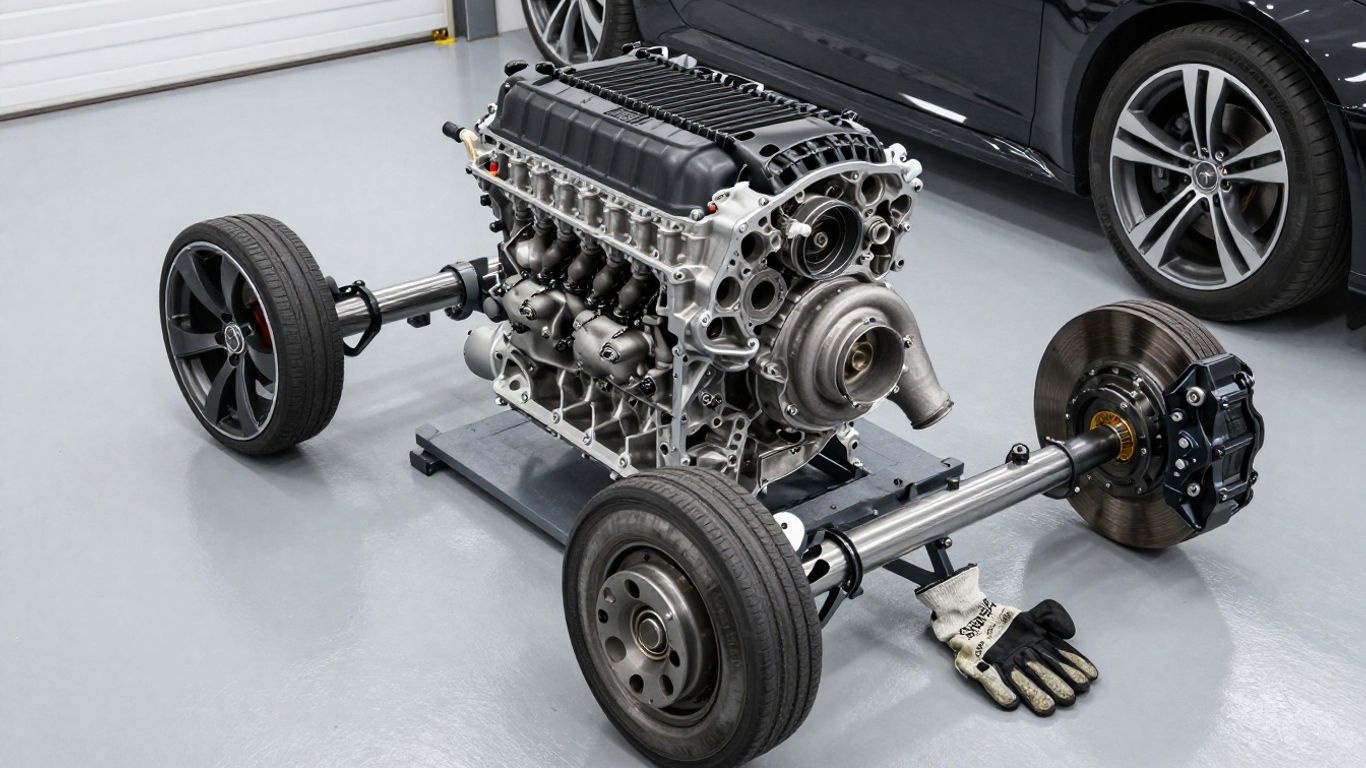
The same principle applies to body and interior parts: inspect the actual item, not only a catalog image.
Checking engines, turbochargers, and transmissions
Look for oil or coolant contamination, broken mounts, damaged threads, missing sensors, and signs of overheating. For an engine, compression or leak-down results are more useful than a statement that it came from a running vehicle. For turbochargers, check shaft play, wheel damage, oil residue, and actuator condition.
Transmission listings should identify the exact gearbox code and include information about noise, engagement, fluid condition, and testing. Ask whether the torque converter, transfer components, or control unit are included when the listing suggests a complete assembly.
Assessing suspension, brakes, and quattro components
Inspect dampers for leaks, air-suspension components for cracking, and control arms for damaged bushes or bent metal. Brake discs should be checked for thickness, cracks, heavy scoring, and uneven wear. Calipers need attention around pistons, seals, bleeders, and mounting points.
For quattro-related parts, confirm the correct differential or transfer-unit code and look for leaks, impact damage, and stripped fasteners. Matching only by axle position can be insufficient when ratios or electronic controls differ.
Examining body panels, wheels, and lighting
Body panels should be checked along their edges, mounting tabs, folds, and inner surfaces. Color matching is never guaranteed from a photograph, even when the paint code is the same, because age and finish can vary. Wheels need inspection for cracks, bends, corrosion, correct width, offset, and clearance around the brake package.
Headlights and taillights should be photographed while illuminated if possible. Confirm lens condition, mounting tabs, ballast or control modules, and whether the unit is designed for the vehicle’s drive side and market.
Reviewing electronic modules and interior parts
Electronic modules can fail because of water ingress, damaged connectors, incompatible software, or a donor vehicle’s security pairing. Ask whether the module is plug-and-play, requires coding, or must be adapted by a specialist. A part number alone may not tell the whole story.
Interior parts are easier to overlook, but seat airbags, heating elements, memory motors, screens, and trim clips can add cost. Check every switch and connector included in the sale, especially when replacing a high-option component with a lower-spec version.
Estimating prices and total replacement costs
The purchase price is only one line in the repair budget. Shipping size, insurance, taxes, core charges, diagnosis, programming, fluids, seals, and labor can change the final figure quickly. Build the estimate before ordering so a seemingly cheap component can be compared fairly with another option.
For a broad catalog search, used 2025 Audi RS6 parts illustrates how many categories can appear under one model heading. That breadth is useful, but the specific vehicle and part still determine the real cost.
Factors that affect the value of used RS6 parts
Value depends on rarity, condition, mileage, test evidence, completeness, demand, and how difficult the component is to source. A common trim piece may be inexpensive, while a tested electronic module or undamaged performance brake assembly can command more. A part from a low-mileage donor is not automatically better, but credible donor information adds context.
Condition should be described precisely. “Good” is less useful than “no cracks, tested motor, minor cosmetic wear, includes connector and mounting bracket.” Clear condition evidence matters more than polished sales language.
Comparing shipping, taxes, and core charges
Large panels, wheels, engines, and transmissions need different packing and freight arrangements. Confirm whether the quoted price includes delivery, insurance, local taxes, and any brokerage costs. A core charge may be refundable only if your old component meets the seller’s return criteria.
Ask how damage in transit is handled and whether you must inspect the package before signing. Written terms are especially important for heavy parts where return freight can be expensive.
Calculating installation and programming expenses
Labor depends on access, corrosion, seized fasteners, required calibration, and whether surrounding components must be removed. Electronic parts may need coding, adaptation, or security-related procedures. Suspension and alignment work can also follow a component replacement even when the part itself is inexpensive.
Add new seals, fluids, filters, fasteners, and one-time-use hardware where appropriate. A realistic estimate makes it easier to decide whether a used, refurbished, or new component is the sensible route.
Recognizing unusually cheap or incomplete listings
A very low price can reflect missing accessories, unknown history, cosmetic damage, a non-returnable sale, or a part that has not been tested. Compare the photographs with the promised contents and ask what is not included. If the listing omits the part number, donor details, or warranty, leave room for substantial uncertainty.
Do not let urgency replace verification. Rare parts can sell quickly, but a rushed purchase of the wrong revision usually creates a longer delay.
Buying high-risk and high-value RS6 components
Large drivetrain assemblies, air-suspension hardware, and performance brakes deserve a higher standard of proof than ordinary trim. Their failure can immobilize the car or create a safety problem, and their installation often involves specialist tools. Make the seller’s testing policy part of the buying decision.
For expensive parts, a documented return path can be nearly as valuable as a small discount.
What to inspect on engines and gearboxes
Request the engine code, gearbox code, donor mileage, and reason for removal. Ask for compression, leak-down, pressure, diagnostic, or road-test information when relevant. Inspect drain plugs, fluid residue, mounts, housings, connectors, and exposed openings for contamination or impact damage.
Clarify whether accessories, sensors, wiring, control units, and torque-converter parts are included. A “complete” assembly can mean different things to different sellers.
Evaluating air suspension and adaptive dampers
Air springs, compressors, valve blocks, and adaptive dampers should be checked for leaks, corrosion, torn rubber, bent shafts, and electrical damage. Ask how the components were stored and whether they were tested under pressure. A photograph cannot establish that an air spring holds pressure overnight.
Installation may require calibration, ride-height setup, or alignment. Include those steps in the budget before comparing a used assembly with a rebuilt alternative.
Checking carbon-ceramic and performance brake systems
Carbon-ceramic discs need careful inspection for chips, cracks, surface damage, and remaining usable thickness. Calipers should be checked for piston movement, seal condition, bleeder damage, and mounting integrity. Confirm wheel clearance and whether compatible pads, sensors, and hardware are included.
Do not assume a visually clean brake part has a long service life. Ask for measurements and clear photographs of both friction surfaces, then have a qualified technician make the final safety assessment.
Understanding warranties, returns, and testing policies
Read the warranty exclusions before paying. Some policies cover replacement only, while others exclude labor, installation damage, wear items, or incorrect ordering. Confirm the time limit, evidence required for a claim, and whether the part must be returned in its original condition.
A seller who explains the test method, keeps accurate stock records, and gives a specific return process is easier to deal with if something goes wrong. Keep invoices, messages, photographs, and packaging until the repair has been completed and checked.
Installing and maintaining used RS6 parts
Correct installation protects the part and helps reveal problems before they become expensive. Some jobs are straightforward, while others involve coding, high-pressure systems, alignment, or specialized lifting and diagnostic equipment. When the consequences of a mistake are high, professional labor is part of the part’s true cost.
Plan the job around inspection, installation, calibration, and a post-repair test rather than treating delivery as the finish line.
Which repairs require specialist equipment
Engine and transmission work may require lifting equipment, specialty locking tools, fluid equipment, and diagnostic support. Air suspension, advanced brakes, and electronic systems can also require pressure testing, bleeding procedures, calibration, or safe isolation methods. Do not improvise around stored energy, airbags, or heavy assemblies.
A workshop familiar with the relevant RS6 generation can identify related faults while the component is accessible. That may prevent paying for the same disassembly twice.
Programming and coding replacement electronics
Replacement modules may need coding, adaptation, or configuration to communicate with the vehicle. Confirm the procedure before buying because a low-priced module that cannot be adapted may not be useful. Save the original module’s information and scan the vehicle for fault codes before removal when possible.
After installation, verify warning lights, communication, sensor readings, and all related functions. A component that powers on is not necessarily fully configured.
A repair video can help explain the sequence of a job, but it should supplement the vehicle’s service information and a technician’s judgment rather than replace them.
Replacing seals, fluids, and wear items during installation
Used assemblies often justify replacing accessible seals, filters, fluids, gaskets, clips, and one-time-use fasteners. Inspect mating surfaces before installation and clean connectors without forcing damaged pins. Use the correct fluid specification and record what was added.
This is especially useful for engines, gearboxes, differentials, cooling components, and suspension systems. Small preventive items are inexpensive compared with repeating the labor for a leak or failed wear part.
Keeping records for future servicing and resale
Keep the invoice, part number, donor information, mileage, photographs, test results, warranty, and installation date. Note any coding, calibration, fluid change, or associated repair. These records make future diagnosis easier and give a prospective buyer a clearer maintenance history.
A careful file also helps you identify which components are original, which are used replacements, and which remain covered by a seller’s warranty. That clarity is valuable long after the initial repair.
Conclusion
The best RS6 used parts purchase is built on careful identification, honest condition evidence, and a complete installation budget. Confirm compatibility by VIN and part number, question vague listings, and use specialist help when electronics, drivetrain, suspension, or braking systems demand it. A slower decision usually costs less than correcting the wrong one.
Frequently Asked Questions
Are RS6 used parts interchangeable across all generations?
No. The C5, C6, C7, and C8 generations differ in platforms, engines, transmissions, electronics, bodywork, and suspension. Confirm the VIN, part number, equipment, and body style before ordering.
Is a refurbished part better than a used part?
Not automatically. Refurbished parts may have been cleaned, repaired, or tested, but the process varies. Ask what work was completed, what was tested, and what warranty applies.
How can I verify that a used RS6 part will fit?
Compare the vehicle VIN, exact part number, revision suffix, connector layout, mounting points, and equipment level. Ask the seller to confirm the application in writing.
What should I ask before buying an engine or gearbox?
Request the donor mileage, engine or gearbox code, reason for removal, test results, included accessories, fluid condition, warranty, and return terms. Clarify whether control modules and related hardware are included.
Do replacement RS6 electronic modules need programming?
Some do. A replacement module may require coding, adaptation, configuration, or security-related procedures. Confirm this before purchase and budget for diagnostic work.
How much should I budget beyond the part price?
Allow for shipping, taxes, core charges, labor, fluids, seals, fasteners, diagnosis, programming, calibration, and alignment where applicable. The extra cost varies considerably by component and repair.
When should I avoid buying a used performance part?
Avoid it when the seller cannot identify the part, prove its condition, explain the return policy, or provide clear photographs of important surfaces and connectors. Safety-critical parts with cracks, severe corrosion, unknown damage, or no test evidence are poor risks.