

Key Takeaways
Finding affordable Audi parts Adelaide drivers can trust starts with accurate vehicle information, not the lowest advertised price.
- Confirm the model, year, engine, trim, and VIN before ordering.
- Compare genuine, aftermarket, and used parts on total value.
- Check warranties, return terms, condition, and delivery costs.
- Treat brakes, suspension, and electronic components with extra care.
- Keep part numbers, invoices, and installation records for future reference.
Understand which Audi part you need
A small mismatch can turn an inexpensive purchase into an expensive delay. Before contacting a supplier, gather the details that identify your vehicle and the job it needs. This makes conversations clearer and reduces the chance of ordering a part that looks right but does not fit.
Identify your model, year, engine, and trim
Start with the basics: model designation, build year, engine size, transmission, body style, and trim level. Two vehicles that appear nearly identical may use different brakes, sensors, suspension pieces, or electrical modules. Registration details can help, but the vehicle handbook, service records, and the component already fitted often provide more useful clues.
Describe the repair as well as the car. A front brake pad, for example, is not the same purchasing problem as a cabin filter or a replacement mirror. If you are unsure, photograph the old part and note any markings before requesting a quote.
Use the VIN to confirm compatibility
The VIN is the safest starting point when a part has several revisions or applications. Give the full number to the supplier and ask them to confirm the matching part number, rather than relying only on a generic model search. A careful seller should be willing to discuss whether the part is for the left or right side, front or rear axle, and the relevant production range.
It is also worth asking whether the quoted item replaces an earlier number. Suppliers may list a current number while the vehicle record contains an older one, so written confirmation helps create a useful paper trail.
Distinguish replacement, service, and performance parts
Replacement parts restore a damaged or worn component. Service parts are items changed as part of routine maintenance, while performance parts are selected for a particular driving objective and may have different fitment or ride characteristics. Keeping those categories separate prevents a routine repair from becoming an unnecessary upgrade.
Use the vehicle’s service schedule and the technician’s diagnosis to define the job. If you are comparing affordable SEO services or an office cleaning guide for unrelated business needs, that research belongs elsewhere; vehicle parts decisions should remain grounded in the car’s exact requirements.
Compare Audi parts suppliers in Adelaide
Adelaide buyers have several supplier types to consider, and each suits a different situation. A dealership may be the simplest route for an exact original component, while an independent store may offer more choice across price points. Recyclers can be especially useful for older vehicles or cosmetic pieces.
The right comparison is not just supplier against supplier. Compare the part number, condition, warranty, delivery estimate, and return process in the same conversation so a low headline price does not hide extra risk.
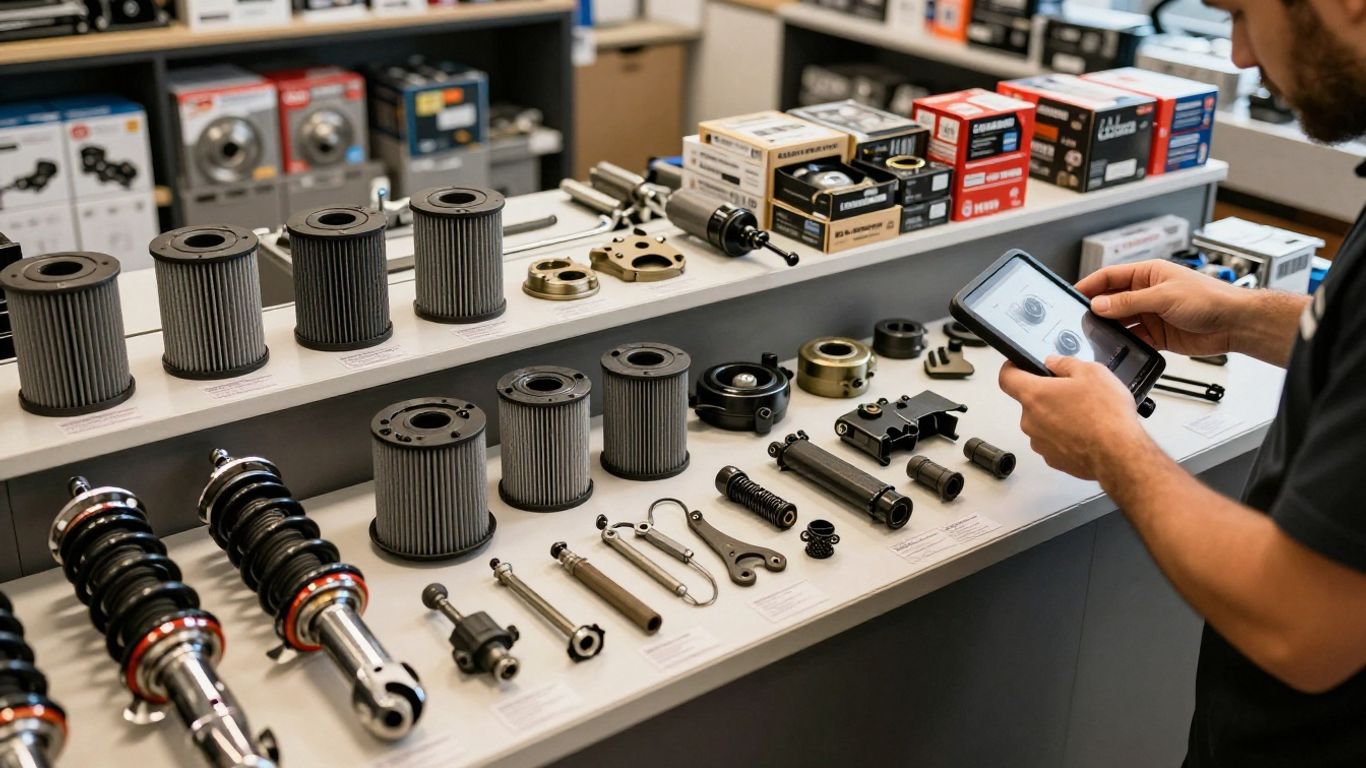
Audi dealerships and genuine parts departments
A genuine-parts department can be useful when the vehicle is newer, the component is safety-critical, or the correct specification is difficult to identify. For a local starting point, Audi Solitaire Parts describes a dedicated parts department with genuine Audi components and an online enquiry option. Ask for a written part number and confirm whether the item is available before arranging a visit.
Dealership pricing may be higher, but the extra cost can make sense when fitment certainty and direct parts support matter more than the lowest initial quote. It is still reasonable to compare the complete purchase cost with other options.
Independent European auto parts stores
Independent suppliers often provide a wider choice between genuine, OEM, certified replacement, and aftermarket components. My Auto Parts lists genuine, OEM, certified replacement, and aftermarket Audi components for repairs and maintenance, so a buyer can compare options rather than assuming there is only one suitable price.
When speaking with an independent store, ask who made the part, what vehicle data was used for the match, and whether the item is supplied with installation instructions. A supplier that answers plainly is easier to work with if a fitment question appears later.
Audi wreckers and recycled parts suppliers
Recycled parts can be sensible for body panels, trim, wheels, interior pieces, and some used mechanical components. Condition varies, so ask for photographs, donor-vehicle details, mileage where relevant, and a clear description of damage or wear. Hotline Auto Parts identifies an Adelaide wreckers source for Audi parts and says its team can help locate a specific item if it is not immediately in stock.
For a complex electronic module or a heavily worn suspension component, the apparent saving may disappear once testing, reprogramming, or replacement is added. Used parts work best when their condition and compatibility can be checked before payment.
Choose between genuine, aftermarket, and used parts
There is no single correct category for every repair. Genuine parts can offer a straightforward match, aftermarket parts may reduce the purchase price, and used parts can make sense when the component is discontinued or cosmetic. The decision should reflect the part’s function, the vehicle’s condition, and how long you plan to keep it.
A low price is useful only when the part performs its job and remains supportable. Consider reliability, installation time, and the consequences of a second failure alongside the initial saving.
When genuine Audi parts are worth the extra cost
Genuine parts deserve closer consideration when exact fitment is difficult, the component interacts with several vehicle systems, or a failure could affect safety. They may also be practical for newer vehicles where maintaining the original specification is a priority. Confirm the warranty and return conditions before assuming the premium covers every future problem.
For a direct comparison, GMS Spares describes a selection of genuine and aftermarket Audi spare parts, including engine, brake, transmission, and electrical components. That sort of range can help you compare categories around the same repair rather than treating “genuine” as the only available answer.
How reputable aftermarket parts can reduce expenses
Aftermarket parts are made by suppliers other than the vehicle manufacturer, and quality can vary considerably. A reputable option should have a traceable manufacturer, a clear application list, and a warranty that is meaningful in practice. It should not be selected solely because its box is cheaper.
Compare the aftermarket part number with the original number and ask whether the supplier has verified the application for your VIN. The best saving is usually the one that lowers the purchase price without creating extra diagnostic or fitting work.
What to check before buying used Audi parts
Used parts need a more detailed inspection than new boxed components. Ask for close photographs and a written condition report, then check whether the item is returnable if it does not match the vehicle. For mechanical and electronic parts, ask how the component was tested and whether testing is documented.
Before paying, check these practical details:
- The donor model, year, engine, and trim.
- The exact part number and any superseded number.
- Visible wear, corrosion, cracks, or water damage.
- Whether keys, brackets, connectors, or mounting hardware are included.
That short check is particularly valuable for parts bought remotely. It gives you specific questions to resolve before delivery rather than after the vehicle is dismantled.
Evaluate part quality and total value
Price comparisons become more useful when every cost is visible. A part that is $40 cheaper may require express shipping, extra seals, specialist coding, or a second order for missing hardware. Conversely, a slightly more expensive local item may save time and reduce uncertainty.
Think of the quote as a repair package, even if the supplier sells only one component. This is where total repair cost matters more than the number printed beside the part.
Compare prices beyond the initial purchase
Build a simple comparison around the same specification. Include the part, freight, tax, consumables, labour, and any likely diagnostic or calibration charge. If two quotes use different brands or conditions, label those differences rather than treating them as equivalent.
The following framework helps separate a genuine bargain from a misleadingly low price:
| Cost or factor | Question to ask | Why it matters |
|---|---|---|
| Part price | Is the specification identical? | A cheaper variant may not be equivalent. |
| Freight | Is delivery included and insured? | Delays or damage can alter the saving. |
| Labour | Does installation take extra time? | Difficult access can outweigh a small discount. |
| Follow-up work | Is coding, bleeding, or calibration needed? | Some parts require work beyond fitting. |
After filling in those fields, compare the likely final amount rather than the advertised starting price. The exercise also shows where spending a little more could prevent a larger labour or delay bill.
Check warranties, returns, and supplier support
Read the warranty period, exclusions, claim process, and requirements for professional installation. A return policy may exclude electrical parts, opened packaging, or items ordered incorrectly, so ask before placing the order. Keep written answers, especially when a supplier confirms compatibility.
Support matters when a part is back-ordered or a vehicle has several possible applications. Suppliers that can explain their identification process are generally easier to deal with than sellers who provide only a generic catalogue description.
Account for shipping, availability, and installation costs
Local availability can be worth paying for when the vehicle is already off the road. Ask whether the item is physically in stock, where it will ship from, and what happens if the delivered part is incorrect. For a recycled item, establish whether the quoted freight includes protective packaging.
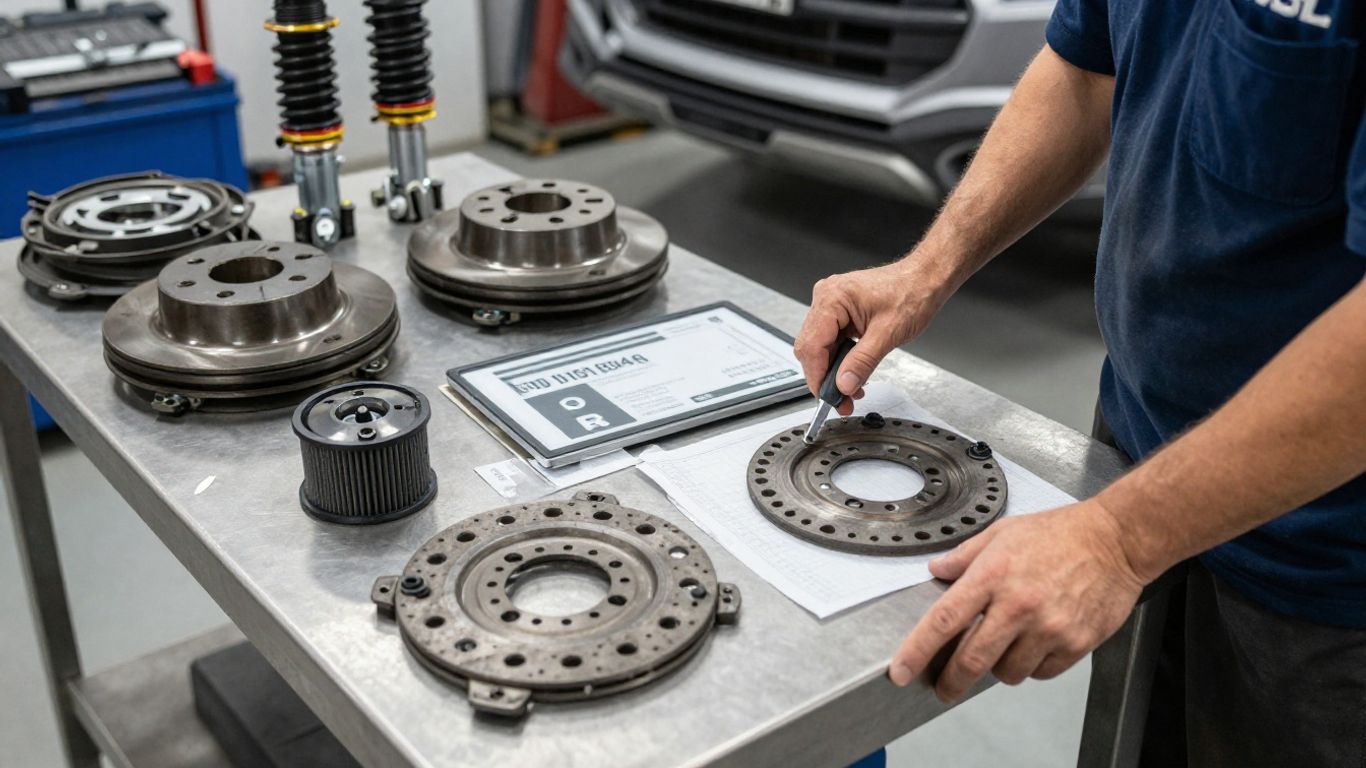
A realistic budget also includes fluids, fasteners, seals, disposal fees, and the possibility of a follow-up inspection. When these costs are listed early, affordable Audi parts Adelaide shoppers can make a decision based on time and risk as well as price.
Inspect common Audi replacement parts
Different components deserve different buying checks. A visible trim piece can often be assessed from photographs, while a brake component or electronic module may need technical confirmation. Treating every part as interchangeable is one of the quickest ways to turn a modest repair into a frustrating one.
The following categories are useful starting points, but the VIN and a qualified diagnosis should still guide the final selection.
Brakes, rotors, and suspension components
Brake pads and rotors must match the axle, brake package, dimensions, and wear requirements. Suspension components also need attention to body style, ride height, axle position, and any associated sensors. Ask whether the quote is for one side or an axle set, and whether fitting hardware is included.
Do not choose a used brake friction component simply because it is inexpensive. For suspension, inspect bushes, ball joints, seals, and corrosion, and ask a technician to assess related components before ordering only one piece.
Filters, belts, batteries, and other service parts
Service parts are often easier to compare, but application details still matter. Filters may differ by engine or production range, belts may require a complete kit, and batteries may need the correct capacity and vehicle-system setup. Confirm what the service procedure calls for rather than assuming every visually similar item is suitable.
A good quote states whether the component is sold individually or as a kit. It should also identify included gaskets, tensioners, terminals, or mounting pieces so you do not discover a missing item halfway through the job.
Electronics, sensors, and interior components
Sensors and modules can be sensitive to both compatibility and installation procedure. Ask whether a replacement needs coding, adaptation, calibration, or testing after fitting. For interior components, check colour, trim code, connector style, and left-hand or right-hand orientation.
Photographs help with cosmetic parts, but they are not enough for every electronic item. If the original fault has not been diagnosed, replacing a sensor at random may leave the underlying wiring or control issue untouched.
Buy and install Audi parts with confidence
A smooth purchase ends with a part that fits, a repair that is completed properly, and records that make the next service easier. Take a few minutes to prepare your questions before calling or emailing suppliers. This is especially helpful when several sellers quote different descriptions for what appears to be the same component.
Good records and sensible escalation turn an uncertain purchase into a manageable repair decision.
Ask suppliers the right compatibility questions
Give the supplier the VIN, part description, side or axle position, and any number printed on the existing component. Ask them to confirm the exact supplied number, condition, brand or manufacturer, stock status, and return terms. If there is a choice between revisions, request an explanation of why one is suitable.
Avoid relying on “it should fit” when the part is expensive, safety-related, or difficult to install. A clear written answer is much more useful than a confident but undocumented guess.
Decide which repairs require a qualified technician
Brake, steering, suspension, airbag, fuel, timing, and high-voltage-system work can carry serious safety consequences. A qualified technician has the equipment and experience to diagnose related faults, follow tightening procedures, and complete any required bleeding, coding, or calibration. Even when you supply the part yourself, agree in advance on whether the workshop will warranty the labour.
For simpler tasks, follow the vehicle instructions and use the correct tools. Stop if the repair reveals damaged wiring, seized fasteners, fluid contamination, or a mismatch with the ordered component.
Keep invoices, part numbers, and maintenance records
Save the invoice, supplier messages, part number, warranty information, and installation date. Add the technician’s notes and any diagnostic report to the vehicle file. These records help with future ordering and can show which component was fitted if a later fault appears.
They also make resale or warranty discussions less complicated. A tidy record costs nothing after the initial purchase and can save considerable time the next time you need affordable Audi parts Adelaide.
Conclusion
The most dependable way to find affordable Audi parts Adelaide is to verify compatibility first, compare the complete repair cost, and match the part category to the job. Genuine, aftermarket, and used options can all be sensible when their condition, support, and fitment are clear. Take the time to ask precise questions, use qualified help for safety-critical work, and keep the paperwork for the next repair.
Frequently Asked Questions
What information should I provide when ordering an Audi part?
Provide the VIN, model, build year, engine, trim, body style, and the exact part or fault description. Add the original part number and photographs when available.
Are aftermarket Audi parts reliable?
Some are reliable, but quality depends on the manufacturer, specification, fitment information, and warranty. Compare traceability and support rather than choosing solely by price.
When are used Audi parts a good option?
Used parts can suit cosmetic items, trim, discontinued components, and some tested mechanical or electronic parts. Confirm condition, compatibility, testing, and return terms first.
Should I buy Audi parts locally or online?
Local buying may reduce delivery time and make returns easier, while online suppliers can offer broader choice. Compare the complete cost and confirm stock before ordering.
Do Audi replacement parts require coding?
Some electronic modules, batteries, sensors, and control components may require coding, adaptation, or calibration. Ask the supplier and technician before purchase.
Can I install Audi parts myself?
Simple maintenance may be suitable for a capable owner with the right tools and instructions. Brakes, steering, suspension, airbags, fuel systems, and high-voltage systems are better handled by a qualified technician.
How can I avoid buying the wrong part?
Use the VIN, request written part-number confirmation, check side and axle position, and clarify whether hardware or related components are included. Keep all correspondence until the repair is complete.