

Key Takeaways
Finding genuine used Audi parts is mostly an exercise in careful identification and sensible risk management.
- Verify the part with the vehicle identification number and the original part number.
- Match the engine, drivetrain, body style, trim, and side of the vehicle.
- Ask for clear photos, mileage information, inspection details, and testing results.
- Compare the complete cost, including shipping, taxes, installation, and possible returns.
- Get warranty, return, and fitment terms in writing before you pay.
Understand what makes used Audi parts genuine
A genuine used Audi part normally began life as an original component installed in an Audi vehicle. It is different from a newly manufactured aftermarket replacement, even when both parts appear similar. The label “OEM” can describe an original-equipment part, but buyers should still confirm the source and the exact number rather than relying on a listing title alone.
Genuine, OEM, and aftermarket parts explained
“Genuine” generally means the component was produced for the vehicle or supplied through the original equipment chain. A used OEM part is an original component removed from another vehicle, while an aftermarket part is made by a separate manufacturer for replacement use. Referring to a part as genuine does not automatically tell you its condition, age, or fitment, so those questions still need answers.
A useful listing should identify whether the part is used, rebuilt, refurbished, or new. It should also show the label, casting mark, connector layout, or other identifying details when those features are relevant. The original part number matters most when several visually similar components fit the same model family.
How Audi part numbers confirm compatibility
Part numbers provide a more reliable starting point than a broad description such as “fits A4.” Compare the number on your removed component with the seller’s number, including suffixes and revision letters. A small change in the suffix can indicate a revised component, a different software version, or a variation for another configuration.
Ask the seller whether the number is an exact match or an approved replacement. If the number has been superseded, request documentation or a catalog reference showing the relationship. Do not assume that a part from the same model and year is interchangeable without checking.
Why model year and trim level matter
Audi can change equipment during a model generation, and trim level can affect sensors, lighting, suspension, interior fittings, and electronic modules. Production date may matter as well, particularly when a vehicle crosses into a new revision. The badge on the trunk is not enough to establish compatibility.
Record the model, model year, engine designation, transmission, drivetrain, body style, and any relevant package or option. That information gives a dismantler a much better chance of finding the right component and helps you spot a listing that is too vague to trust.
When refurbished parts may be a suitable alternative
A refurbished part has usually been disassembled, cleaned, repaired, or tested before resale. It can be a reasonable option for a component whose internal wear is serviceable and whose repair process is clearly explained. The key questions are what was replaced, what was tested, and whether the work came with a written warranty.
Refurbishment is not the same as merely cleaning a used part. For electronics and mechanical assemblies, ask whether calibration, coding, seals, or wear surfaces were addressed. If the seller cannot describe the process, treat “refurbished” as a marketing label rather than a technical specification.
Identify the right part for your Audi
Correct identification prevents the most expensive kind of used-parts mistake: paying for a component that cannot be installed or configured. Start with factory information and the part currently on the vehicle, then use the seller’s catalog as a second source. Photos are helpful, but they should confirm a match rather than replace one.
Use the VIN to verify fitment
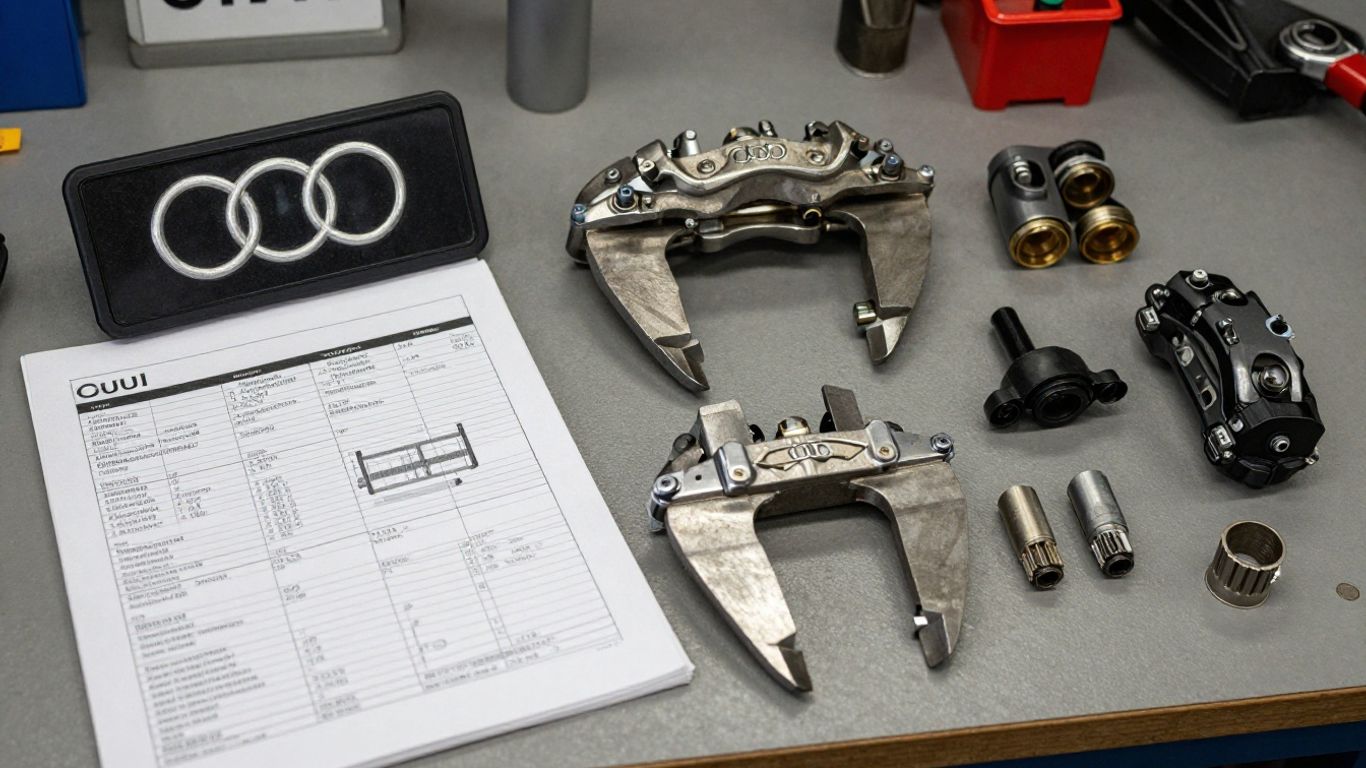
The VIN can reveal the vehicle’s production details and equipment, allowing a seller or parts specialist to narrow the search. Provide the full VIN, not just the model name, when requesting fitment confirmation. A responsible seller should tell you whether the match is exact, conditional, or still needs additional information.
Keep the VIN private when posting publicly. Send it through the seller’s secure contact method and compare the resulting specification with your own registration and service records. A VIN check is valuable, but it does not eliminate the need to compare the physical and electronic details of the part.
Match engine, drivetrain, and body configuration
The same Audi model can use different engines, transmissions, drive systems, and body configurations. A component from a front-wheel-drive car may not suit an all-wheel-drive version, and a part from a sedan may differ from one used on a wagon or SUV. Engine output and emissions equipment can also change the associated hardware.
Before ordering, write down the engine code if available, transmission type, drivetrain, body style, and door count. For suspension, cooling, exhaust, and drivetrain components, these details are especially important. They reduce the chance of receiving a part that is technically original but wrong for your vehicle.
Check superseded and interchangeable part numbers
Manufacturers sometimes replace an older part number with a newer revision. That does not necessarily mean the older component is unusable, but the seller should explain the relationship and any installation requirements. An interchangeable number may apply only when a bracket, connector, control unit, or software version is also changed.
Ask for both the number being sold and the number it replaces, if applicable. Save screenshots of the listing and the seller’s fitment statement. This simple record can help if the part arrives with a different suffix or if a return dispute develops.
Confirm left-side, right-side, front, and rear variations
Many Audi parts are position-specific. Headlamps, mirrors, body panels, suspension pieces, wiring, and brake components can differ from left to right or from front to rear. Some listings use the driver’s side convention, while others use left and right as viewed from inside the vehicle, so clarify the wording.
Request a photo of the actual part and ask the seller to state its position in writing. Check mounting points, connector locations, and molded markings before installation. A correct part number can still be accompanied by a cataloging error, especially when the components look nearly symmetrical.
Choose reliable sources for genuine used Audi parts
The source affects how much information you receive, how the part was handled, and what happens if the fit is wrong. Specialized dismantlers often know the vehicle the component came from, while larger databases may offer broader inventory but less personal context. A good source makes identification, condition, and after-sale terms easy to verify.
Audi dismantlers and specialized salvage yards
A dismantler focused on Audi vehicles may be familiar with platform revisions, option codes, and recurring fitment differences. Ask whether the part was removed from a running vehicle, whether the vehicle’s mileage is known, and whether the component was inspected after removal. The quality of the catalog record matters as much as the size of the inventory.
For comparison, listings from Lifetime Audi Parts, Benzeen Auto Parts, and Tom’s Foreign Auto Parts illustrate the kind of source detail buyers may look for: vehicle application, part category, OEM identification, and stated purchase terms. Treat any listing as a starting point and confirm the specifics for your own car.
Online marketplaces and parts databases
Online catalogs are convenient because they let you search by make, model, year, category, or OEM number. Still, a search result is not a fitment guarantee. Read the full listing, inspect the photos, and check whether the image shows the actual component or a generic stock photograph.
A database is more useful when it includes a donor vehicle, inventory reference, condition notes, and a clear contact route. Photographed OEM inventory is one example of a useful cataloging practice because real images can reveal connector damage, corrosion, or missing trim that a short title would hide.
Dealerships and certified recycling networks
A dealership may be able to confirm a part number or supersession, even when a used component is ultimately purchased elsewhere. Certified recycling networks can also provide more consistent handling and documentation than an unknown individual seller. Neither route removes the need to ask about warranty coverage and returns.
Look for a business address, reachable customer service, clear terms, and a traceable order record. A site that explains its privacy policy, search process, or catalog structure may be easier to evaluate than one that provides only a payment button. Those details do not prove part quality, but they indicate how the transaction is managed.
Questions to ask before placing an order
A short conversation before payment can expose gaps in the listing. Ask questions that produce specific, verifiable answers rather than general reassurance. For a complicated electronic or drivetrain component, request the exact number and donor information in writing.
- Is this the actual part shown in the photos?
- What is the complete part number, including suffixes?
- What mileage and vehicle history are available?
- Was the component tested, and what did the test cover?
- What are the fitment, warranty, and return terms?
The answers should agree with the listing and your vehicle details. If the seller avoids basic identification questions, move on even if the price looks attractive. A low purchase price cannot compensate for an unusable part and a difficult return.
Evaluate a used Audi part’s condition
A genuine component can still be a poor purchase if it has hidden damage, severe wear, or missing hardware. Condition should be assessed separately from authenticity. Ask for evidence that relates to the part’s function, not only a statement that it was “inspected.”
Inspect photos for wear, corrosion, and damage
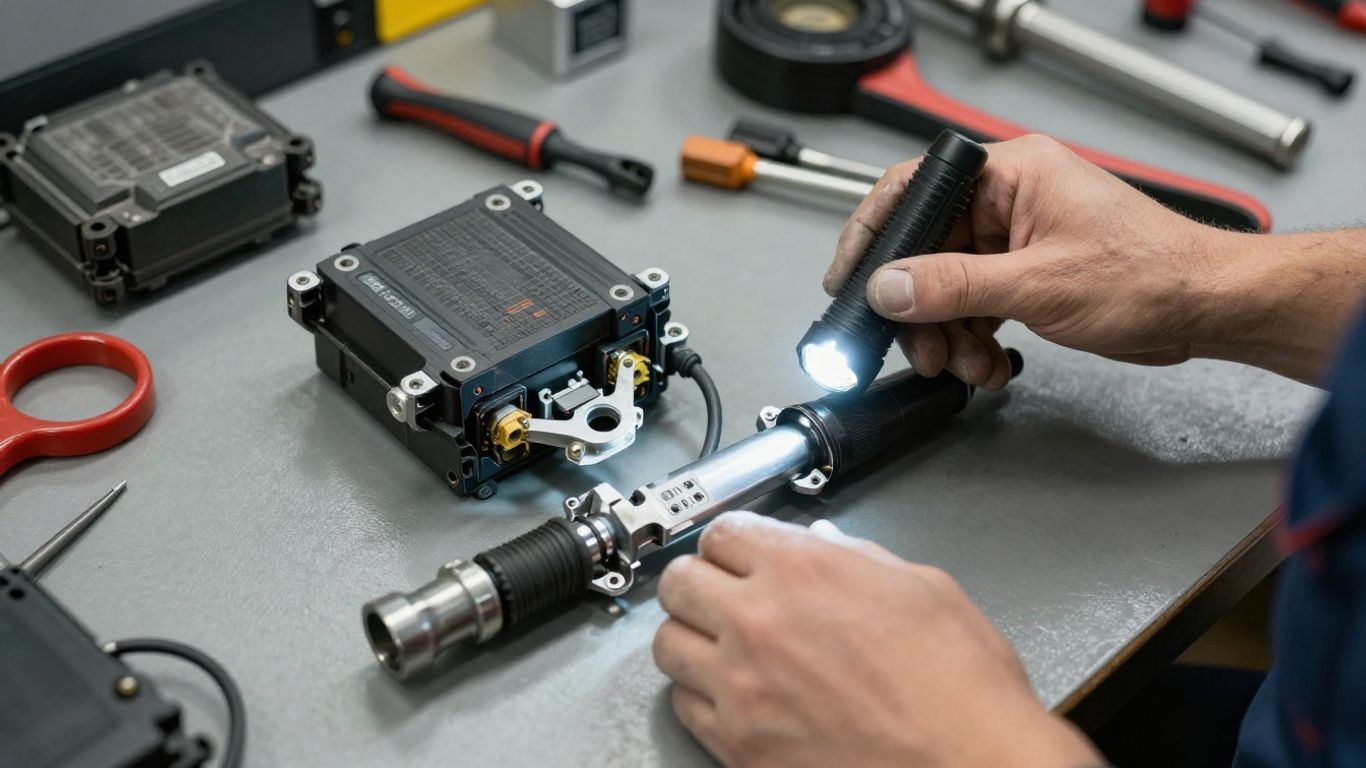
Look closely at mounting tabs, housings, connectors, seals, wiring, threads, and machined surfaces. Scratches on a body panel may be cosmetic, while a cracked mounting ear or corroded connector can prevent installation. Ask for additional photos when the available images do not show the areas that carry load or make the electrical connection.
Photographs should be of the actual part, taken in enough light to show its condition. For painted panels, also ask about color mismatch and previous repairs. For modules and sensors, check labels and connectors rather than judging condition by a clean exterior.
Review mileage and vehicle history when available
Mileage is useful context for engines, transmissions, steering components, compressors, and other assemblies with moving parts. It is not a guarantee of remaining life, since maintenance, accident damage, storage, and driving conditions also matter. A donor vehicle’s history can help explain why a part was removed.
Ask whether the mileage is documented or estimated. If the donor vehicle was damaged in the same area as the component you need, request extra inspection details. For structural or safety-related parts, uncertainty should weigh heavily in the buying decision.
Understand testing and inspection standards
“Tested” can mean anything from a visual check to a bench test or a complete operating test. Ask who performed the inspection, what equipment was used, and whether the result was recorded. Electronic parts may need programming or a vehicle-specific test before their full behavior can be confirmed.
The following distinctions are useful when comparing listings:
| Listing language | What to clarify | Why it matters |
|---|---|---|
| Inspected | Was it visual or functional? | The word alone does not describe the test. |
| Tested | Which functions passed? | Different components require different tests. |
| Removed from running vehicle | Was the vehicle operational at removal? | This provides useful but limited evidence. |
| Refurbished | What was repaired or replaced? | The work may range from minor cleaning to a rebuild. |
Once you know what the seller actually checked, you can compare condition more fairly. Keep the test description with your order records, especially for expensive modules and assemblies.
Identify parts that should usually be purchased new
Some items are poor candidates for used purchase because they degrade with time, are safety-critical, or are difficult to validate after removal. A used part may be acceptable in one situation and unwise in another, depending on its age and installation risk.
Common examples include:
- Airbag and other restraint-system components with uncertain history.
- Brake friction materials, disposable filters, and worn belts.
- Gaskets, O-rings, seals, and one-time-use fasteners.
- Tires or rubber parts with unknown age, cracking, or storage conditions.
Replacing these items new can protect the larger repair and prevent paying labor twice. When in doubt, ask a qualified technician to assess the risk before ordering.
Compare prices and total ownership costs
The cheapest listing is not always the least expensive repair. Used parts can reduce the initial bill, but shipping, taxes, installation, programming, and return risk can change the calculation. Compare like with like: exact part number, similar condition, matching warranty, and the same delivery assumptions.
Research fair pricing for the specific part
Search several listings for the same number and note whether each is tested, complete, and backed by a warranty. An engine, module, mirror, and trim panel each have different value drivers, so broad “average Audi part” pricing is not very useful. Scarcity, donor mileage, and included accessories may explain a significant difference.
Ask why an unusually cheap part is priced below the group. It may be missing a bracket, sold as untested, or listed with a short return period. Conversely, a higher price can be reasonable when the seller supplies detailed photos, testing information, and fitment support.
Factor in shipping, core charges, and taxes
Large body panels and engines can carry substantial freight costs, while a core charge may apply to an exchangeable assembly. Confirm whether the quoted price includes packaging, residential delivery, and taxes. Also ask who pays return shipping if the part is defective or incorrectly cataloged.
Write the complete estimate before comparing sellers. A part that costs less at checkout may become more expensive after freight and installation delays are included. This is particularly true when the vehicle is already apart and waiting for one missing component.
Compare used, new OEM, and aftermarket options
A used original part, a new original-equipment replacement, and an aftermarket component each involve different tradeoffs. The right choice depends on the part’s function, availability, warranty, and the importance of preserving the vehicle’s original specification.
| Option | Potential advantage | Main question |
|---|---|---|
| Used original part | Lower purchase cost | What is its remaining service life? |
| New OEM part | New condition and current specification | Is the price justified for this repair? |
| Aftermarket part | Broader availability or lower cost | Does quality and fitment match the need? |
| Refurbished part | Repaired original component | What work and testing are documented? |
The table is a comparison tool, not a universal ranking. A used trim piece may be an easy choice, while a safety-related or hard-to-install component may justify a new option.
Calculate the cost of installation and future repairs
Include labor, diagnostic time, programming, fluids, seals, fasteners, and any required adaptations. If the part fails soon after installation, removing and reinstalling it may cost more than the original component. A warranty is more valuable when it covers the part and does not leave all labor costs with you.
Before ordering, ask the technician whether related wear items should be replaced at the same time. Planning that work together can prevent a second teardown and make the total cost more predictable.
Check warranties, returns, and seller protections
A warranty is only useful when its coverage and process are clear. Used-parts terms often distinguish defects from installation damage, misuse, overheating, or incompatibility caused by incorrect coding. Read the policy before payment, and save a copy because online terms can change.
What a used-parts warranty should cover
Check the duration, covered failure, remedy, and exclusions. The policy should say whether the seller will repair, replace, or refund the part and whether a comparable substitute may be offered. For electronic components, clarify whether programming is covered or excluded.
Also ask whether the warranty is void if a part is opened, modified, installed without new seals, or fitted by someone other than a professional. These conditions may be reasonable, but they need to be known before installation.
How return windows and restocking fees work
A return window may begin on delivery rather than installation, leaving little time for inspection. Confirm the number of days, required authorization, packaging rules, and any restocking fee. A part that is ordered by mistake may have different terms from one that arrives defective or does not match the written fitment confirmation.
Do not install a questionable component just to test it if the seller requires an unmodified return. Contact the seller first and describe the issue with photographs and the order number. Written instructions protect both sides.
Documenting damage during delivery
Inspect the package before signing when possible, and photograph crushed corners, torn wrapping, or leaking containers. Open the box carefully and photograph the part, packing material, labels, and any damage before discarding anything. Notify the carrier and seller within the stated reporting period.
Keep the shipping label and delivery confirmation. Clear documentation can separate transit damage from a pre-existing defect and can make a claim much easier to resolve.
Why written fitment guarantees matter
A verbal assurance is difficult to prove after the transaction. Ask the seller to confirm the VIN, part number, and vehicle configuration in an email, order note, or invoice. The confirmation should also state what happens if the part does not fit despite the information supplied.
This is especially valuable for modules, lighting assemblies, and parts with multiple revisions. A written fitment guarantee does not eliminate every installation issue, but it gives the return discussion a factual starting point.
Install and maintain genuine used Audi parts
Installation is the final point where a careful purchase can succeed or fail. Compare the replacement with the removed component before dismantling anything further, and use the service procedure appropriate to the vehicle. If the repair involves safety systems, high voltage, fuel, or complex electronics, use a qualified technician.
Prepare the vehicle and confirm the part before installation
Clean the work area, gather the correct tools, and compare connectors, mounting points, dimensions, and labels. Do not force a component into place because it looks nearly correct. Check the order paperwork against the physical part before removing a working component or draining fluids.
Take photographs of wiring routes and fastener locations during disassembly. That small step helps prevent pinched wires, reversed brackets, and missing clips during reassembly.
Program or code electronic Audi components
Some electronic components may require programming, coding, adaptation, or pairing after installation. Ask in advance whether the replacement is plug-and-play, whether it must be reset, and what diagnostic equipment is needed. A physically correct module may not operate correctly until the vehicle recognizes its configuration.
The seller should not promise a coding outcome that has not been verified for your vehicle. Confirm the process with the repair shop before purchase, particularly when the part is security-related or tied to vehicle-specific data.
Replace related seals, fasteners, and wear items
Reuse only hardware and sealing elements that the service instructions permit. New gaskets, O-rings, clips, fluids, and one-time-use fasteners are often inexpensive compared with the labor required to reach them again. Inspect hoses, connectors, and nearby mounts while access is available.
This is also the moment to compare the old and replacement part for missing brackets or accessories. A used assembly may be sold without a sensor, cover, or mounting plate that your technician expected to transfer.
Test the repair and keep service records
Follow a controlled test procedure after installation. Check for warning lights, leaks, unusual noise, poor alignment, and stored diagnostic codes, then verify the vehicle under the conditions relevant to the repaired system. Do not assume that the absence of an immediate warning means every function has been confirmed.
Keep the invoice, part number, donor information, warranty, photographs, and installation date. These records support a later warranty claim and give the next technician useful history. For future parts searches, they can also help establish exactly which revision is now installed.
Conclusion
The best way to buy genuine used Audi parts is to treat the purchase like a small technical investigation: verify the vehicle, match the number, assess the evidence, and calculate the full cost before ordering. A careful seller and clear paperwork make the process much less uncertain, while a rushed bargain can create another repair instead of solving the first one.
Frequently Asked Questions
Are genuine used Audi parts the same as new OEM parts?
No. A genuine used part is an original component removed from another vehicle, while a new OEM part has not previously been installed. Their fitment may be similar, but their condition, warranty, and expected service life can differ.
How do I know whether a used Audi part will fit?
Use the VIN, compare the complete part number, and match the engine, drivetrain, body style, trim, and position. Ask the seller to confirm the fitment in writing before payment.
Is a part number more reliable than a model-year listing?
Usually, yes, because one model year can contain several configurations and revisions. The number should still be checked against the VIN and any supersession or interchange information.
Should I buy used electronic modules?
You can, but confirm whether the module was tested and whether it needs coding, programming, or pairing. Also verify the return policy in case it cannot be configured for your vehicle.
What should I inspect when a used part arrives?
Check the packaging, labels, connectors, mounting points, seals, and visible damage. Photograph the package and part before installation, especially if anything appears different from the listing.
Are used safety parts a good idea?
Use extra caution with airbags, restraint components, brakes, tires, and other safety-related items. Unknown history or age can make these parts difficult to validate, so new replacement components may be the safer choice.
What paperwork should I keep after buying a used part?
Keep the invoice, part number, fitment confirmation, donor mileage or history, warranty terms, delivery photos, and installation records. These documents help with returns, warranty claims, and future maintenance.