

Key Takeaways
Choosing aftermarket Audi parts in Australia is less about finding the lowest price and more about confirming fitment, quality, installation requirements, and long-term support.
- Match every component to the Audi’s exact model, generation, engine, and build details.
- Compare the complete cost, including freight, labour, diagnostics, and possible follow-up work.
- Use OEM numbers, fitment data, and clear supplier policies before ordering.
- Treat safety-critical parts and electronic components with extra care.
- Check Australian modification, insurance, roadworthiness, warranty, and consumer-law requirements.
Understanding the aftermarket Audi parts market in Australia
The aftermarket Audi parts Australia market includes replacement components made by manufacturers other than Audi, along with upgrade parts designed to change appearance, comfort, or performance. Some are built to match the original specification closely, while others deliberately offer a different design or material. The right choice depends on the repair, the vehicle’s condition, and how you use it. A careful comparison can save money without turning a straightforward repair into a recurring problem.
What aftermarket parts are and how they differ from genuine Audi parts
Genuine Audi parts are supplied through the manufacturer’s parts network and are intended to meet the vehicle’s original specification. Aftermarket parts come from independent manufacturers and may offer equivalent dimensions, alternative materials, or a different level of finish. They are not automatically inferior, but their quality and fitment can vary considerably between brands and product lines. Read the specification rather than assuming that every part described as a replacement is identical to the original.
Common categories of Audi replacement and upgrade parts
Owners commonly shop for braking, suspension, cooling, electrical, lighting, body, filtration, and engine components. Cosmetic and performance categories can include grilles, spoilers, intake systems, exhaust components, and exterior trim. A repair part should be judged primarily on compatibility and reliability, while an upgrade also needs to suit the vehicle’s supporting systems. Parts marketed for one Audi platform may not transfer safely to another, even when the cars look similar.
Why Australian drivers consider aftermarket alternatives
The attraction is usually a combination of price, availability, and choice. An independent supplier may offer several replacement grades when a dealer channel has only one option, and an older Audi may be easier to keep on the road with a broader parts search. Freight distances and local stock also matter in Australia, particularly when a vehicle is needed for work or family use. Cost remains useful only when it is considered alongside warranty coverage, expected service life, and installation quality.
How vehicle age, model, and driving conditions affect part selection
A newer performance model may need parts that tolerate higher heat, load, or electronic complexity, whereas an older commuter Audi may benefit from a dependable standard replacement. Coastal air, rough roads, hot summers, towing, and frequent short trips can all influence wear. Record the vehicle identification number, engine code, transmission, and option package before searching. Those details reduce the chance of buying a part that is technically similar but physically or electronically wrong.
Choosing the right parts for your Audi
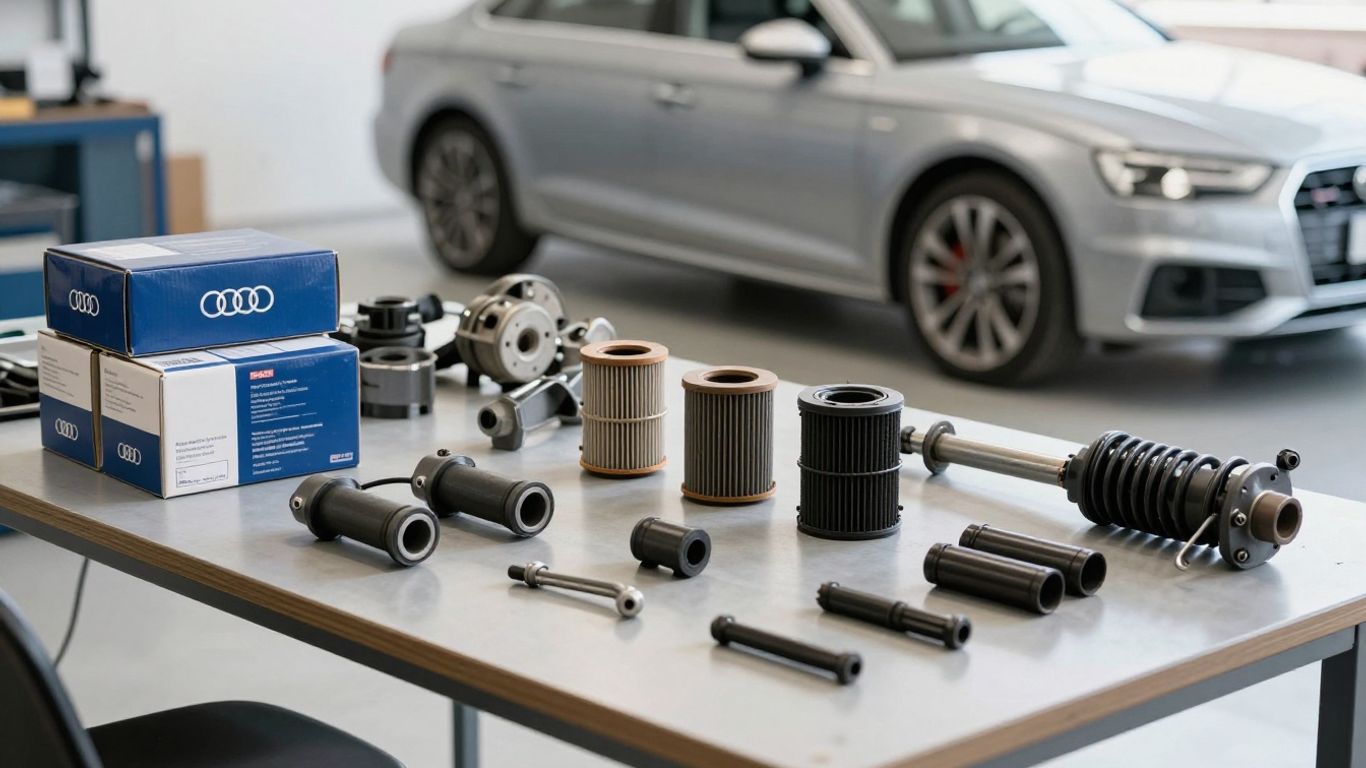
Part selection starts with identification, not browsing. Audi model names often cover several generations, engines, body styles, and production updates, so a product that fits an A4 may still be wrong for a particular A4. Take photographs of the existing component when useful, but treat them as supporting evidence rather than proof. The invoice and catalogue description should make the intended fitment clear.
Matching parts to the exact model, generation, and engine
Begin with the build year and generation, then confirm engine capacity, fuel type, drivetrain, body style, and transmission. Mid-cycle updates can alter connectors, mounting points, sensors, or dimensions. For suspension and braking, wheel size and factory equipment may also change the required part. If the catalogue asks for a registration or VIN lookup, use it, then compare the result with the vehicle’s physical details.
Checking OEM numbers, fitment data, and compatibility
An OEM number is a valuable reference, but it should not be treated as the only check. Numbers can be superseded, shared across revisions, or listed differently by suppliers. Compare the number, dimensions, connector arrangement, position, and stated vehicle range. When uncertainty remains, ask the supplier to confirm compatibility in writing before paying; a written fitment response is far more useful than a vague promise that the component is “universal.”
Comparing new, refurbished, and used aftermarket components
New aftermarket parts provide the clearest condition and warranty position, although quality still depends on the manufacturer. Refurbished components can make sense for expensive assemblies when the refurbishment process, testing, and warranty are documented. Used parts may be suitable for non-safety-critical trim or hard-to-source items, but their remaining service life is harder to predict. Factor in inspection time and the cost of removing the part again if it fails.
Recognising quality standards and reputable manufacturers
Look for traceable manufacturer information, a precise specification, batch or part identification, and installation guidance where relevant. For safety-related components, ask whether the product meets the applicable Australian requirements rather than relying on marketing language. Catalogue photographs are not a substitute for technical data. A supplier that can explain limitations and exclusions is generally more useful than one that claims every part is a perfect fit.
Finding reliable aftermarket Audi parts suppliers
The supplier affects more than the purchase price. It determines how clearly fitment is explained, how quickly a wrong part is resolved, and whether support remains available after delivery. Australian buyers may use online retailers, specialist workshops, local parts stores, or dealer channels depending on urgency and complexity. The best route is the one that provides enough information for the particular repair.
Comparing online retailers, specialist workshops, and local stores
Online retailers can offer broad catalogues and convenient price comparisons, while workshops bring practical knowledge and may check the part before installation. Local stores can be valuable when a vehicle is off the road and a same-day option exists. For a wider catalogue, buyers may browse Audi parts and accessories, while a general spare-parts search can include Carparts2u. These listings should still be checked against the vehicle’s exact details rather than accepted without question.
What to look for in supplier reputation and customer support
Read recent reviews for patterns involving incorrect fitment, damaged freight, delayed refunds, and unanswered questions. A useful support team asks for the model, year, engine, and part number before recommending anything. It should also explain whether advice is based on a catalogue match or a technician’s inspection. Keep emails, chat transcripts, and order details until the component has been installed and tested.
Reviewing warranties, returns, and fitment guarantees
Before ordering, check who pays return freight, whether opened packaging can be returned, and whether labour is excluded from the warranty. Some policies require professional installation or proof that the fault was diagnosed correctly. A fitment guarantee may cover an incorrect catalogue match but not a buyer entering the wrong vehicle details. Clear terms are especially important for electronic modules, special-order items, and large body components.
Understanding shipping times and availability across Australia
“Available” can mean physically stocked, held by a domestic distributor, or available from an overseas warehouse. Ask for the dispatch location and a realistic delivery window, especially outside major cities. Freight damage is more likely with large panels and fragile lighting assemblies, so inspect the parcel before signing where possible. If the Audi is immobilised, the cheapest part is rarely the cheapest solution if it arrives weeks later.
Evaluating cost, quality, and long-term value
A part’s sticker price is only one line in the repair budget. Labour, diagnostic scans, seals, fluids, freight, and calibration can alter the final figure substantially. A slightly dearer component may be better value if it reduces repeat work, but higher price alone does not prove better quality. Compare like with like and ask what is included.
Calculating the total purchase and installation cost
Request a written estimate that separates the part, shipping, consumables, labour, and diagnostic or coding charges. Consider whether related components should be replaced at the same time, such as hardware or seals that are difficult to reuse. The following checklist is useful when comparing quotes:
- Confirm the exact part number and stated vehicle fitment.
- Add freight, taxes, workshop labour, and required consumables.
- Include diagnostic, coding, calibration, or wheel-alignment charges.
- Ask what happens if the supplied part is incorrect or defective.
This approach prevents a low online price from hiding a costly installation or return process. It also gives two suppliers a comparable brief instead of inviting estimates based on different assumptions.
When a cheaper part may create additional risks
Poorly made parts can cause noise, premature wear, warning lights, leaks, or repeated labour charges. A small saving is harder to justify when failure could affect braking, steering, cooling, fuel delivery, or visibility. Ask what testing is performed and whether the part has a documented warranty. If the seller cannot identify the manufacturer or explain the specification, the uncertainty is part of the cost.
Balancing performance upgrades with everyday reliability
An upgrade should suit the Audi’s complete setup, not just promise a larger headline figure. Consider heat management, fuel requirements, noise, drivability, service intervals, and whether other components need supporting changes. A modification that works on a track-focused vehicle may be tiring or unreliable in traffic. Choose the outcome first—better response, comfort, appearance, or durability—then select parts that deliver it without compromising ordinary use.
Identifying parts that should not be compromised on
Brakes, tyres, steering, suspension joints, timing-related components, cooling parts, and safety systems deserve particularly careful sourcing. Electrical modules and sensors also warrant caution because a physical fit does not guarantee correct communication with the vehicle. When the consequence of failure is serious, prioritise traceability, correct installation, and professional inspection. Saving money on a cosmetic trim piece is a different decision from saving money on a braking component.
Buying aftermarket Audi parts online
Online shopping works well when the buyer treats the product page as a technical document rather than a shop window. Use the vehicle selector, then verify the result against the written fitment information. Save the page and order confirmation because listings can change. If several products look alike, compare their specifications, warranty terms, and included hardware.
Using product descriptions and vehicle selectors accurately
Enter the complete vehicle details and read exclusions such as “not for sport suspension” or “only with sensor package.” Check whether the price covers one component or a pair, and whether gaskets, brackets, bulbs, or fasteners are included. Product photos can show shape and connector location, but they cannot confirm every revision. When the selector and description disagree, pause the order and ask for clarification.
Confirming stock status, delivery fees, and return conditions
Check whether stock is live or subject to supplier confirmation. Delivery fees may change by postcode, package size, or warehouse, and an apparently cheap item can become expensive at checkout. Read the return deadline and the process for reporting transit damage. Photograph packaging and the unopened part when a high-value order arrives; that record can help resolve a dispute.
Protecting against counterfeit or incorrectly advertised parts
Buy from sellers that provide a physical business identity, traceable manufacturer details, and proper invoices. Be wary of copied photographs, implausible discounts, vague descriptions, and reviews that discuss a different product. Compare packaging, markings, and supplied documentation with the manufacturer’s published information where available. Never install a questionable safety component simply because returning it is inconvenient.
Safely comparing quotes from multiple suppliers
Send each supplier the same vehicle details, OEM number, quantity, delivery postcode, and intended use. Compare the delivered total and warranty, not just the headline price. Keep the quote dates because stock and freight can change quickly. A useful comparison also asks whether the supplier will verify fitment before dispatch and what evidence is needed if the part fails.
Installing and maintaining aftermarket Audi parts
Installation quality can determine whether a good component performs as intended. Some work is straightforward for an experienced owner, while other repairs involve high pressures, specialised tools, safety systems, or electronic configuration. Read the instructions before dismantling anything and avoid treating a tutorial as a substitute for training. A clean, documented repair is easier to inspect later.
Deciding which repairs require a qualified technician
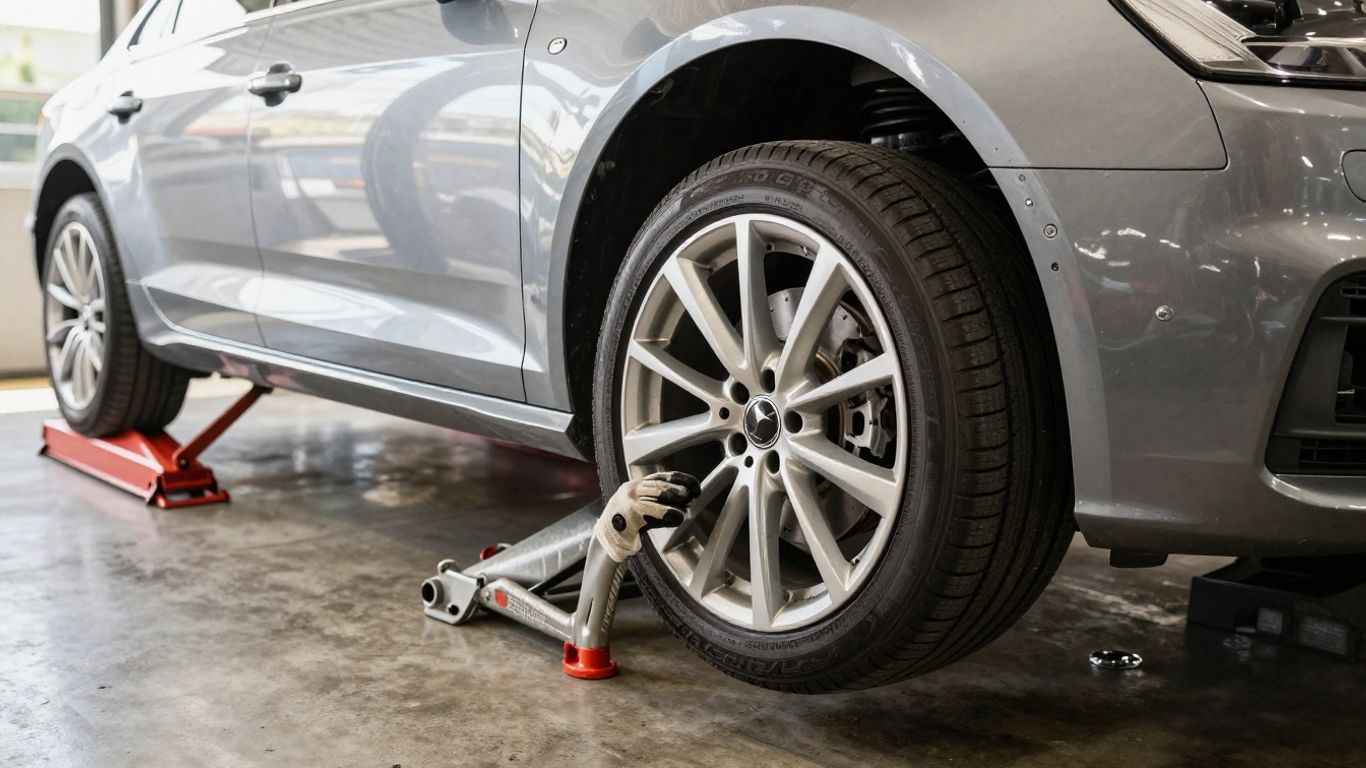
Brake hydraulics, steering, suspension, airbags, fuel systems, timing systems, and high-temperature engine work should generally be assessed by a qualified technician. The same applies when access requires lifting equipment or when a mistake could make the vehicle unsafe. Ask the workshop whether it has experience with the relevant Audi platform. If you do the work yourself, use the correct torque procedures and replace single-use hardware as specified.
Preparing for electronic coding and Audi-specific diagnostics
Some replacement modules, sensors, lights, and batteries may need diagnostic procedures, adaptation, or coding after installation. Confirm this before buying so the workshop can identify the equipment and labour required. A part that physically fits may still trigger a warning or fail to communicate correctly. Do not assume that disconnecting the battery or clearing a fault code completes the repair.
A suitable Audi repair demonstration can help explain the sequence and tools, but it should be treated as general guidance. The vehicle’s service information and the technician’s inspection take priority when the example differs from the actual car.
Checking installation quality after the repair
Inspect for leaks, loose fasteners, trapped wiring, uneven panel gaps, abnormal noises, and warning lights. Test the vehicle in a controlled area before returning to normal driving, then recheck the repair after a short run. Ask for the original faulty component when practical, as it can help explain what was replaced. Wheel alignment, brake bedding, sensor calibration, and fluid-level checks should be completed when the job requires them.
Keeping service records and monitoring replacement intervals
Record the part number, manufacturer, installation date, mileage, supplier, workshop, and warranty period. Note any symptoms that appeared before or after the repair. These records help identify patterns and make future ordering easier, particularly when an Audi has multiple revisions of the same component. Follow the vehicle’s service schedule while also responding to unusual wear, noise, vibration, or warning messages.
Legal, safety, and warranty considerations in Australia
Australian rules can vary by state and territory, and a modification that is acceptable in one location may require approval or inspection elsewhere. This is particularly relevant to suspension height, lighting, exhaust systems, wheels, tyres, engine changes, and other performance modifications. The part itself is only one part of compliance; installation and the finished vehicle matter too. Check the applicable authority before work begins.
Understanding Australian vehicle safety and modification requirements
Ask whether the proposed change affects the vehicle’s original safety systems, dimensions, emissions, noise, or handling. Keep certificates, product documentation, and installation records where an approval pathway may apply. Do not rely solely on a supplier’s statement that a component is “road legal,” because the claim may depend on location and configuration. A qualified inspection can identify issues before the vehicle is presented for use.
Checking whether a modification affects insurance coverage
Tell the insurer about material modifications and ask for written confirmation of coverage. An undeclared change may complicate a claim, even when the component itself was purchased legally. Keep invoices and photographs showing what was fitted. Insurance questions should be answered by the insurer rather than inferred from a parts listing.
Assessing roadworthiness and state-based inspection rules
Roadworthiness inspections may consider braking performance, tyre clearance, lights, steering, suspension, seat belts, emissions, and general condition. Requirements and inspection names differ across Australia, so use the relevant state or territory guidance. If a component changes the vehicle’s original specification, obtain advice before ordering it. Passing an inspection once does not remove the need for ongoing maintenance.
Protecting your Audi warranty and consumer rights
Read the vehicle warranty terms and ask the manufacturer or dealer how a proposed non-genuine part may affect a specific claim. A warranty issue is not automatically resolved by blaming every unrelated aftermarket component, but poor installation or an incompatible part can create a genuine dispute. Keep receipts, written advice, and workshop records. Australian consumer protections may also apply when goods are faulty, inaccurately described, or not fit for their stated purpose.
Conclusion
A sound aftermarket Audi parts Australia purchase begins with exact vehicle identification and ends with proper installation, documentation, and follow-up. Compare delivered cost and support alongside quality, and be especially cautious with safety-critical or electronically integrated components. With those habits, aftermarket options can become a practical part of maintaining an Audi without turning every saving into a future repair.
Frequently Asked Questions
Are aftermarket Audi parts reliable?
They can be reliable when produced by a reputable manufacturer, correctly matched to the vehicle, and installed properly. Quality varies, so check specifications, traceability, reviews, and warranty terms.
Are aftermarket parts cheaper than genuine Audi parts?
Often they have a lower purchase price, but the final saving depends on freight, labour, consumables, diagnostics, and expected service life. Compare the complete repair cost rather than the part alone.
How do I confirm an aftermarket part will fit my Audi?
Use the VIN or full vehicle details, compare the OEM number and catalogue fitment, and confirm dimensions or connectors where relevant. Ask the supplier for written confirmation if any detail is uncertain.
Can I install Audi parts myself?
Some cosmetic or simple maintenance items may be suitable for a capable owner. Repairs involving brakes, steering, airbags, fuel, timing, high pressure, or electronic configuration are better assessed by a qualified technician.
Do aftermarket parts affect an Audi warranty?
The effect depends on the part, installation, warranty terms, and relationship to the claimed fault. Keep records and request specific written guidance rather than assuming that any aftermarket component cancels the entire warranty.
Are Audi modifications legal across Australia?
Not necessarily. State and territory rules can differ, particularly for suspension, wheels, lighting, exhaust, emissions, and engine modifications. Check the relevant authority before purchasing or fitting a modified component.
What should I do if an online part arrives damaged or incorrect?
Photograph the packaging and part, keep the invoice, and contact the supplier promptly under its returns or warranty process. Avoid installing a component that appears damaged or does not match the confirmed fitment.