

Key Takeaways
A successful used-parts purchase starts well before payment. Identify the exact Audi specification, inspect the part’s history, and compare the full installed cost rather than the sticker price alone.
- Confirm the Audi model, year, body style, engine, and drivetrain.
- Use the VIN and part number to check compatibility.
- Ask how the part was sourced, tested, stored, and removed.
- Compare warranty, returns, freight, labour, and installation costs.
- Record the agreement and test the replacement carefully after fitting.
Identify the right Audi part before you buy
Audi parts can look almost identical while differing in connectors, mounting points, software, or dimensions. Before you search for a bargain, write down the details of the vehicle and the failed component. That small amount of preparation prevents a cheap purchase from becoming an expensive return or workshop visit.
Confirm your model, year, and body style
Start with the full model designation, production year, body style, and, where relevant, the generation or facelift version. An A4 sedan, Avant, and convertible may share some mechanical items but use different exterior, trim, or interior components. Photos of the existing part can help, but they should support—not replace—the vehicle details.
Also check whether the car is a left-hand-drive or right-hand-drive market variant, particularly when buying interior or steering-related components. Keep the registration details and a clear photo of the old part nearby while speaking with a seller.
Use the VIN to verify compatibility
The vehicle identification number gives a parts supplier a more reliable starting point than a broad search such as “Audi A3 headlight.” Ask the seller to confirm the VIN against the listing and request the exact part number before paying. If the supplier cannot verify the match, treat compatibility as unconfirmed.
Part numbers may include suffixes or revision codes that matter. A superseded number can sometimes replace an earlier one, but that should be confirmed by the supplier or a qualified technician rather than assumed from a similar-looking photograph.
Match engine, transmission, and drivetrain specifications
Engine size alone may not identify the correct component. Confirm the engine code, transmission type, drive configuration, and, for some parts, the equipment package. Sensors, control modules, driveshafts, differentials, cooling components, and exhaust parts can vary across versions of the same model year.
Give the supplier the information in one message so there is less room for a detail to be missed. If the part is electronic, ask whether programming, coding, or adaptation may be needed after installation; do not assume a physical fit means the vehicle will accept it.
Distinguish between trim-specific and universal parts
Some items are broadly interchangeable, such as certain fasteners or generic maintenance accessories. Others depend on trim, options, lighting technology, sound system, seat configuration, or driver-assistance equipment. A bumper, mirror, grille, seat, or multimedia unit should be checked against the original equipment and connectors.
Take a careful photograph of labels, plugs, brackets, and mounting tabs. The part number matters most when two components appear visually identical, and a seller who welcomes that comparison is easier to deal with than one who relies only on a generic model description.
Choose where to buy used Audi parts in Perth
The right supplier is not necessarily the one with the lowest advertised price. Look for clear answers about donor vehicles, inspection, storage, warranty, and collection. Perth buyers should also consider whether a part can be examined locally or whether freight and a possible return will add delay and cost.
Compare Audi wreckers, dismantlers, and private sellers
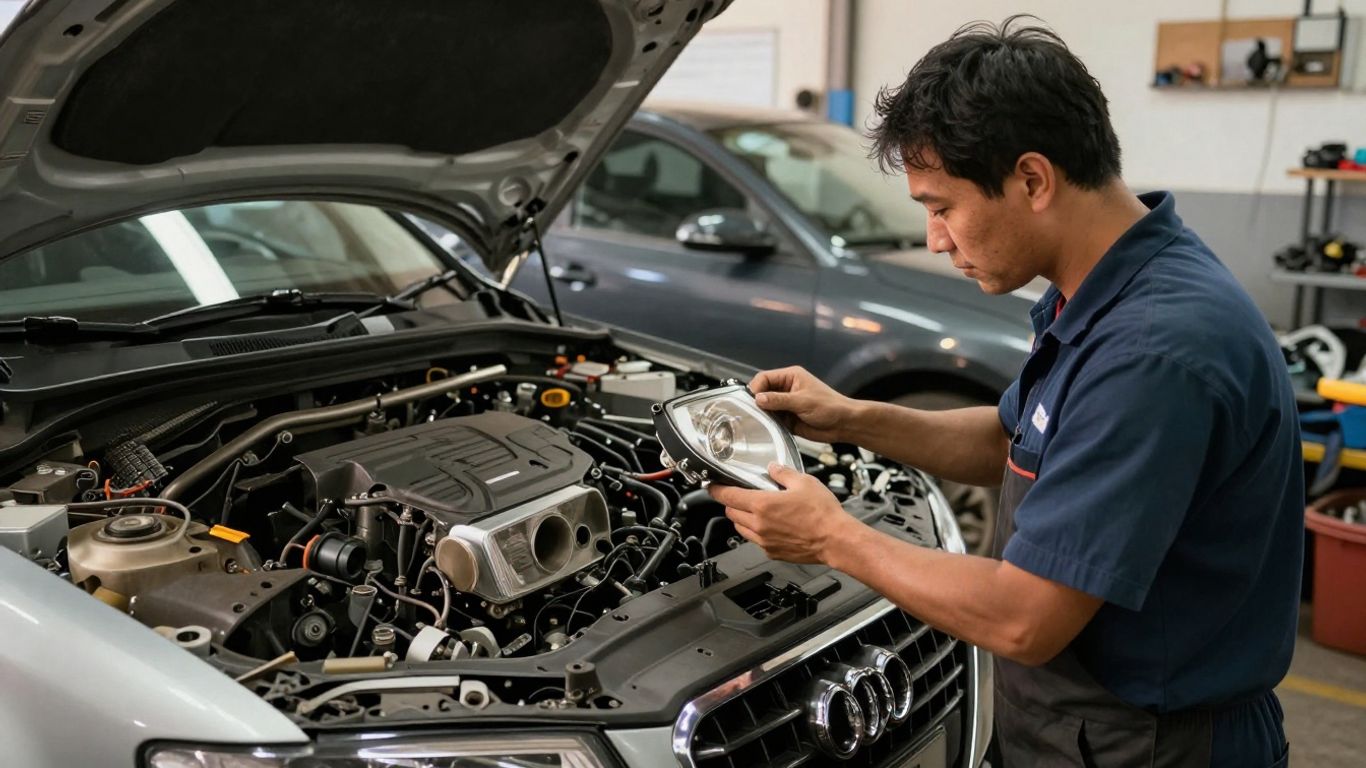
Professional wreckers and dismantlers may be able to identify parts from a donor vehicle and provide information about how they were removed. Private sellers can sometimes offer a lower price, but the available history, testing, and return protection may be limited. Compare the evidence behind each offer, not just the seller’s description.
For local research, WA Auto Parts describes Audi vehicle assessment, removal, and recycling services, while Western Metal Recycling presents a range of genuine used Audi parts. Treat every listing as a starting point and still ask for the exact part number, condition, and terms.
Evaluate online marketplaces and local suppliers
Online listings make it easy to compare photographs and prices, but they can also hide important details. Check whether the image shows the actual item, whether the location is Perth, and whether freight, GST, or a core charge is included. A local supplier may cost slightly more while making inspection, collection, and problem resolution simpler.
The same habit used in a careful App Idea Report comparison—checking cost, speed, and quality of information—works well here too. It keeps the decision anchored to evidence instead of a polished listing or an attractive headline price.
Ask about inventory, sourcing, and testing procedures
Ask whether the part came from a running vehicle, an accident-damaged car, or a vehicle dismantled for other reasons. Find out what was inspected, whether the item was cleaned or reconditioned, and whether the supplier has recorded mileage or test results. For an electrical part, ask specifically what function was tested and under what conditions.
PACE BM describes a changing collection of reconditioned and second-hand European parts, so a buyer may need to contact the supplier with a specific Audi requirement rather than rely on a static catalogue. A direct conversation often reveals whether the seller understands the part or is simply repeating a generic description.
Consider pickup, delivery, and interstate shipping options
Ask for the packed dimensions, dispatch time, carrier, insurance, and delivery estimate before agreeing to buy. Large panels and fragile lights need more careful packaging than small brackets, and a damaged delivery can complicate an otherwise good purchase. If the seller is outside Perth, confirm who pays for a return if the part is wrong.
Odin Auto Parts describes sourcing parts through a supply network and on-the-spot installation, which may be useful when comparing a locally supported purchase with an uninstalled shipped item. Decide whether convenience, inspection, or a lower initial price matters most for the particular component.
Assess the condition and history of each part
A used part is valuable because it can provide a sound replacement at a lower cost, but condition is never implied by age alone. Ask for the donor vehicle’s details and inspect the areas that affect fit, function, and future reliability. Be especially cautious when a part is safety-related or difficult to remove again.
Check mileage and donor vehicle information
Mileage can provide useful context for engines, transmissions, suspension parts, alternators, and other wear-prone components. It is not a guarantee of condition, since driving style, maintenance, accident history, and storage also matter. Ask for the donor vehicle’s model, year, engine, transmission, and reason for dismantling.
If mileage is unavailable, ask what evidence supports the seller’s condition assessment. A transparent answer such as “unknown, untested” is more useful than an unsupported claim that the part is excellent.
Inspect body panels, lights, and interior components
For panels, examine edges, mounting points, seams, and paint transitions rather than only the broad face. Dents can often be repaired, but stretched metal, bent brackets, or corrosion around mounts may make a panel difficult to fit. Confirm the colour code and whether the panel includes mouldings, grilles, sensors, or other attached pieces.
Lights should be checked for cracked lenses, moisture, broken tabs, cloudy reflectors, and damaged connectors. Interior components need a close look at clips, rails, wiring, stitching, and odour, since small missing fittings may be difficult to source separately.
Evaluate mechanical and electrical parts
Mechanical components should be assessed for leaks, excessive play, noise, scoring, damaged threads, and signs of overheating. Ask whether the item was tested before removal and whether seals, fluids, filters, or consumables will need replacement. With modules and sensors, confirm connector condition and whether coding or programming is required.
A seller’s test statement should be specific enough to understand. “Tested” might mean a complete functional check, a basic visual inspection, or simply that the vehicle was known to run; those are very different levels of assurance.
Watch for corrosion, damage, and signs of prior repairs
Look closely at fasteners, brackets, seams, electrical terminals, and areas that collect water or road grime. Corrosion may be cosmetic on one component and structurally important on another. Weld marks, non-factory paint, sealant, drilled holes, and mismatched hardware can indicate previous repairs or modifications.
When photographs are provided, request additional close-ups of any suspicious area. A careful inspection now is usually easier than removing a replacement part after discovering that a mounting point or connector has been altered.
Compare prices and calculate the real value
Price comparisons are useful only when the parts being compared are genuinely equivalent. A tested used original part, a reconditioned component, and a new aftermarket item may carry different levels of risk, support, and expected service life. Build the comparison around the job you need completed, not the cheapest line in a search result.
Research typical prices for genuine Audi parts
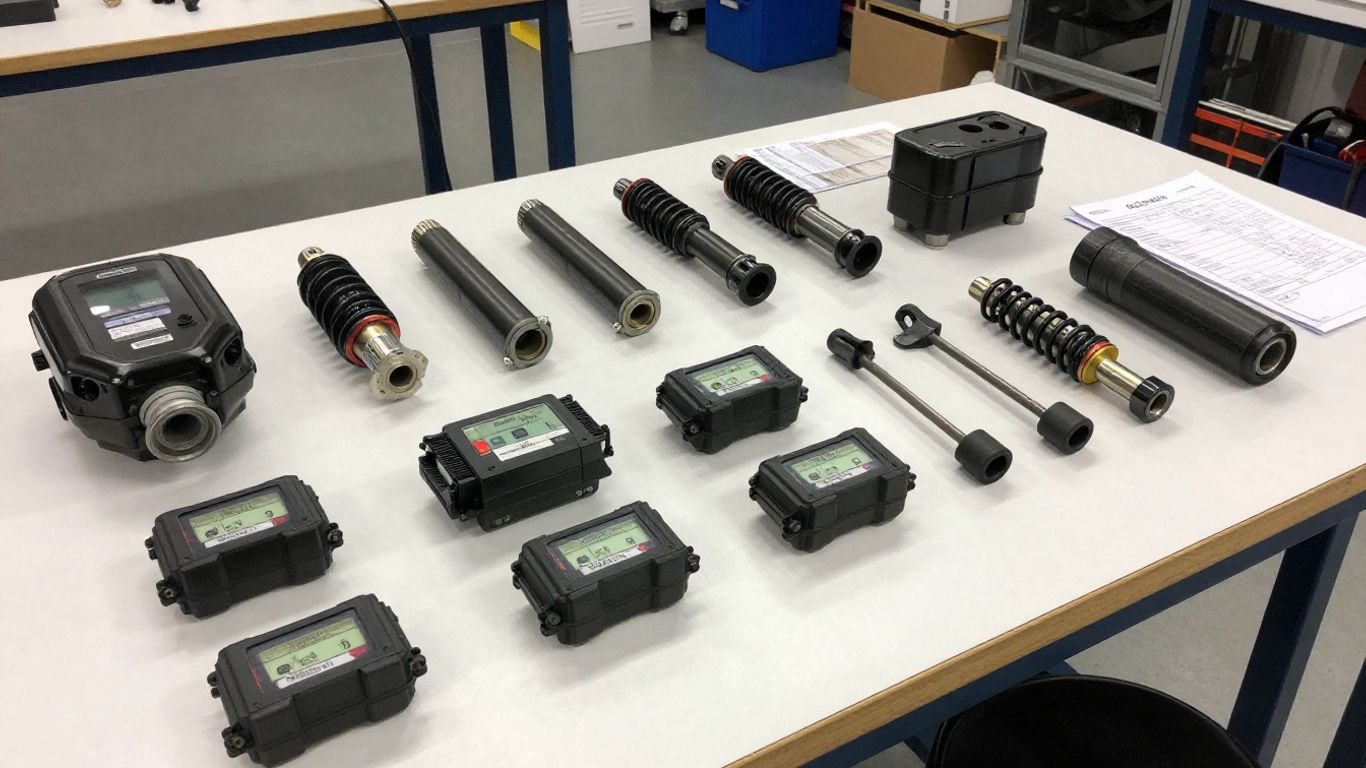
Collect several prices for the same part number and note whether each item is used, reconditioned, or new. Check whether the quote includes brackets, sensors, covers, keys, wiring, or other pieces that are shown in the photograph. Genuine original equipment can command a premium, but the premium is easier to judge once the inclusions are clear.
Do not treat an unusually low price as proof of a bargain. It may reflect missing accessories, untested condition, high mileage, cosmetic damage, or a seller who expects the buyer to accept substantial uncertainty.
Compare used, reconditioned, and aftermarket alternatives
A used original part may be the most direct match, while a reconditioned item may include replaced wear components or a supplier inspection. An aftermarket alternative can be appropriate for some items, but quality and compatibility vary between manufacturers. Ask what has actually been renewed or tested rather than relying on the label “reconditioned.”
For a broader decision-making perspective, a budget travel guide illustrates the value of comparing the whole trip rather than one headline expense. The same principle applies to parts: judge the complete purchase and installation, not only the shelf price.
Include labour, installation, and delivery costs
Add freight, inspection, fitting, programming, fluids, seals, disposal, and any follow-up diagnosis to the comparison. A part that requires specialist coding may be less economical than one supplied with the necessary setup, even if its purchase price is higher. Ask the workshop for a written estimate when the installation is complex.
A simple comparison table can make the difference visible before you commit:
| Option | Purchase price | Additional costs to check | Main uncertainty |
|---|---|---|---|
| Used original part | Lower to moderate | Freight, fitting, coding | Wear and donor history |
| Reconditioned part | Moderate | Core charge, fitting, warranty limits | What was renewed |
| New aftermarket part | Moderate to high | Brand quality, fitting | Exact compatibility |
| New genuine part | Usually highest | Fitting and programming | Total ownership cost |
The lowest total is not automatically the best value. Use the table to identify which unknowns need an answer, then compare warranty and return protection alongside the dollars.
Recognise when a cheaper part may create extra risk
A low-cost part can become expensive if it fails soon after fitting, damages another component, or requires the same labour twice. Risk is higher when the item is safety-critical, difficult to access, electronically coded, or sold without a meaningful return path. Paying more for verified condition can be sensible when removal and installation are labour-intensive.
Before choosing, ask what failure would cost in time and money. That practical question often separates a genuine saving from a purchase that merely postpones the expense.
Verify warranties, returns, and installation requirements
Warranty language needs to be read before payment, especially for used engines, transmissions, modules, and other high-value parts. Confirm what is covered, how long coverage lasts, and what evidence the supplier requires if a fault appears. Keep the written terms with the invoice and the part details.
Understand the supplier’s warranty coverage
Ask whether the warranty covers parts only or also labour, diagnosis, freight, seals, fluids, and consequential damage. Some warranties require professional installation, while others exclude overheating, incorrect fitting, modifications, or normal wear. Clarify whether the warranty begins at purchase, dispatch, or installation.
A verbal assurance is difficult to rely on later. Request the conditions in writing and check that the invoice identifies the exact part supplied.
Check return conditions for incorrect or incompatible parts
Find out how quickly an incorrect part must be reported, whether it needs to remain uninstalled, and who pays return freight. Ask whether there is a restocking fee or whether electrical parts are excluded once connected. Photograph the package and part when it arrives in case the condition needs to be documented.
A useful warning-sign checklist includes:
- The seller will not confirm the part number or VIN match.
- The return policy is vague, verbal, or difficult to locate.
- The listing does not identify whether the item was tested.
- The price excludes major charges that appear only at checkout.
These signs do not prove that a part is faulty, but they do show that the buyer may have limited protection. A guide to avoiding prop firm scams makes a similar general point about checking transparency, fees, and verifiable claims before paying; those checks are sensible in any purchase.
Confirm whether testing or installation is included
Do not assume that “tested” includes installation or that installation includes programming. Ask whether the supplier can fit the part, whether a workshop must complete the work, and whether the component needs calibration or coding. For airbags, steering, braking, suspension, fuel, and high-voltage systems, follow the vehicle and workshop safety requirements.
If a service is included, confirm what happens if the part is found incompatible during fitting. The answer may affect the real value of the offer more than a small difference in purchase price.
Use a qualified technician for complex components
A qualified technician can confirm compatibility, identify related faults, and install the part according to the vehicle’s requirements. This is particularly important for control modules, transmissions, engine assemblies, safety systems, and components requiring specialist tools or calibration.
Bring the invoice, part number, donor information, warranty conditions, and any diagnostic results to the workshop. Good documentation gives the technician a clearer starting point and helps protect the warranty.
Buy and install your Audi part with confidence
The final stage should be orderly rather than rushed. Recheck the part and terms before payment, preserve the evidence of what was promised, and plan the installation around the part’s condition and requirements. A few minutes of administration can save a second round of searching.
Ask the seller the right questions before payment
Ask for the exact part number, VIN compatibility, donor vehicle details, mileage, test procedure, included accessories, warranty, return conditions, and dispatch or collection timing. For body parts, confirm colour and damage; for electronics, confirm connectors and coding; for mechanical items, ask about leaks, play, and wear.
Write the answers down in the message thread or quote. If the seller avoids straightforward questions, pause rather than allowing urgency to make the decision for you.
Document part numbers, condition, and purchase terms
Save the listing, photographs, invoice, payment receipt, correspondence, and warranty. Photograph the part from several angles when it arrives, including labels and connectors, before installation. Record any damage on the delivery paperwork and notify the seller promptly.
This record also helps if the technician finds that the supplied component differs from the agreed specification. Clear documentation is useful even when the purchase goes smoothly.
Arrange safe collection or delivery in Perth
For collection, use suitable transport and protect fragile components from movement, moisture, and direct sun. For delivery, check the package before signing where possible and retain all packaging until the part has been inspected and tested. Large panels, glass, and lights deserve extra padding and careful handling.
Agree on the collection window or dispatch date in advance. If the part is needed for a booked repair, allow time for inspection and possible resolution rather than scheduling installation immediately after arrival.
Test the replacement part after installation
Follow the workshop’s testing process and check for warning lights, leaks, unusual noises, poor fit, vibration, or intermittent electrical faults. Confirm that related functions work, not merely that the vehicle starts. Keep the old part until the replacement has passed its checks and the return period has ended.
If a fault appears, stop using the vehicle when safety may be affected and contact the technician and supplier promptly. A calm, documented report with diagnostic information is more likely to produce a useful resolution than a rushed assumption about the cause.
A practical video on inspecting and installing used Audi parts can complement professional advice, but it should not replace the vehicle-specific repair information or a qualified technician’s assessment.
Conclusion
To buy used Audi parts Perth drivers can rely on, begin with exact compatibility details, investigate the part’s history, and compare the complete installed cost. A transparent seller, written terms, suitable installation, and careful testing turn a second-hand component into a considered repair rather than a gamble.
Frequently Asked Questions
How do I know which used Audi part fits my car?
Confirm the model, year, body style, engine, transmission, drivetrain, VIN, and original part number. Ask the seller to verify the match before payment, especially for electronic, safety, and trim-specific components.
Is a used original part better than an aftermarket part?
Neither is automatically better in every situation. Compare confirmed compatibility, condition, testing, warranty, expected service life, and the full installation cost rather than choosing solely by whether the part is original or aftermarket.
What information should I request from a parts seller?
Request the part number, donor vehicle details, mileage where available, condition, test procedure, included items, warranty, return terms, delivery arrangements, and any programming or installation requirements.
Should I buy a part without a warranty?
That depends on the component, price, condition, and availability of alternatives. For expensive or labour-intensive parts, limited warranty protection can make the purchase substantially riskier.
Can I return a part if it does not fit?
Only if the supplier’s terms allow it. Check the reporting deadline, installation restrictions, return freight, restocking fees, and exclusions for electrical parts before buying.
Do used Audi electronic parts need coding?
Some electronic components may require coding, programming, adaptation, or calibration. Confirm the requirement with the seller or a qualified technician before installation.
What should I do if the replacement part fails?
Stop using the vehicle if safety could be affected, document the symptoms and installation, and contact the technician and supplier promptly. Keep the invoice, warranty, photographs, and diagnostic information available.