

Key Takeaways
A recycled radiator can be a practical replacement, but its condition and exact fitment matter as much as its price.
- Confirm the model year, trim, engine, part number, and radiator configuration before ordering.
- Ask how the radiator was inspected, cleaned, and tested for leaks.
- Check the donor vehicle details, return terms, warranty, and shipping protection.
- Include installation labor, coolant, and any related repairs when comparing costs.
- Follow the correct coolant and bleeding procedure, then monitor temperatures after installation.
Understand what “recycled Audi radiator” means
The phrase can describe a radiator removed from a vehicle and offered for reuse, but it does not tell you how the part was inspected or prepared. Sellers may use “recycled,” “used,” and “refurbished” differently, so ask what each term means in the specific listing. The best choice depends on fitment, condition, documentation, and the protection offered if the part does not work as expected.
Recycled, refurbished, and used parts compared
A used radiator is generally a previously installed part, while “recycled” commonly refers to a used component recovered for another vehicle. A refurbished part has undergone some form of repair or reconditioning, but the word alone does not establish what was done. Ask the seller to describe the work rather than assuming a label guarantees a particular inspection or repair standard.
OEM and aftermarket radiator options
A genuine radiator is made as an original-equipment part, while an aftermarket radiator is produced outside the vehicle maker’s original parts supply. A recovered genuine part may suit someone prioritising original configuration, while an aftermarket option may be worth comparing when a new part is preferred. In either case, verify the exact application and specifications; familiar branding or a matching vehicle name is not enough to confirm compatibility.
Radiators versus radiator grilles made with recycled materials
A radiator is part of the engine cooling system; a radiator grille is an exterior panel at the front of the vehicle. Recycled material in a grille does not mean the cooling radiator itself is recycled. For example, recycled-content radiator grilles refer to grille production, a separate subject from choosing a replacement cooling component. Keeping the distinction clear helps when searching listings and comparing part descriptions.
Confirm fitment for your Audi
Fitment depends on more than the badge on the bonnet. Model year, trim, engine, transmission, and cooling-system layout can all affect which radiator is suitable. Before arranging purchase, compare the vehicle’s details with the listing and ask the seller to confirm any uncertain specifications.
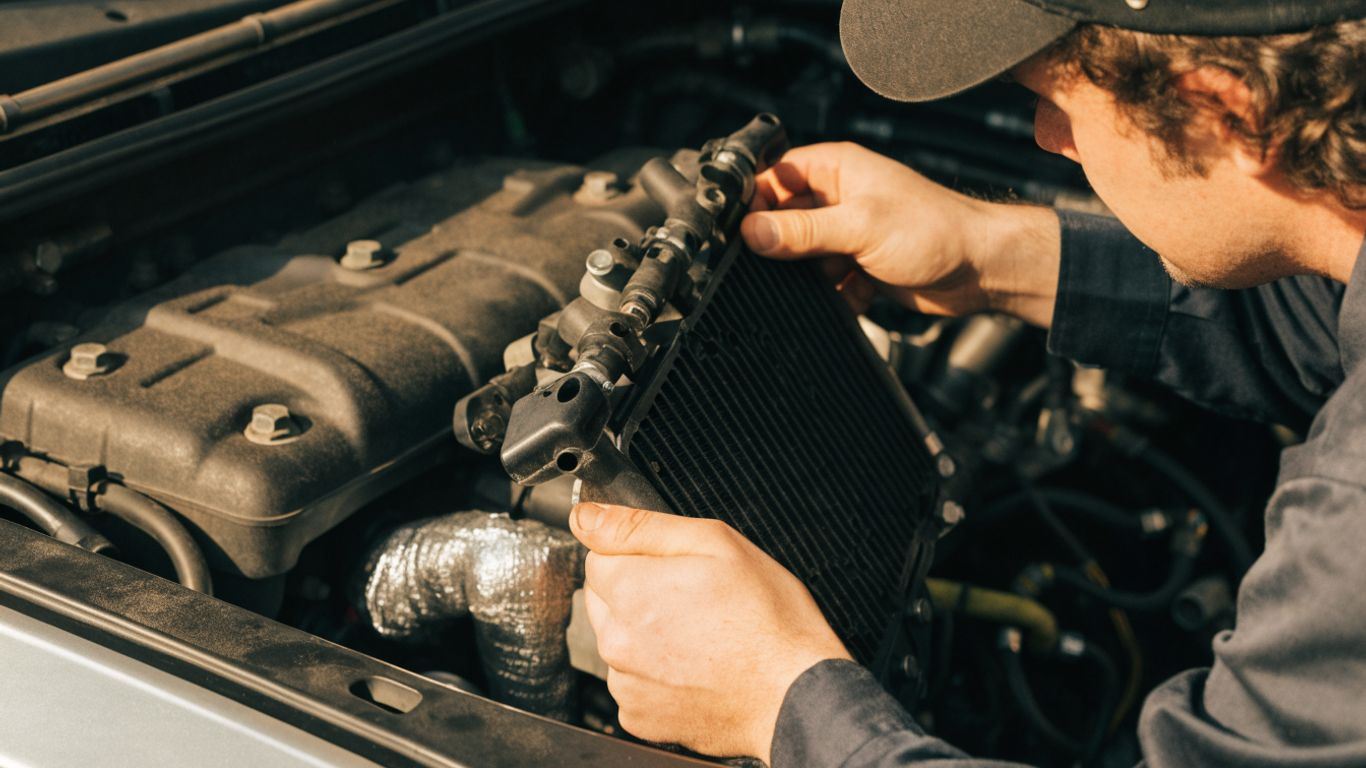
Match the model year, trim, and engine
Start with the vehicle identification number (VIN), model year, trim, and engine size or code. A listing may cover several vehicles, but that does not mean every version shares the same radiator. A used Audi A4 radiator listing, for instance, gives a particular engine and automatic-transmission configuration; treat that kind of detail as a prompt to verify your own car, not as a broad promise of fitment.
Check the part number and radiator configuration
Where possible, compare the part number on the installed radiator with the number in the listing, while allowing for documented supersessions or compatible replacements. Also check the radiator’s dimensions, mounting points, hose connections, and any ports or fittings. A mismatch in one connection can turn an apparently similar part into an unsuitable one, so confirm details with the seller before ordering.
Account for transmission and cooling-system differences
Some configurations may require different cooling arrangements, connections, or additional provisions. Use the vehicle’s build information and the radiator’s full description to identify those differences rather than relying on a generic model match. If a listing specifies an automatic or manual configuration, clarify whether that specification is essential for your vehicle.
Evaluate a radiator’s condition
A used radiator may look serviceable in a photograph and still have damage that is hard to see. Ask for clear images and a description of the inspection, including whether the part was checked for leaks. Condition details are especially useful when they distinguish normal cosmetic wear from a problem that could affect cooling or installation.
Look for leaks, corrosion, and damaged fins
Inspect the tank seams, core, fittings, and hose necks for signs of coolant residue, corrosion, cracks, or impact damage. Bent fins are common on older parts, but extensive crushing or blocked sections may affect airflow. Photographs can help screen a part, though they cannot establish that it holds pressure or performs correctly once installed.
Ask about pressure testing and cleaning
Ask whether the radiator was pressure tested and what the result was, and whether it was cleaned before sale. A seller’s clear answer gives you more useful information than a general claim that the part is in good condition. Record the answer alongside the listing details so you can refer back to it if questions arise after delivery.
Check for signs of previous repairs
Look closely for solder, sealant, patches, uneven seams, or evidence that a tank or fitting has been replaced. Not every repair automatically rules out a part, but its location and quality matter, and a repaired area deserves a direct explanation. If the seller cannot describe the repair or provide useful images, consider whether the uncertainty is worth the lower price.
Choose a reputable parts supplier
A useful listing gives you enough information to judge whether the part is a plausible match and what recourse you have if it is not. Our parts network connects customers with quality used, genuine, and aftermarket parts, so clear vehicle and part details remain central to choosing well. Compare the seller’s answers and written terms before committing, not just the headline price.

Verify the donor vehicle and part details
Ask which vehicle the radiator came from, including its year, model, engine, and transmission where known. Check that the listing’s part number, photographs, and stated condition agree, and get confirmation of fitment for your Audi rather than relying on a broad compatibility list. When online results wander into unrelated subjects such as reputation management, outdoor furniture, privacy practices, Forza Horizon, or Asphalt 9, those pages offer no evidence about a radiator; return to the part record and vehicle-specific details.
For a straightforward supplier conversation, have the main questions ready before contacting the seller:
- Can you confirm fitment using my VIN and the radiator part number?
- Which donor vehicle and configuration did this part come from?
- Was it inspected or pressure tested, and what was found?
- What are the return conditions if it does not fit or arrives damaged?
These questions make it easier to compare answers across listings. Our parts network serves customers across Melbourne, Sydney, Brisbane, and nationwide, while the specific part’s details and written terms should guide your decision.
Review return policies and warranty coverage
Read the actual return and warranty terms before buying. Check how long coverage lasts, what it applies to, whether installation requirements affect a claim, and who pays return shipping. A short written confirmation can prevent confusion later, especially if a part arrives with damage or proves incompatible despite the fitment check.
Confirm shipping and packaging protections
Radiators have delicate fins and exposed fittings, so ask how the part will be packed and whether the shipment is protected against transit damage. Confirm how quickly you should report a problem and what photographs or paperwork the seller requires. Good packaging cannot guarantee a trouble-free delivery, but clear procedures make issues easier to address.
Compare costs and ownership trade-offs
The purchase price is only one part of the decision. A lower-cost used radiator may make sense when fitment is confirmed and its condition and return terms are acceptable; a new part may be more suitable when uncertainty or the consequences of failure outweigh the initial saving. Compare the whole job rather than judging each option by its listing price alone.
Weigh upfront price against warranty terms
Compare the price alongside the length and scope of any warranty, the return window, and the cost of sending a part back. A longer warranty does not automatically make a part the right choice, and a lower price does not necessarily mean poor value. The useful comparison is how much risk remains after accounting for the part’s condition and the seller’s written protections.
Factor in labor, coolant, and related repairs
Installation can involve labor, replacement coolant, and attention to connected components. To keep estimates comparable, separate likely costs into a few practical categories:
| Cost area | What to confirm | Why it matters |
|---|---|---|
| Part | Exact fitment and condition | Avoids buying an unsuitable component |
| Labor | Installation estimate and scope | Helps compare the full repair cost |
| Coolant | Required type and quantity | Supports the correct refill procedure |
| Related work | Hoses, clamps, or other worn items | May affect the total cost and timing |
This breakdown helps reveal whether a seemingly inexpensive radiator still makes sense once the full repair is priced. Ask the repairer whether any related items need attention before the work begins, rather than discovering additional costs during installation.
Consider when a new radiator may be the better choice
A new radiator may be worth the added cost if the used part has uncertain history, visible damage, weak return terms, or unclear fitment. It may also suit a repair where the owner prefers to reduce uncertainty around a component that is difficult or costly to replace again. On the other hand, a well-documented used part with verified compatibility can be a reasonable option; compare the evidence and trade-offs for your particular vehicle.
Prepare for installation and maintenance
A correct radiator is only one part of a cooling-system repair. Before installation, check nearby components and use the appropriate service information for the vehicle. Our parts network connects customers with used, genuine, and aftermarket parts, but the installation and maintenance steps should follow Audi-specific guidance for the exact vehicle.
Inspect hoses, clamps, and connected components
Look for brittle or swollen hoses, worn clamps, damaged connectors, and other parts that may have contributed to the original problem. Replacing or addressing a worn connection during the same repair can help avoid repeating work, but have a qualified technician assess what is necessary. Do not assume that a radiator replacement alone resolves every cooling-system concern.
Follow Audi-specific coolant and bleeding procedures
Use the coolant specification and filling or bleeding procedure applicable to your model and engine. Different configurations can require different steps, so do not rely on a generic method when vehicle-specific service information is available. If you are unsure about the correct procedure, ask a qualified technician to carry out the refill and bleeding process.
Check for leaks and monitor temperatures after installation
After installation, check the connections and radiator area for leaks, then monitor the temperature gauge during the first drives. Follow the service procedure for rechecking coolant level, and stop safely if the temperature rises abnormally or a warning appears. A prompt inspection can help catch a loose connection or other issue before it develops into further damage.
Conclusion
Choosing among recycled Audi radiators means balancing verified fitment, visible condition, seller protections, and the full cost of installation. Take time to confirm the part details, ask direct questions, and follow the correct cooling-system procedure; a careful match is more valuable than a low price on its own.
Frequently Asked Questions
Are recycled Audi radiators the same as refurbished radiators?
Not necessarily. “Recycled” or “used” generally describes a previously installed component offered for reuse, while “refurbished” suggests some reconditioning; ask what inspection or work was actually completed.
How can I check whether a radiator fits my Audi?
Compare the VIN, model year, trim, engine, transmission, part number, and radiator configuration with the listing, and ask the seller to confirm compatibility.
Is a used radiator safe to install?
It may be suitable if its fitment and condition are verified, but a listing or photograph alone cannot confirm that it is leak-free. Ask about inspection and testing.
What should I look for in photos of a used radiator?
Check the core, fins, seams, hose necks, and fittings for corrosion, impact damage, residue, or signs of repair. Request additional views if important areas are unclear.
Should I choose a used radiator or a new one?
Compare the used part’s condition, documentation, fitment, and warranty with the cost and certainty of a new part. The better option depends on your vehicle and repair priorities.
Does replacing a radiator mean I need new coolant?
The repair usually involves draining and refilling coolant, but the correct coolant specification and procedure depend on the vehicle. Follow model-specific service guidance.
What should I monitor after a radiator is installed?
Check for leaks, watch the temperature gauge, and follow the proper procedure for checking coolant level. Stop driving and seek help if a warning appears or the temperature rises abnormally.