

Key Takeaways
Choosing a used turbocharger is less about finding the cheapest listing and more about confirming that the part fits, has been honestly described, and makes financial sense after installation.
- Match the turbocharger to your Audi’s engine code and part number, not just its model name.
- Ask for clear photos, donor-vehicle details, and a specific account of why the unit was removed.
- Check for visible damage and ask a qualified technician to assess wear that photos cannot reveal.
- Compare the complete cost, including shipping, labor, and any related parts, with other repair options.
- Prepare the oil and intake systems correctly, then watch for leaks, noise, and warning lights after installation.
Confirm compatibility with your Audi
A turbocharger that looks right may still be wrong for your car. Audi fitment can vary with model year, engine, emissions equipment, and other vehicle specifications, so begin with the details for your exact vehicle. Before you buy, compare those details with the seller’s identification information and ask for confirmation if anything is unclear.
Match the turbocharger to your model, year, and engine
Start with the Audi model, model year, engine size, and engine type. Even cars that share a model name can use different turbochargers across years or engine configurations. Treat a broad listing such as “fits Audi A4” as a starting point, not proof of fitment, and verify the unit against your car’s specific build information.
Check the engine code and turbo part number
The engine code and the part number on the turbocharger can narrow down compatibility more reliably than a model name alone. Compare the number on your existing unit with the number in the listing, allowing for the possibility that revisions or superseded numbers need to be confirmed. If the label is missing or hard to read, ask the seller for a close, well-lit photo rather than guessing.
Verify fitment for emissions systems and vehicle specifications
Check whether the listing identifies relevant emissions equipment and vehicle specifications, including any market or production differences that could affect fitment. A similar-looking part from another configuration may not connect or operate as expected. If your car has been modified or has an unusual specification, share that information with the seller and have a technician verify the match before ordering.
Ask whether related components are included
Listings may show a complete assembly, a turbocharger without its actuator, or a unit with only some attached pipes and fittings. Ask exactly what is included and what will need to be transferred from your existing setup. Confirming this in advance helps avoid a last-minute search for a small component that holds up the repair.
Assess the turbocharger’s condition
A used turbocharger can look tidy in a listing photo and still have wear that affects its usefulness. Ask for an honest description and enough evidence to assess the unit from multiple angles, while remembering that a photo cannot replace an inspection. Look for signs of mechanical damage and have a qualified technician assess anything uncertain before you commit.
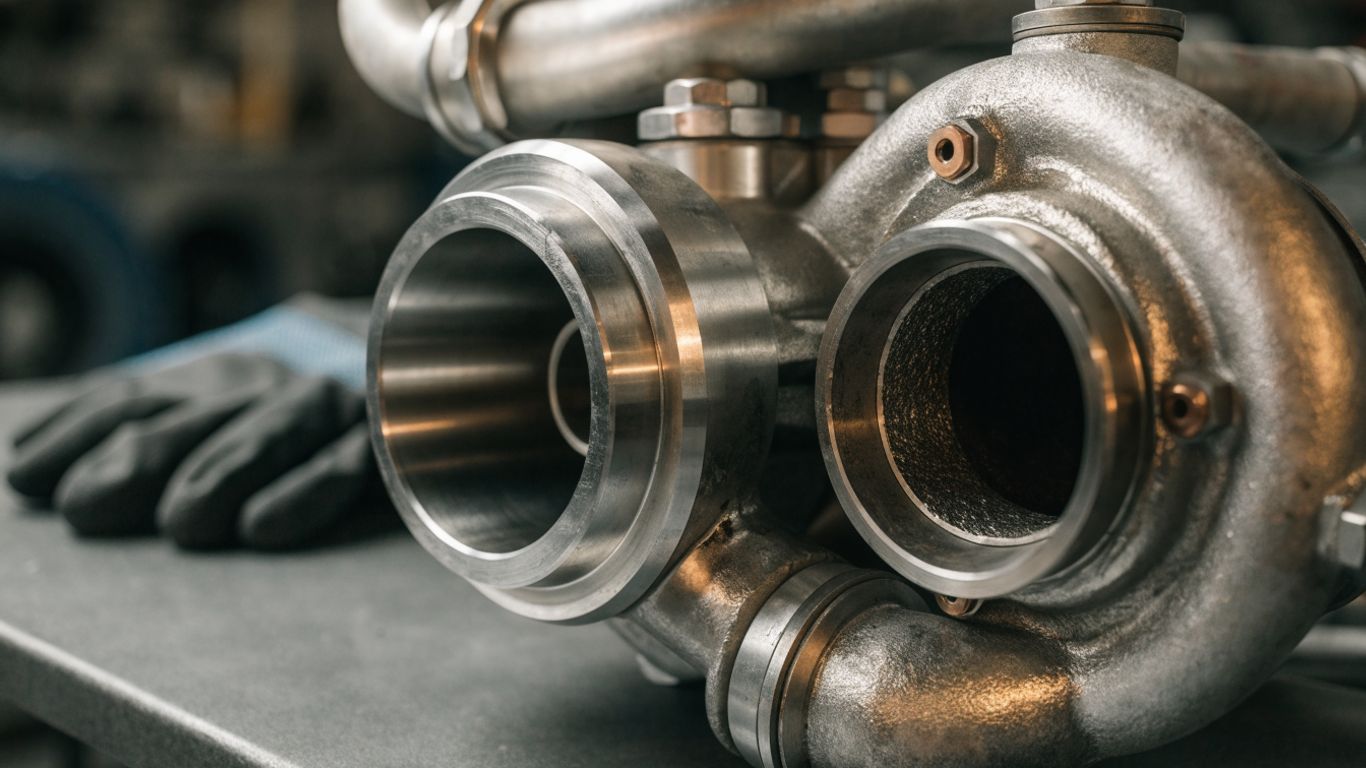
Inspect the compressor and turbine wheels for damage
Ask to see both the compressor and turbine wheels clearly, not only the outside of the housing. Look for chipped, bent, or visibly damaged blades, and for signs that a wheel has contacted its housing. If the seller cannot provide a clear view, treat the condition as unverified rather than assuming the part is sound.
Check the shaft for excessive play
Shaft movement should be assessed with care; a buyer’s casual hand check is not a reliable diagnosis on its own. Ask whether the seller or a technician has checked for excessive movement and what the inspection found. If you are viewing the part in person, avoid forcing or spinning components, and arrange a professional assessment if the result is unclear.
Look for oil leaks, cracks, and signs of overheating
Inspect the housings and connections for cracks, heavy deposits, oil residue, and discoloration that could suggest heat exposure. Some staining may reflect handling or storage, so appearance alone does not establish a failure. Ask the seller to explain anything unusual and have a technician judge whether it warrants concern.
Distinguish normal wear from evidence of a failing turbo
Used components may show some wear, but the practical question is whether the condition is acceptable for the intended repair and price. An inspection should consider the unit as a whole rather than relying on one reassuring detail, such as a clean exterior. A useful video can help you understand what an inspection involves, but it cannot certify the specific unit in a listing.
Use any demonstration as background only; the seller’s evidence and an in-person or professional inspection remain specific to the turbocharger you are considering.
Evaluate the seller and listing
A clear listing makes it easier to decide what you are actually buying. Look for consistent identification details, a straightforward account of the part’s origin, and direct answers to practical questions. If the seller’s description leaves important gaps, ask for clarification in writing before paying.
Request clear photos of the unit and identification numbers
Ask for recent photos of the exact turbocharger, including its identification number, housings, connections, and both wheel sides where accessible. Stock images cannot show the condition of the specific item you will receive. In other consumer decisions, too, checking the evidence behind a claim matters, whether you are researching prepackaged snacks or assessing a listing for a used part.
Ask for the donor vehicle’s history and mileage
The donor vehicle’s mileage and history can help put the part’s condition into context, although neither guarantees how long it will last. Ask which vehicle the turbo came from and whether the mileage is known or estimated. If the listing provides little background, treat that as uncertainty to weigh against the price and the return terms.
Find out why the turbocharger was removed
Ask whether the turbo was removed as part of a repair, an engine replacement, or vehicle dismantling, and whether its condition was checked before removal. A direct answer gives you useful context, while an unclear or changing explanation should prompt more questions. Evaluating credentials and risks is useful in other service decisions as well, such as choosing a skin clinic, though the checks themselves differ by purchase.
Confirm whether it has been inspected or tested
Ask what “inspected” or “tested” means in this particular listing. Find out who performed the check, what was examined, and whether the result is documented; a vague assurance is not the same as a report. When reviewing online information more broadly, readers may also encounter guidance about SEO or Content AI, but for a turbocharger the useful evidence is the seller’s documentation for the actual unit.
A short set of questions can help keep the conversation focused and make answers easier to compare:
- Is this the exact unit shown in the photos?
- What vehicle did it come from, and what mileage is known?
- Why was it removed, and what inspection was completed?
- What parts are included, and what are the return terms?
Keep the answers with the listing and invoice so you can refer back to what was represented if a problem arises. If the concern involves a model-specific legal matter rather than choosing a part, consult the Audi turbocharger settlement information separately; a used-part listing cannot establish eligibility or resolve a claim.
Compare the cost with other options
The asking price is only one part of the repair cost. Include delivery, taxes, installation labor, and any parts or fluids your technician recommends before deciding whether a used unit is worthwhile. A fair comparison puts alternatives on the same footing rather than weighing a used listing against only the advertised price of another option.
Check prices for comparable used Audi turbochargers
Compare units intended for the same model, engine configuration, and part-number family, then check whether each listing offers similar information about condition and returns. The lowest price may reflect a less complete assembly or less certainty about its history. Consider how much evidence you are getting along with the part, not just the number on the screen.
Factor in shipping, taxes, and installation
Delivery charges, taxes, and labor can meaningfully change the total. Ask whether the turbo is shipped securely and whether the price includes any related hardware; confirm the installation estimate with the repair shop before ordering. A part that appears affordable at first may be less attractive once these costs are added.
Compare the total cost with a remanufactured unit
Compare the used option with a remanufactured unit using the same assumptions for delivery, installation, and included components. Warranty terms and the available inspection information may differ, so read them rather than assuming that two similar-looking prices represent equivalent value. The right choice depends on the condition and documentation of the specific used turbo, as well as your repair budget.
Allow for possible replacement parts or repairs
Before choosing, ask the technician which supporting parts might need attention during the job. The following cost categories provide a simple way to build a more realistic estimate:
| Cost category | What to confirm |
|---|---|
| Turbocharger | Exact fit, condition, and included components |
| Shipping and taxes | Delivery charge, timing, and total at checkout |
| Installation | Labor estimate and any shop-specific requirements |
| Supporting items | Parts, fluids, or repairs recommended for the job |
Use the full estimate to compare options, and leave room for a repair that uncovers an additional issue. A cheaper unit is not necessarily the lower-cost choice if it requires extra parts or creates a second round of labor.
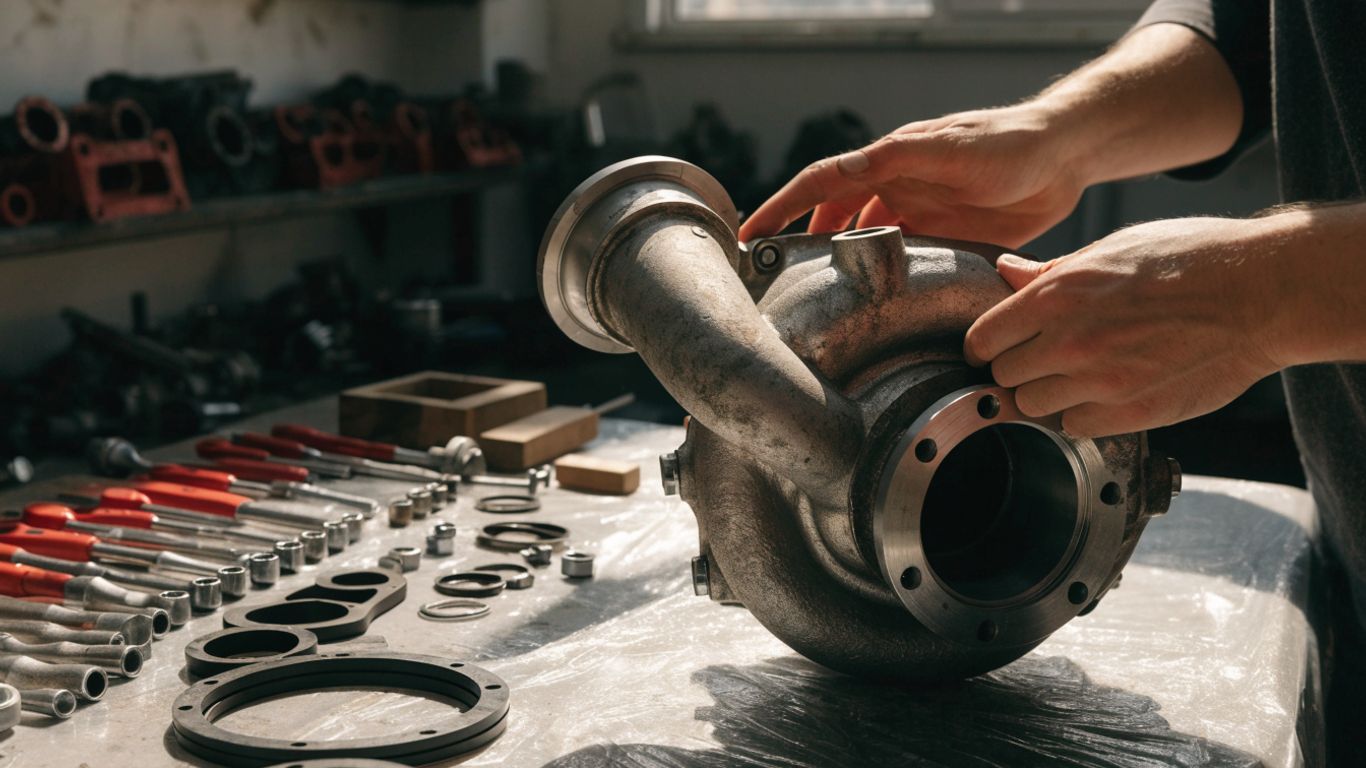
Understand the risks of buying used
Buying used can reduce the upfront cost, but the remaining service life of an individual unit is difficult to know from a listing alone. The risks are easier to manage when the seller provides clear evidence, return terms, and a consistent description of the part. Consider how much uncertainty you are prepared to accept before making the purchase.
Consider how wear can affect remaining service life
A turbocharger’s past use, maintenance, and storage all affect how much useful life may remain, and a low mileage figure does not tell the whole story. Visible condition and inspection findings can help, but they cannot promise a particular lifespan. Base your decision on the evidence available and the cost of being wrong, not on an unsupported guarantee.
Check the return policy and any warranty coverage
Read the return policy before buying, including the deadline, condition requirements, and who pays return shipping. If warranty coverage is offered, confirm what it covers, how long it lasts, and what documentation or installation conditions apply. Save the listing and any written statements about coverage.
Watch for mismatched parts and incomplete listings
A listing can be incomplete without being deliberately misleading, but missing numbers, unclear photos, or a vague description make fitment harder to establish. Check that the part number, vehicle details, included components, and seller’s answers agree with one another. Resolve contradictions before purchase rather than hoping they will not matter when the part arrives.
Decide when a used unit may not be worth the risk
If fitment cannot be verified, the condition is undocumented, or the seller will not explain the return terms, the apparent savings may not justify the uncertainty. A used part may also be a poor fit for a repair where downtime or repeat labor would be especially costly. Compare the alternatives with your technician and choose an option whose evidence and coverage suit your circumstances.
Prepare for installation and testing
A replacement turbocharger is only one part of the repair. Before installation, ask the shop to check related systems and follow the vehicle-specific procedure, rather than treating the job as a simple swap. Good preparation can help identify problems that might otherwise affect the new unit or complicate diagnosis later.
Identify related parts that may need replacement
Ask the technician to inspect the relevant pipes, seals, fasteners, and other connected components, and to identify any item that should be replaced rather than reused. What is needed depends on the vehicle and the condition of its existing parts. Confirm the scope of work and the cost before the repair begins.
Check oil and intake systems before fitting the turbo
Have the oil supply and return arrangements and the intake system checked for issues that could affect the turbocharger. The mechanic should determine whether contamination, restrictions, or other faults need attention as part of the repair. Addressing the cause of the original failure matters; fitting another unit without investigating related problems can leave the repair incomplete.
Follow the vehicle’s installation and priming requirements
Use the requirements for your exact vehicle and the instructions that apply to the replacement unit. Ask the installer how the turbo will be prepared and primed, and confirm that any specified fluids, seals, or procedures are followed. Avoid relying on a generic video or instructions for a different engine configuration.
Monitor for leaks, unusual noise, and warning lights after installation
After installation, follow the shop’s guidance on the first start and early checks. Report leaks, unusual sounds, smoke, changes in performance, or warning lights promptly rather than waiting to see whether they disappear. Keep the invoice and inspection notes, since they can help the technician diagnose a concern while the repair details are fresh.
Conclusion
A sound purchase starts with verified fitment and continues through careful inspection, clear seller answers, and a realistic comparison of total costs. Second hand Audi turbochargers can be an option when the part’s identity and condition are supported by evidence and the risks are acceptable to you. Take time to verify the details, involve a qualified technician, and make the decision based on the whole repair rather than the listing price alone.
Frequently Asked Questions
How do I know whether a used turbocharger fits my Audi?
Compare the vehicle’s model year and engine details with the turbocharger’s part number and any fitment information. If those details do not match clearly, ask the seller or a qualified technician to verify before buying.
Is a little shaft movement normal on a used turbo?
A casual check cannot establish whether movement is acceptable for a particular turbocharger. Ask for an inspection by someone qualified to assess the unit and explain the result in context.
What should I ask a seller before buying?
Request photos of the exact unit and its identification numbers, the donor vehicle and known mileage, the reason for removal, inspection details, included components, and the return policy.
Does low mileage guarantee a longer-lasting turbocharger?
No. Mileage is useful background, but it does not establish maintenance history, storage conditions, or the turbocharger’s present condition. Consider it alongside inspection evidence and the seller’s documentation.
Should I buy a used or remanufactured turbocharger?
Compare the complete costs, fitment evidence, condition information, and coverage terms for the options available to you. A mechanic can help assess the risks and likely labor costs for your specific repair.
What related parts should be checked during installation?
Have a technician inspect the connected oil and intake systems and related components, then recommend any replacements based on the vehicle and their condition. The exact needs vary by repair.
What should I do if the turbo makes noise after installation?
Contact the repair shop promptly, especially if the noise comes with a leak, smoke, poor performance, or a warning light. Avoid continuing to drive if the technician advises that it could cause further damage.