

Key Takeaways
A used caliper can be a sensible replacement only when its fitment and condition are clear. Verify the details before buying, and have brake work completed and checked carefully.
- Match the vehicle year, model, trim, axle position, side, and brake package.
- Compare part numbers and measurements rather than relying on a broad fitment claim.
- Inspect the caliper and ask for evidence of testing or refurbishment.
- Confirm the seller’s return terms and exactly which parts are included.
- Follow the correct installation and bleeding procedure, then check brake operation.
Confirm fitment for your Audi
A caliper that looks similar to the one on your vehicle may still be the wrong part. Audi brake configurations can vary by model, year, trim, and brake package, so start with the vehicle’s exact details and the caliper’s identifying information. Treat a listing’s broad compatibility claim as a starting point, not confirmation. If the car itself is being imported, import eligibility and inspection steps are a separate matter from confirming brake-part fitment.
Match the model year, model, and trim
Write down the model year, model, and trim before searching, and use the vehicle identification number when checking fitment with a parts supplier or technician. Closely related trims can use different brake equipment, even within the same generation. A listing that names only the model may not identify the exact configuration, so ask for confirmation against your vehicle details before placing an order.
Check front or rear placement and left or right side
Confirm whether the replacement is for the front or rear axle and for the left or right side. Listings may use driver-side and passenger-side descriptions, which can be ambiguous when the vehicle’s market or viewing direction is unclear. Match the seller’s terminology to the vehicle’s orientation and the position of the part, rather than inferring the side from a photograph alone.
Compare part numbers and brake package details
Part numbers provide a useful way to narrow a search, but compare the full number and any suffix rather than assuming that a near match is interchangeable. The caliper should also suit the brake package fitted to the car. A short comparison can help organize what to verify before treating a listing as a match:
| Detail to compare | What to confirm | Why it matters |
|---|---|---|
| Vehicle identification | Year, model, trim, and VIN details | Broad model names can cover different configurations |
| Caliper number | Full part number and suffix | Similar-looking parts may not be interchangeable |
| Position | Front or rear, left or right | Placement and side must match the vehicle |
| Brake package | Relevant caliper and rotor setup | Equipment can vary across trims and options |
Use the table as a prompt for questions, not as a substitute for a fitment check. If the number is missing or difficult to read, ask the seller for a clear photograph and have the part verified before purchase.
Verify rotor size and mounting configuration
Check the rotor diameter and the caliper’s mounting arrangement against the vehicle’s existing setup. A difference in rotor size or bracket configuration can prevent correct installation, even when the caliper appears to be from a similar Audi. When the listing does not give measurements or mounting details, request them and compare them with reliable vehicle-specific information before buying.
Understand caliper types and configurations
Brake calipers differ in how they move and how their pistons apply force, and those differences affect compatibility. The goal is not to choose the most elaborate design, but to find the configuration intended for the car’s braking system. Use photographs and specifications to identify what is being offered, then confirm the fitment independently.
Distinguish fixed from floating calipers
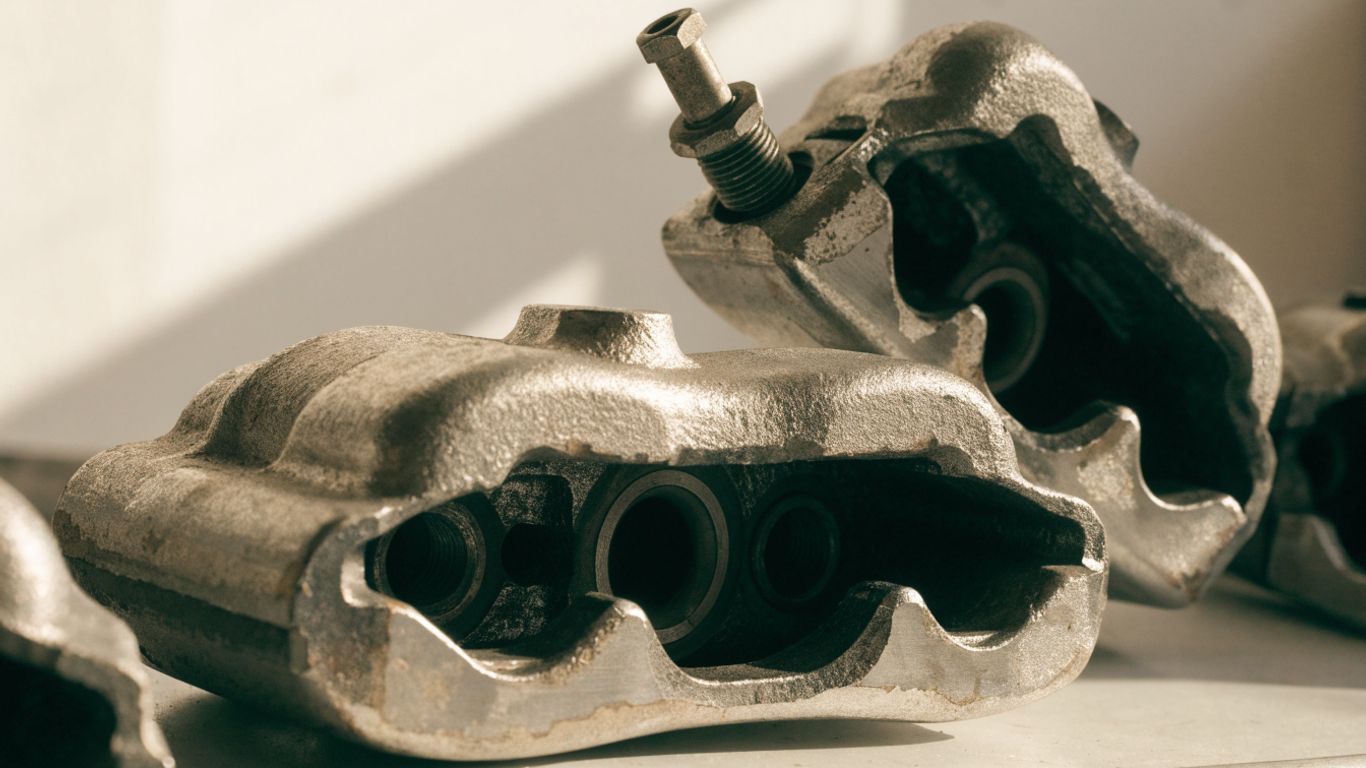
A fixed caliper is mounted in place and applies pressure using pistons on both sides of the rotor. A floating caliper moves on its mounting slides so it can clamp the rotor from both sides. These designs are not automatically interchangeable; the replacement must match the vehicle’s original arrangement and mounting points.
Compare single-piston and multi-piston designs
Calipers may use one piston or several, depending on the brake system. Piston count is one detail to compare, but it does not establish compatibility on its own: the caliper’s dimensions, mounting, and hydraulic connections matter too. Avoid choosing a part simply because it has more pistons or appears to be an upgrade; confirm that the rest of the system is designed for it.
Check compatibility with your existing brake system
Check the replacement against the rotor, brake hose connection, mounting hardware, and the rest of the system on the vehicle. If a listing mentions only that the part fits a broad model range, ask which years and configurations it covers. A specialist’s vehicle-specific confirmation can prevent the expense and delay of receiving a part that cannot be fitted correctly.
When the details are uncertain, pause the purchase and gather better information rather than trying to resolve a mismatch during installation. The same basic discipline of matching expertise to a specific need appears in advice on choosing an orthopedic specialist, though brake-system compatibility requires mechanical, vehicle-specific checks.
Consider OEM and aftermarket options
A used original-equipment caliper and an aftermarket replacement may differ in source, condition, and included parts. Either way, verify the part number or documented application, the seller’s description of condition, and the return terms. Listings for used and reconditioned calipers illustrate why it is useful to distinguish the part’s stated condition and position instead of treating all used listings as equivalent.
Inspect condition before you buy
A correct part number does not tell you whether a used caliper is sound. Ask for clear images and specific information about wear, corrosion, testing, and any refurbishment. Visible condition is only part of the assessment; a caliper can look tidy while having a problem that is not apparent in a photograph.
Look for corrosion, cracks, and impact damage
Examine the body for cracks, deep corrosion, damaged mounting ears, and signs of impact. Surface discoloration may be cosmetic, but heavy corrosion or damage around a mounting point deserves closer scrutiny. If the photos omit the back of the caliper or the mounting area, request additional views before deciding.
Check pistons, seals, and dust boots
Ask whether the pistons move as intended and whether the seals and dust boots are intact. Torn boots or signs of fluid around a piston can point to a need for repair or further inspection. A seller’s description should distinguish a tested part from one that has only been visually checked; do not assume that appearance proves internal condition.
Examine bleeder screws and brake line ports
Inspect the bleeder screw and brake-line port for damaged threads, rounding, corrosion, or signs of leakage. These details matter because a compromised connection can complicate installation and service. Ask for close-up photos if the listing images are too distant to show the openings and fittings clearly.
Ask whether the caliper has been tested or refurbished
Find out what “tested” or “refurbished” means in the seller’s description. Ask which checks were performed, what work was completed, and whether the seller provides a warranty or return option if the part is not as described. A precise answer is more useful than a general assurance, particularly when the caliper’s internal condition cannot be judged from photos.
Evaluate the seller and listing
The listing should make it possible to assess both the part and the terms of the sale. Look for a clear description, vehicle-specific fitment information, useful photographs, and a written policy for returns or warranty claims. A transparent seller makes it easier to resolve a mismatch before the part is installed.
Review the return policy and warranty
Read the return policy before purchase, including any deadline, restocking charge, or condition requirement. Confirm whether the warranty applies to used parts and what documentation is needed to make a claim. These terms can affect the real cost of a part if it arrives damaged or proves incompatible.
Request clear photos and precise fitment details
Ask for photographs that show the part from multiple angles, including its number, mounting points, ports, and overall condition. Request precise fitment details if the listing gives only a broad model range. Clear evidence matters more than polished presentation; the same general preference for stated process and support appears in guides to website agency selection factors, but here the questions should stay focused on the actual caliper and vehicle.
Confirm what hardware is included
Do not assume that the listing includes brackets, guide pins, clips, or other hardware. Ask for an itemized description and compare it with what the installation will require. Before ordering, make sure you know whether the sale covers the caliper alone or additional components, so there are no surprises when the repair is scheduled.
Compare price with new and remanufactured alternatives
Compare the asking price with the cost of new and remanufactured options, while accounting for condition, included hardware, warranty, and return terms. The lowest initial price is not necessarily the least costly choice if missing parts or uncertain condition add time and expense. A similar habit of comparing fees and total costs is useful when reviewing car-loan refinancing costs, although the factors for a brake component are different.
Plan for installation and brake service
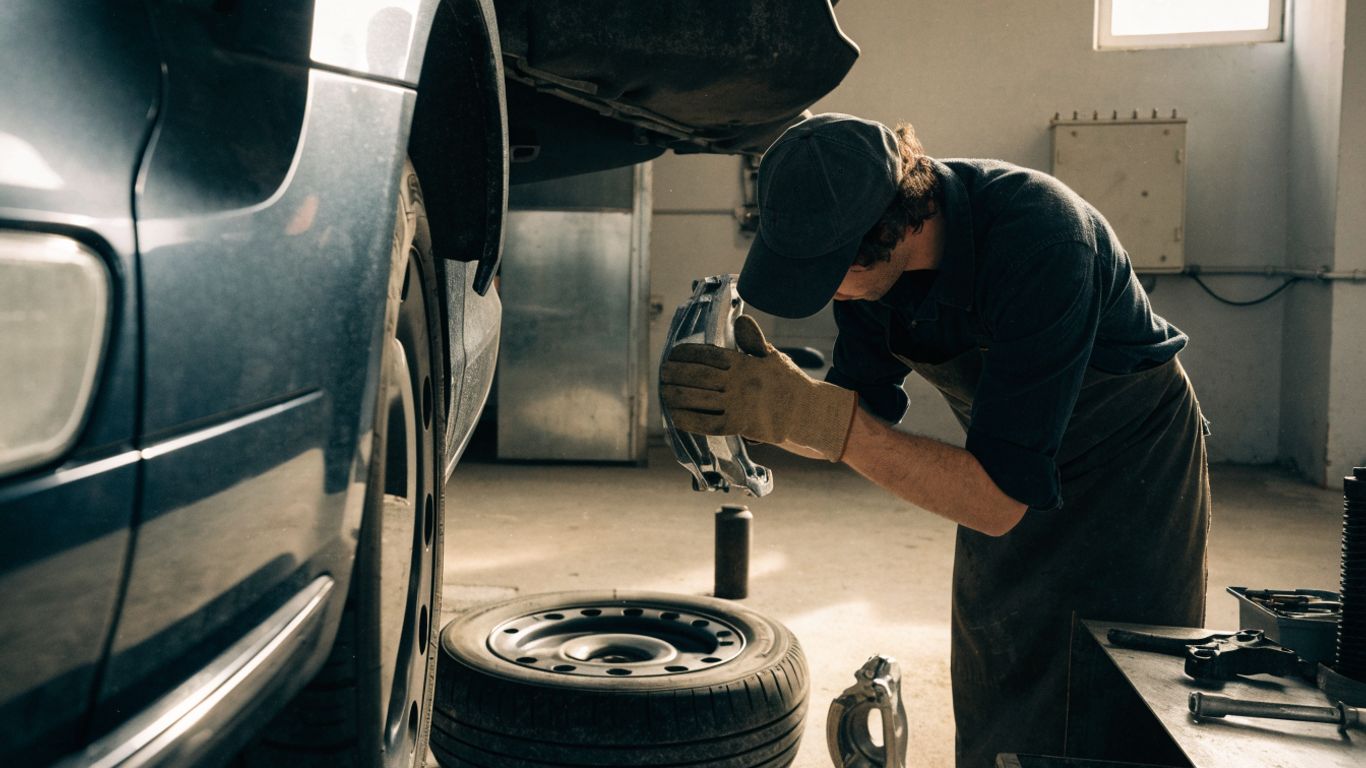
A replacement caliper is part of a brake system, so installation planning should include more than the part itself. Consider the condition of related components and the correct service procedure before work begins. If the fitment or installation details are uncertain, have a qualified technician inspect the vehicle and the replacement part.
Replace calipers in axle pairs when appropriate
Whether one caliper or both on an axle should be replaced depends on the vehicle’s condition and the repair diagnosis. Ask a qualified technician whether replacing calipers as a pair is appropriate for the specific situation, rather than assuming it is always required. Balanced braking and the condition of the other side should inform the decision.
Inspect pads, rotors, hoses, and mounting hardware
Inspect the nearby parts while the brake assembly is being serviced. A short review of the related components can help identify wear or damage that might affect the repair:
- Brake pads for wear or uneven contact.
- Rotors for wear, damage, or condition concerns.
- Brake hoses and connections for deterioration or leaks.
- Mounting hardware for damage, corrosion, or missing pieces.
Finding a related issue during the repair can help avoid repeating labor or overlooking a problem. Brake wear depends on use and vehicle condition; broader guidance on brake lifespan and maintenance can provide context, but it does not replace an inspection of the car in front of you.
Use the correct brake fluid and bleeding procedure
Use the fluid specification and bleeding procedure appropriate for the vehicle, and do not guess based on another model or a generic instruction. Brake-system service can introduce air or fluid leaks if carried out incorrectly. If you are not equipped to perform the work safely, leave the installation and bleeding to a qualified technician.
Follow Audi service specifications or consult a qualified technician
Use vehicle-specific service information for fasteners, procedures, and any required checks. If those specifications are unavailable or the repair is beyond your experience, consult a technician familiar with the vehicle’s braking system. A local-search guide such as local search strategy is about a different subject, but the practical principle of looking for clear scope and transparent information also helps when assessing a repair provider.
Check performance after installation
Installation is not the final check. Confirm that the system is dry, the pedal feels consistent, and the caliper operates as intended before returning to normal driving. Any abnormal noise, pulling, warning light, or change in pedal feel calls for stopping and investigating rather than continued use.
Inspect for leaks and confirm a firm pedal
With the vehicle safely stationary, check the caliper, hose connection, and bleeder area for signs of fluid leakage. Confirm that the brake pedal feels firm and consistent according to the proper service procedure. If the pedal is soft or sinks, do not drive the vehicle until the system has been checked and the cause addressed.
Verify the caliper releases without dragging
After the brake is applied and released, check for signs that the wheel or caliper is binding. Unusual heat, persistent rubbing, or a vehicle that resists rolling may indicate a problem that needs inspection. Do not treat a short test drive as proof that a dragging brake is harmless.
Bed in new pads and rotors as directed
If new pads or rotors were installed, follow their manufacturer’s bedding instructions. Avoid improvising a procedure or applying hard braking before the components are ready. Properly following the directions helps the parts settle in as intended; if the instructions are missing, ask the installer or parts supplier for guidance.
Recheck fluid level and brake operation after a test drive
After the checks and a cautious test drive, recheck the fluid level and inspect for leaks or unusual behavior. Pay attention to pedal feel, noise, pulling, and any warning indicators. If something has changed or does not feel right, park safely and arrange a professional inspection before continuing to drive.
Conclusion
Choosing used Audi brake calipers is less about finding a part that looks right and more about confirming that it fits, assessing what condition it is in, and understanding the seller’s terms. Take time to verify the details before buying, and treat installation and post-repair checks as part of the decision. When any fitment or safety question remains, get vehicle-specific advice from a qualified professional.
Frequently Asked Questions
How do I know whether a used caliper fits my Audi?
Match the year, model, trim, axle position, side, part number, and brake configuration. Confirm fitment using vehicle-specific information or with a qualified parts professional before ordering.
Is the part number enough to confirm compatibility?
It is a useful identifier, but it may not be enough by itself. Compare the full number and suffix, then confirm the application and configuration against the vehicle.
What should I look for in photos of a used caliper?
Look for clear views of the body, mounting points, ports, bleeder screw, and part number. Check for cracks, deep corrosion, damaged threads, impact damage, or visible fluid residue.
Should used calipers be replaced in pairs?
Not in every case. The decision depends on the diagnosis, vehicle condition, and the condition of the caliper on the other side; ask a qualified technician whether paired replacement is appropriate.
What does “refurbished” mean in a caliper listing?
The term can describe different work, so ask what was inspected, repaired, or replaced and whether the part was tested. Review any warranty or return terms rather than relying on the label alone.
Can I install a used brake caliper myself?
Brake work requires correct parts, procedures, and bleeding. If you lack the required tools, service information, or experience, have a qualified technician do the installation and verify the system.
What should I check after installation?
Check for leaks, a firm pedal, proper release, and normal brake operation. After a cautious test drive, recheck fluid level and inspect for unusual noise, pulling, heat, or warning lights.